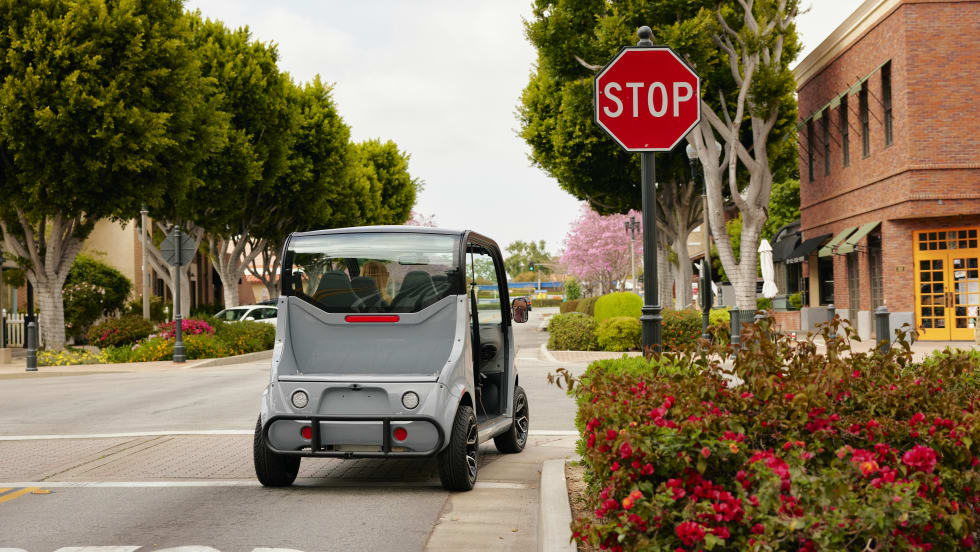




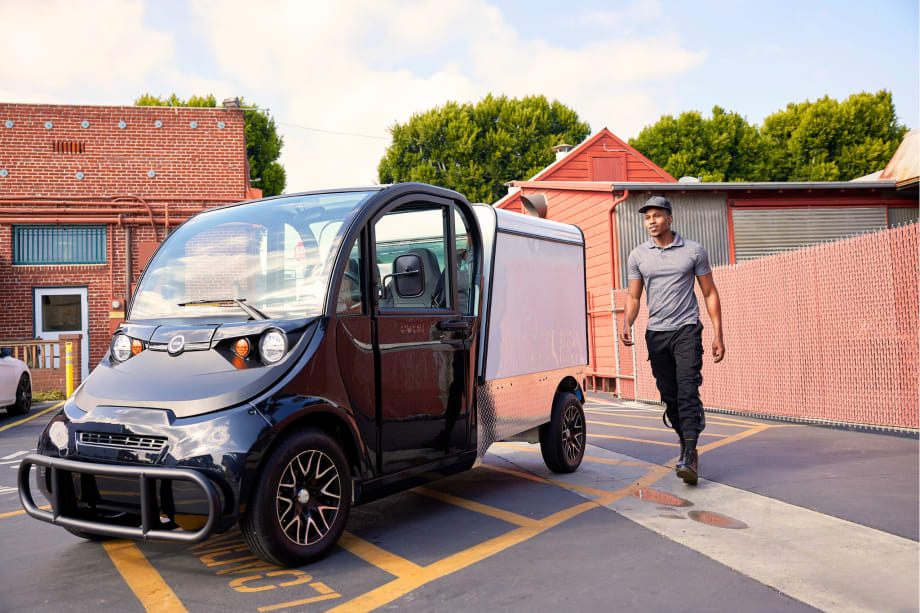
It’s crucial to assess various factors – such as how the LSVs will integrate within the current fleet, safety features, and required costs and maintenance – to ensure it meets operational needs.
Photo: Sandia National Laboratories
Looking to move away from gas-powered golf carts to a more environmentally friendly option, Sandia National Laboratories became an early adopter of electric vehicles (EVs).
Sandia began the transition to EVs in 2002 with the purchase of GEM low-speed vehicles (LSVs), allowing the premier national science and engineering lab to supplement its motor vehicle fleet while reducing carbon emissions and operational costs.
A Commitment to Sustainability
“As one of the nation’s largest national laboratories, Sandia is serious about reducing our environmental impact as much as possible,” said Nick Lovato with Fleet Services at Sandia National Laboratories. “Our fleet has more than 200 street-legal GEM vehicles including our originally purchased GEMs, more recent GEM e4s and solar-powered GEM e4s. The legacy vehicles continue to serve us with periodic battery changes.”
With significant installations in sun-drenched regions of New Mexico and California, Sandia’s Facilities Energy Management team and Fleet Services organization established a goal to harness solar power to create a more energy-efficient campus, reduce grid-tied energy use, increase renewable-energy, and implement solutions for reducing greenhouse gas emissions.
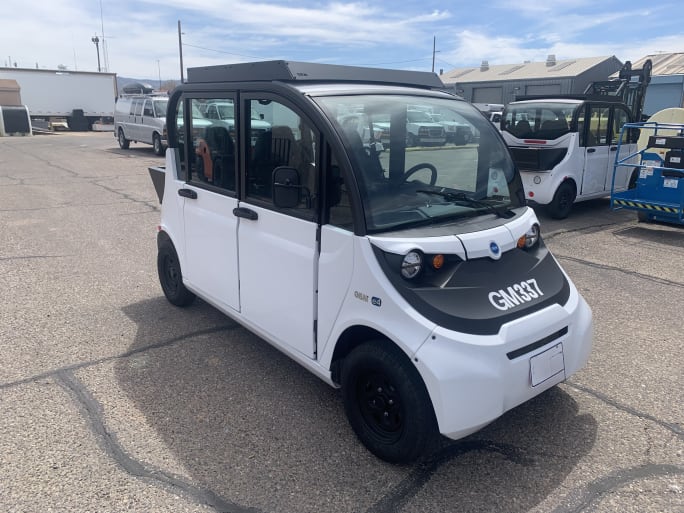
Sandia’s Facilities Energy Management team and Fleet Services organization established a goal to harness solar power to create a more energy-efficient campus.
Photo: Sandia National Laboratories
Solar-Powered Innovation for Fleets
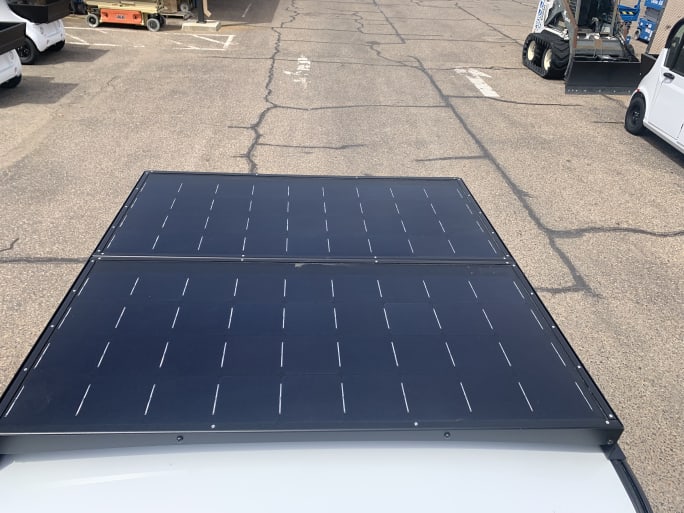
The emission-free vehicle, modified with a rooftop solar, panel did just that. Anytime the vehicles were left outside in the sun, they recharged themselves without needing to be plugged in. And this happened frequently at Sandia, with no official ‘garage’ to return vehicles to be plugged in at the end of the day or the end of the week.
Today, Sandia purchases all of its new GEM e4s already equipped with solar panels.
“The OEM solar panels enable us to continue reducing our electrical infrastructure load and extend the usable range of the vehicles,” said Lovato. “As the fleet expands to include more solar panel-equipped vehicles, we have seen a significant decrease in service calls, saving fleet time and resources. The solar-powered GEM e4s have also allowed more departments to get vehicles despite not having convenient charging access, further reducing our environmental impact.”
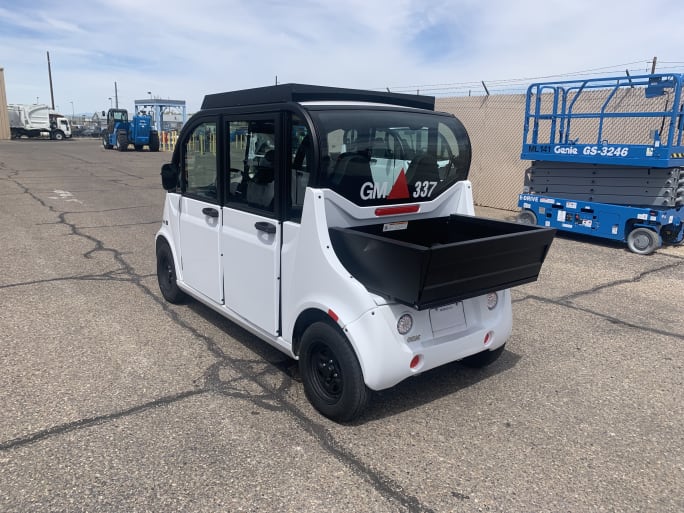
Sandia uses its solar-paneled electric vehicles at their Albuquerque, NM, and Livermore, Calif., sites to move people and cargo from location to location.
Photo: Sandia National Laboratories
Operational and Environmental Considerations
By supplementing its motor vehicle fleet with LSVs, Sandia has been able to meet federal oversight guidelines as well as significantly reduce overall fleet operating costs through maximized vehicle efficiency and reduced maintenance costs. Additionally, batteries are equipped with an automatic shut-off to prevent overcharging and extend their lifespan.
Sandia uses its solar-paneled electric vehicles at their Albuquerque, New Mexico, and Livermore, California, sites to move people and cargo from location to location. They are also currently exploring options to reduce reliance on their fleet of micro-trucks for maintenance personnel and replacing them with solar-powered electric vehicles.
Sandia National Laboratories also has been recognized by the White House for these efforts, having received a GreenGov Presidential Award – earning the “Green Innovation Award” for developing and implementing the photovoltaic (PV) powered carts.
Considering adding an LSV to your operation’s fleet? It’s crucial to assess various factors – such as how the LSVs will integrate within the current fleet, safety features, and required costs and maintenance – to ensure it meets operational needs. By thoroughly considering these factors, organizations will be able to make a well-informed decision about whether the vehicle is a suitable addition to the fleet.
Questions to Ask When Considering Adding LSVs to Your Fleet
1. Fleet Integration
2. Compliance and Safety
3. Cost
4. Battery and Charging
5. Durability and Maintenance
About the Author: Byron Dudley is the director of Government Programs for Waev, Inc.
This article was authored and edited according to Government Fleet editorial standards and style. Opinions expressed may not reflect that of GF.