




Data from Government Fleet's survey shows fewer fleets reporting size increases compared to last year, and a slight rise in those reporting operating budget increases.
2018 Benchmarking Statistics
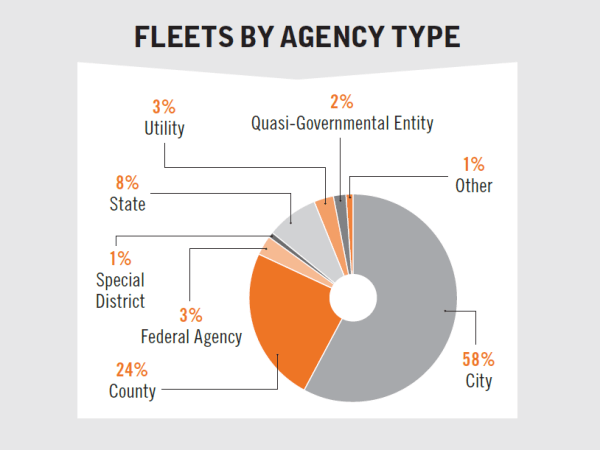
This chart shows the profile of survey respondents and the public entities for which they work.
Source: Government Fleet Research
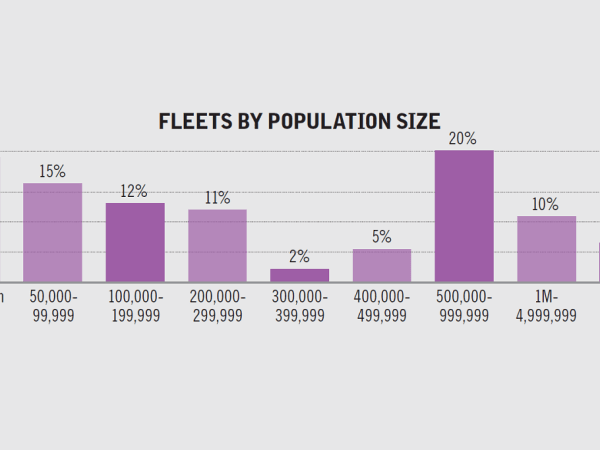
This graph breaks down the population of the public agencies where survey respondents work.
Source: Government Fleet Research
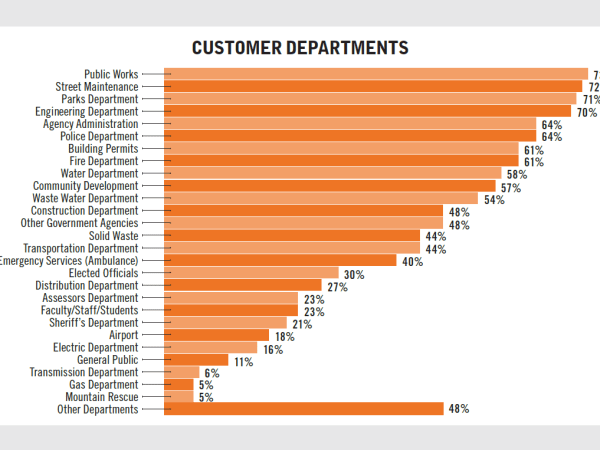
Many fleets service numerous deaprtments, while some are department-specific. This chart showing customer departments that respondents work with gives an idea of what kinds of vehicles they manage. More than one response possible.
Source: Government Fleet Research
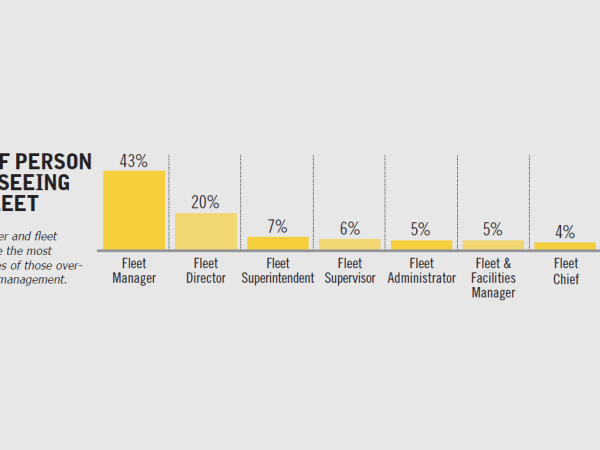
Fleet manager and fleet director were the most common titles of those overseeing fleet management.
Source: Government Fleet Research
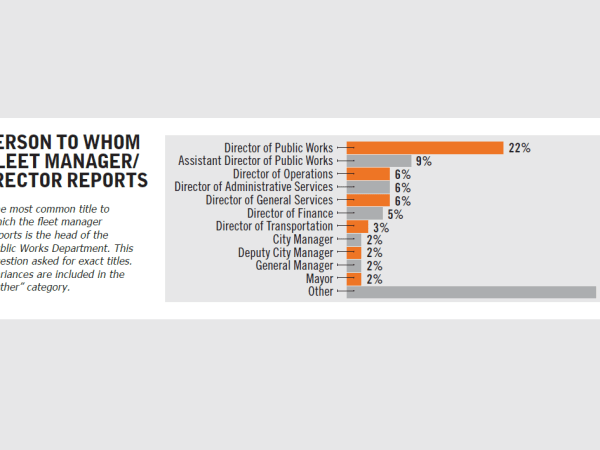
The most common title to which the fleet manager reports is the head of the Public Works Department. This question asked for exact titles. Variances are included in the "Other" category.
Source: Government Fleet Research
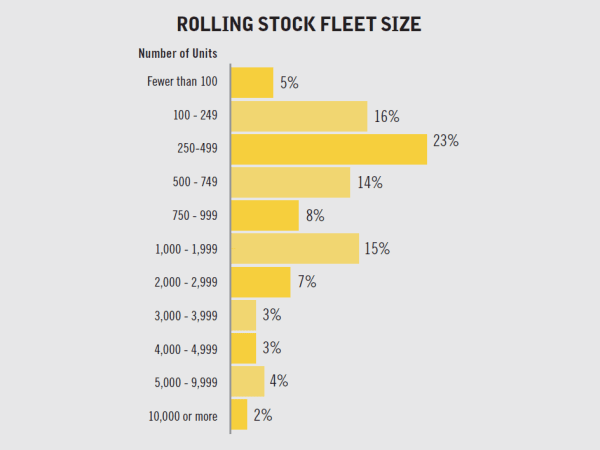
A significant number of those surveyed manage small fleets, with 44% overseeing fleets of fewer than 500 units.
Source: Government Fleet Research
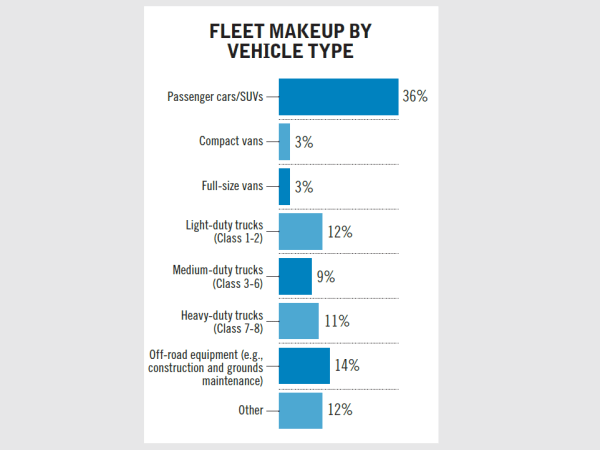
This chart shows the average vehicle makeup of survey respondents.
Source: Government Fleet Research
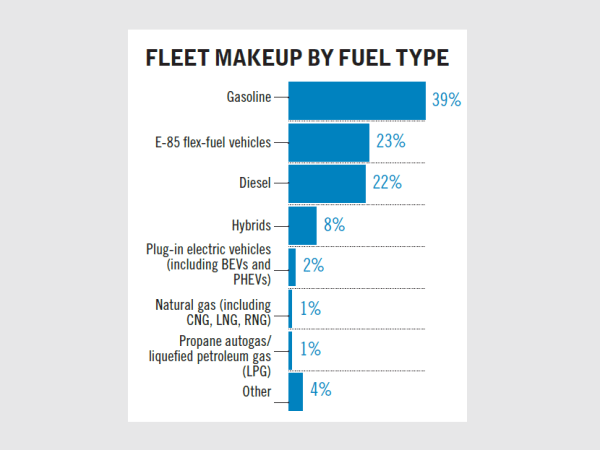
Respondents were asked to provide their fleet breakdown by fuel type used by vehicles. This chart shows the average vehicle makeup by fuel type.
Source: Government Fleet Research
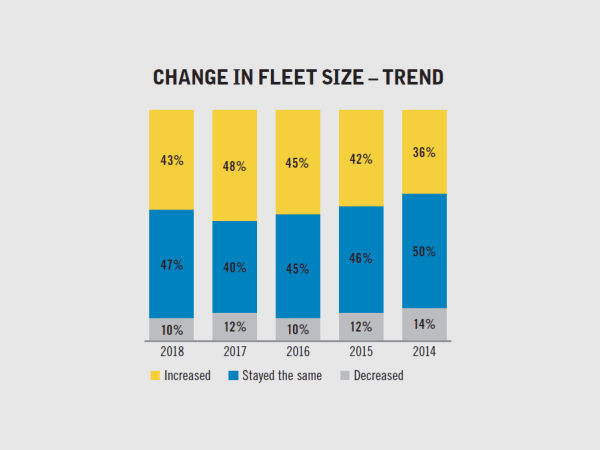
This graph tracks respondents' reports of fleet size fluctuations since this question has been asked in GF's annual survey. Since 2014, this is the first year that fewer respondents reported fleet increases than the previous year.
Source: Government Fleet Research
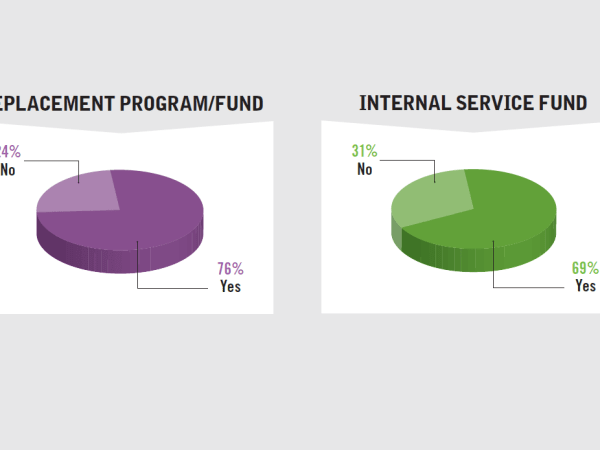
About three-quarters of respondents said their fleets have an equipment replacement program and/or fund. About two-thirds of respondents said their fleets are internal service funds.
Source: Government Fleet Research
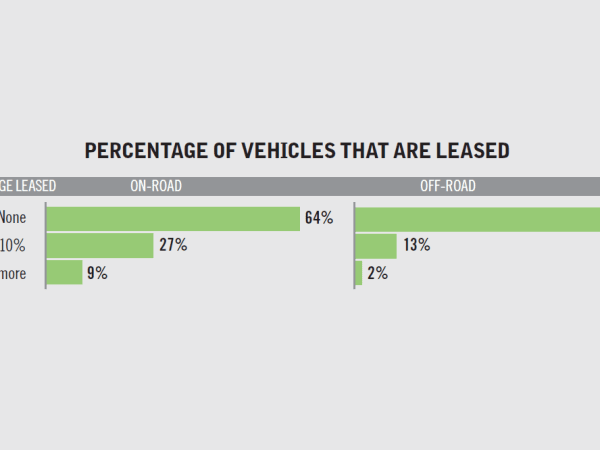
Respondents were asked what percentage of their vehicles were leased. The mast majority did not lease any vehcles, and many of those that did leased a small portion of their total fleet.
Source: Government Fleet Research
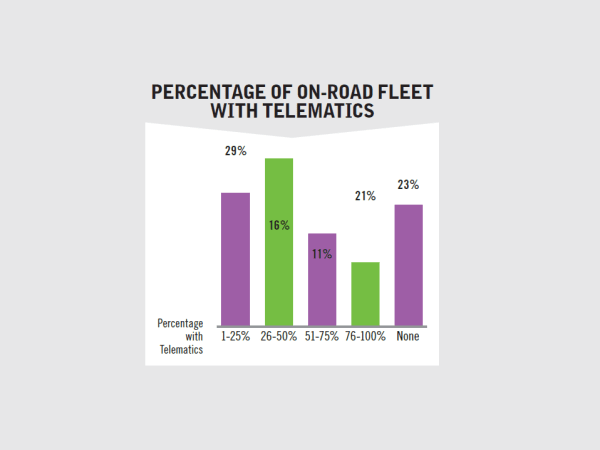
Respondents were asked what percentage of their on-road units had telematics devices installed. About three-quarters of fleet respondents said they had telematics on at least some vehicles, with 13% stating they had telematics on all their on-road vehicles.
Source: Government Fleet Research
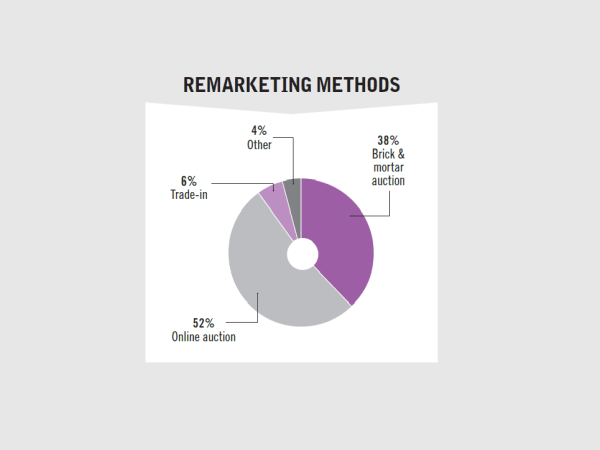
Respondents were asked the percentage of use of various remarketing methods, and this chart represents the averages of each method used. Onilne auctions continue to be the most common method, up form 50% last year. "Other" methods include selling to other public agencies, selling for scrap, and donating.
Source: Government Fleet Research
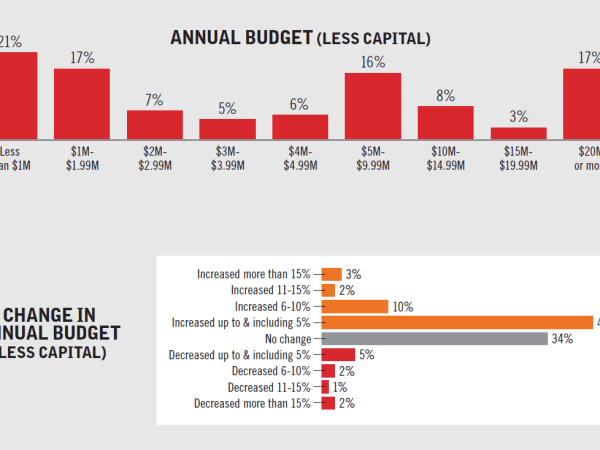
Respondents reported a wide range of budgets, with the median being $4.5 million. Fifty-six percent of respondents reported budget increases this year, up from 52% last year. Those reporting budget increases said the increases were due to fuel price increases, parts and oil cost increases, and technology costs. Those reporting decreases cited equipment reductions and downsizing.
Source: Government Fleet Research
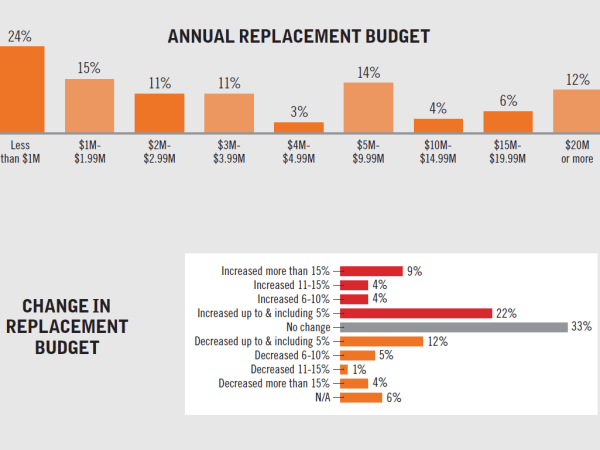
Of those who reported having a fleet replacement budget for the year, the median is $3.5 million. Fluctuations in replacement budgets year over year are normal, as each year's replacement needs may be different. Those reporting increases cited major investments in replacements this year, catching up on replacements, and increases in service levels. Those who had decreased budgets said they had fewer vehicles to replace this year. For 2018, 39% of the fleets reported an increase, down from 47% in 2017.
Source: Government Fleet Research
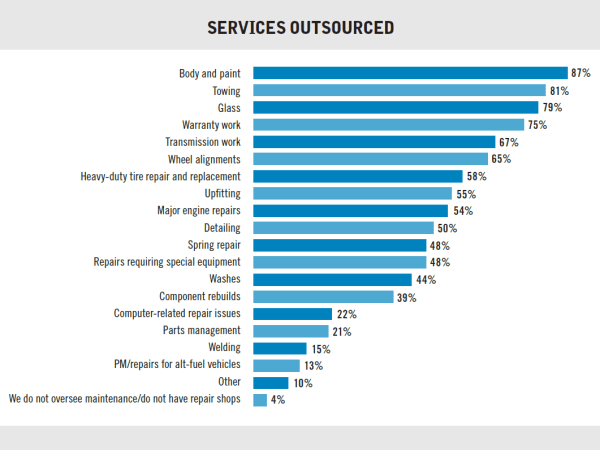
Respondents were asked what work they outsource to other vendors, with the msot commonly outsourced work being body and paint, followed by towing. (More than one response possible).
Source: Government Fleet Research
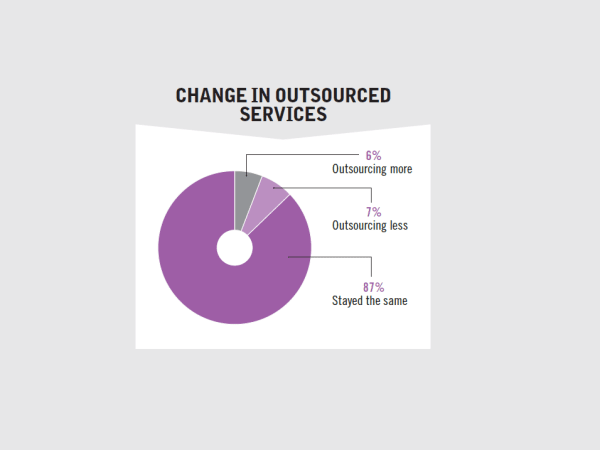
This year, 7% reported outsourcing less work, compared to 1% in 2017. Those fleets said they have begun doing their own upfits, body work, alignments, engine repairs, and warranty work. Investing in equipment and additional staff allowed them to do this. Those who are outsourcing more said they are sending out more upfitting work and specialized work, repairs for an increased number of collisions, work during weekends, and when short-staffed.
Source: Government Fleet Research
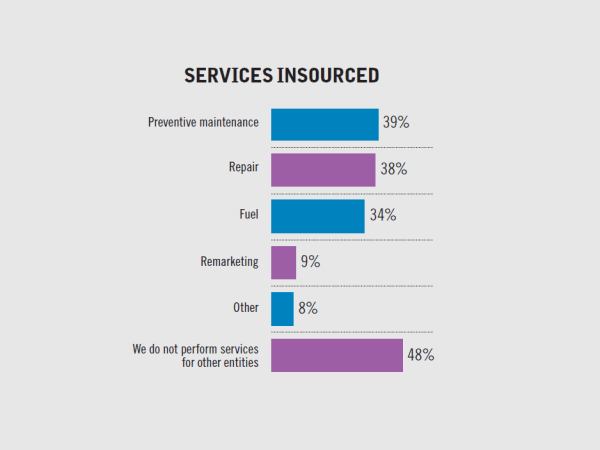
About half of fleets reported performing fleet work for other agencies, with the majority stating they provide maintenance and repair work. The "other" category includes fire truck pump testing, upfitting, radio equipment work, and washes. (More than one response possible).
Source: Government Fleet Research
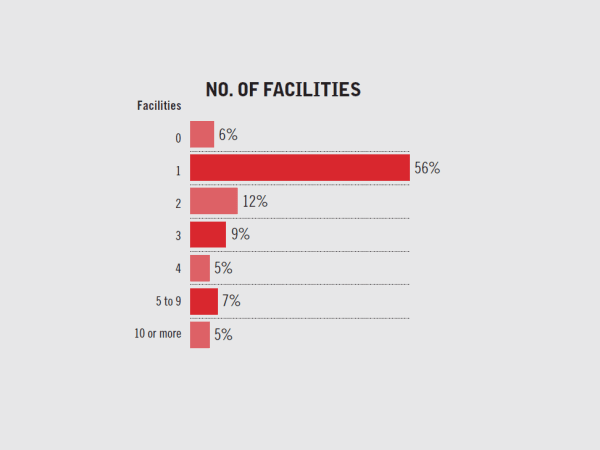
More than half of respondents reported having exactly one maintenance facility.
Source: Government Fleet Research
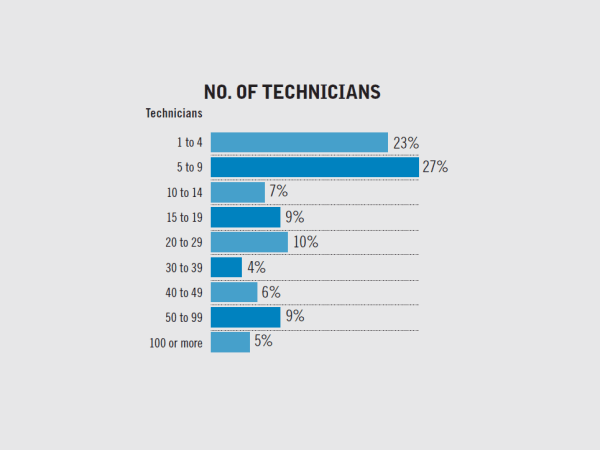
Half of respondents reported having fewer than 10 technicians. Those without technicians were not included in this chart.
Source: Government Fleet Research
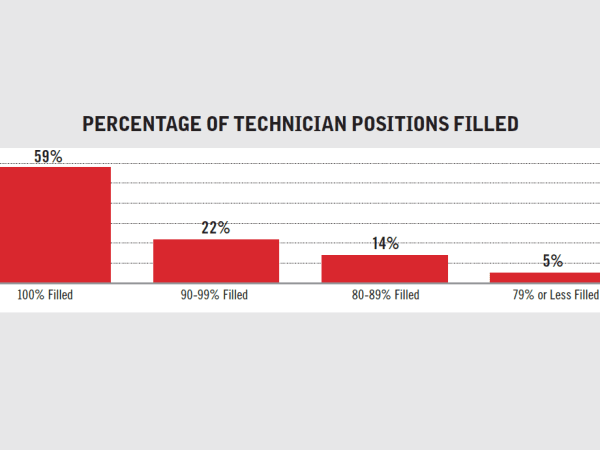
Respondents were asked how many of their allocated technician positions are currently filled, and 59% said they were fully staffed. This is comparable to last year's response, which was 60%.
Source: Government Fleet Research
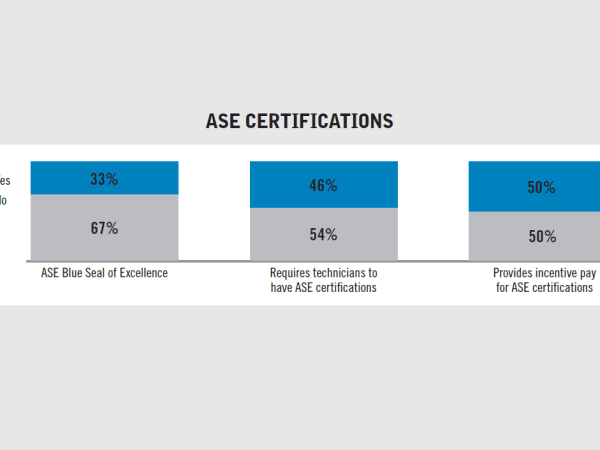
One-third of survey respondents said their shops have ASE (National Institute of Automotive Service Excellence) Blue Seal certifications. Of those that have Blue Seals, 78% require their technicians to have ASE certifications and 59% provide incentive pay for ASE certifications.
Source: Government Fleet Research
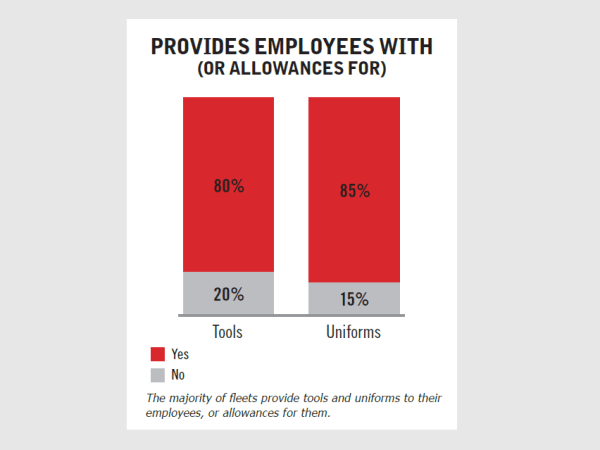
The majority of fleets provide tools and uniforms to their employees, or allowances for them.
Source: Government Fleet Research
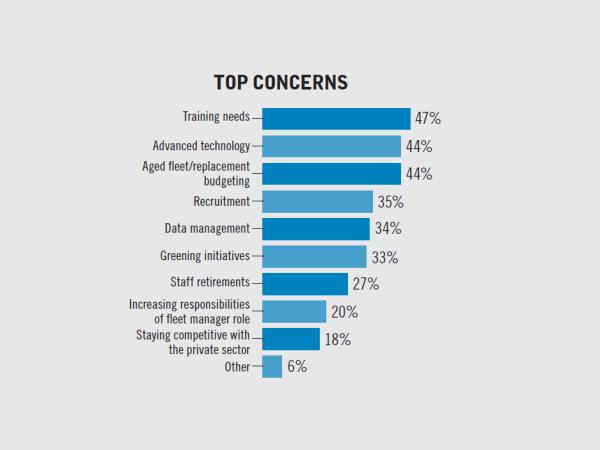
Respondents were asked to choose their top three concerns, and the top three from this year also ranked highest last year. Other concerns include facility adjustments, budgeting and rates, and relationships with a new administration and with other public agencies. (More than one response possible).
Source: Government Fleet Research