




Charts: Salaries & Retirement 2017
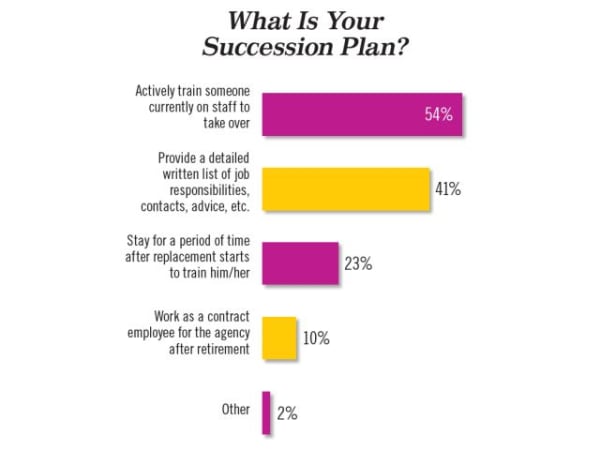
Of those who have a succession plan, the most common succession planning method is training someone currently on staff to take over. Ten percent of respondents said they plan to work as contract employees for their agencies after retirement. Those who said they do not have a succession plan are not included in this chart.
(More than one response possible.)
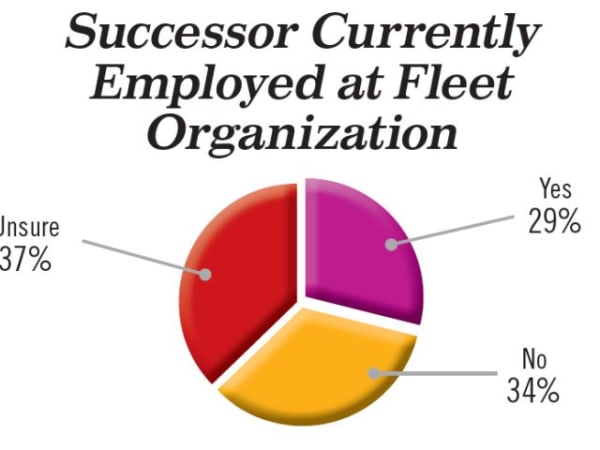
Respondents were asked if they believe their successor is already employed at their operation; less than one-third said yes.
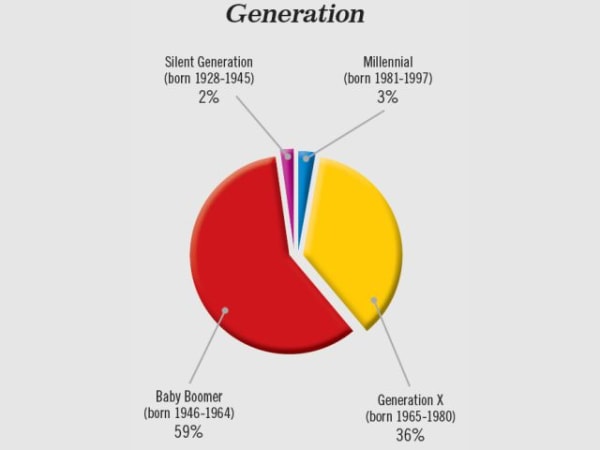
More than half of respondents said they are baby boomers.
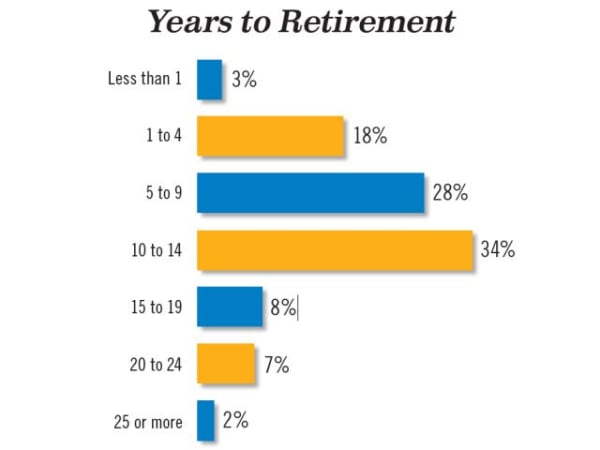
More than 20% of respondents said they plan to retire in less than five years.
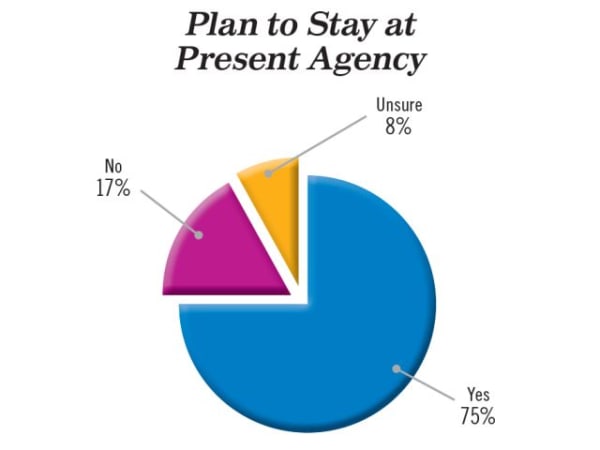
Three-quarters of respondents said they plan to stay at their present agency until they retire or leave the industry.
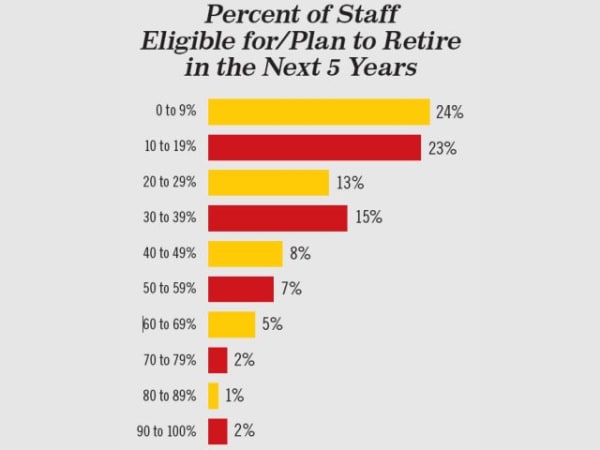
About 17% of respondents believe at least half their staff members are eligible for or plan to retire in the next five years.
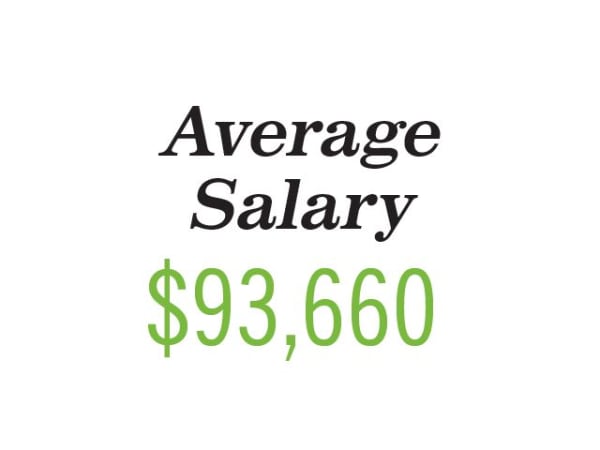
The average salary this year is nearly 11% higher than the average respondents reported two years ago, which was $84,694.
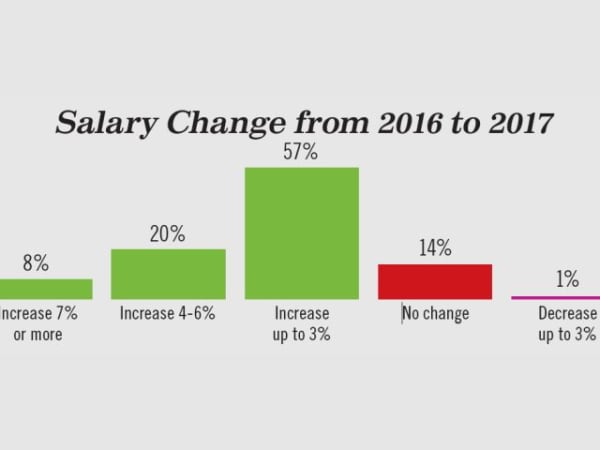
Eighty-five percent of respondents reported an increase in salary in 2017 from the prior year compared to 79% in 2015. In addition, the increases reported were higher.
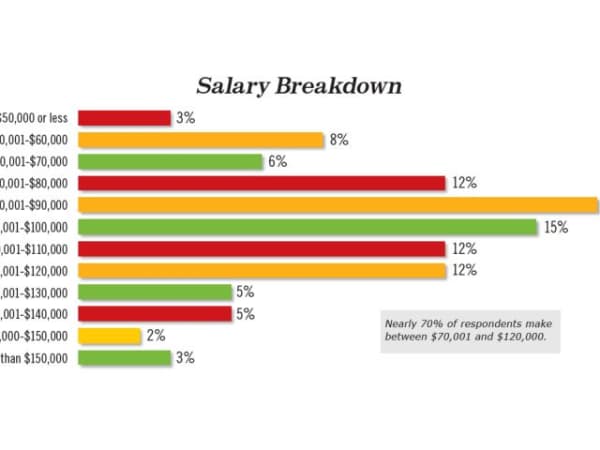
Nearly 70% of respondents make between $70,001 and $120,000.
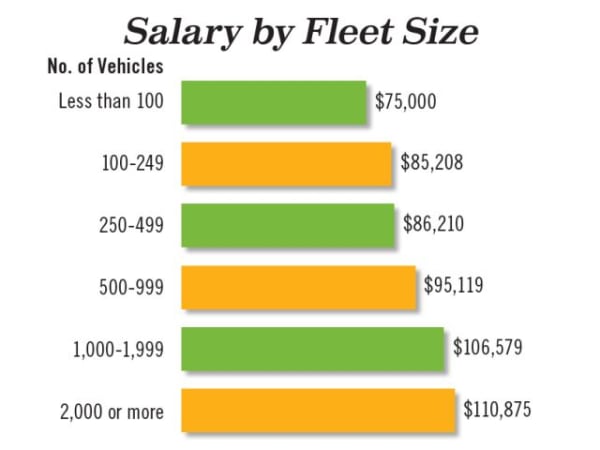
Average salary loosely correlates with the number of vehicles managed.
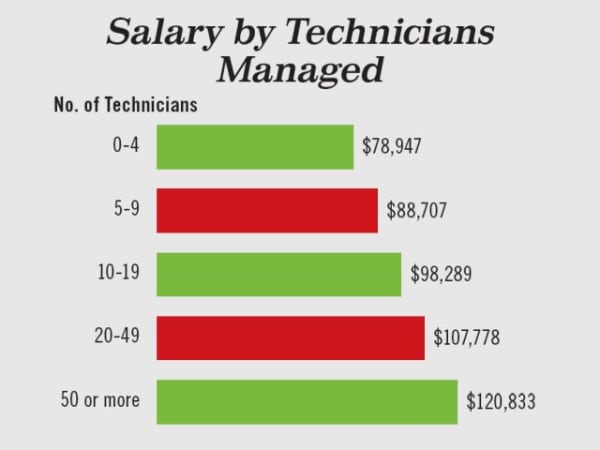
Those managing more technical staff are paid more on average.
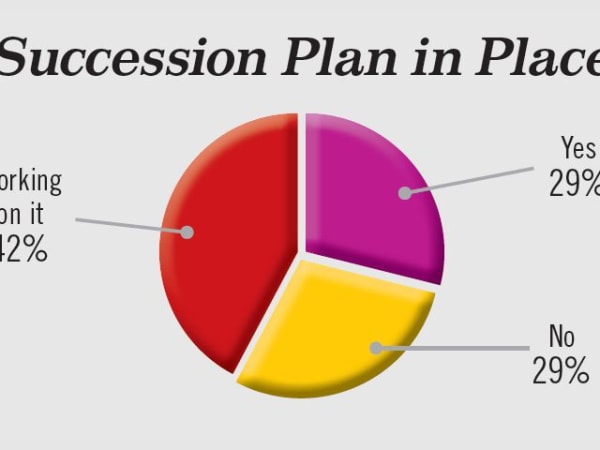
More than two-thirds of respondents said they have a succession plan in place or are working on one, slightly higher than survey results from 2015.