


 MENU
MENU SEARCHMENUSEARCH
The City of Fort Lupton (Colo.) has converted its entire police fleet to run on compressed natural gas (CNG), and added several other CNG-powered trucks for Public Works and other city departments.
Read More →Orange County, Fla., has approved a new refuse collection program that mandates haulers to begin using compressed natural gas (CNG) vehicles.
Read More →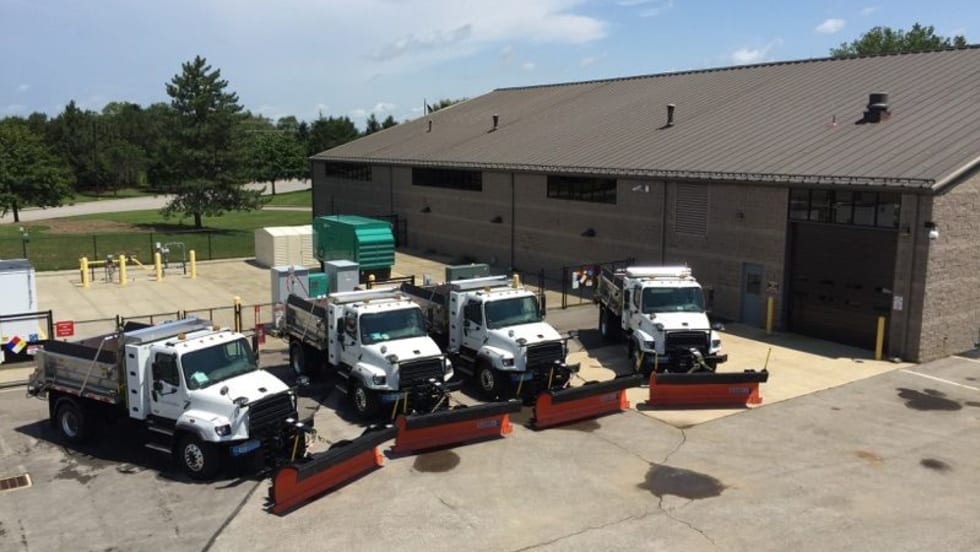
The City of Dublin, Ohio, recently received its first four compressed natural gas (CNG)-powered Freightliner snow plow trucks, bringing its CNG fleet to 63 units.
Read More →
While some types of “green” vehicles have been around for a while, newer technologies on vehicles make resale value difficult to estimate.
Read More →The City of Grand Junction, Colo., has finished a $2.8 million compressed natural gas (CNG) project that has been in the works for a decade, the city has announced.
Read More →Ohio State University is building a $2.5 million compressed natural gas (CNG) fueling station to power its four CNG buses and additional vehicles that will be converted to run on the natural gas.
Read More →The City of Cincinnati has struggled to sell off a $350,000 compressed natural gas (CNG) refuse truck that it purchased in 2013 and couldn't use, after a deal to sell the vehicles to the City of Lexington, Ky., fell through.
Read More →The City of Grand Junction, Colo., has jointly invested in a biogas conditioning system and pipeline project that will provide a biogas-based fuel to municipal fleet vehicles, including 30 refuse trucks, dump trucks, pickups, and sedans.
Read More →A green fleet report suggested that transitioning to compressed natural gas heavy-duty vehicles could potentially save the City of Rockville, Md., 45-50% in fuel costs over diesel.
Read More →The Dane County, Wis., fueling station, located at a landfill, will help generate 250 gasoline gallon equivalents (GGEs) of compressed natural gas (CNG) per day. This CNG fuel will be used for County vehicles.
Read More →