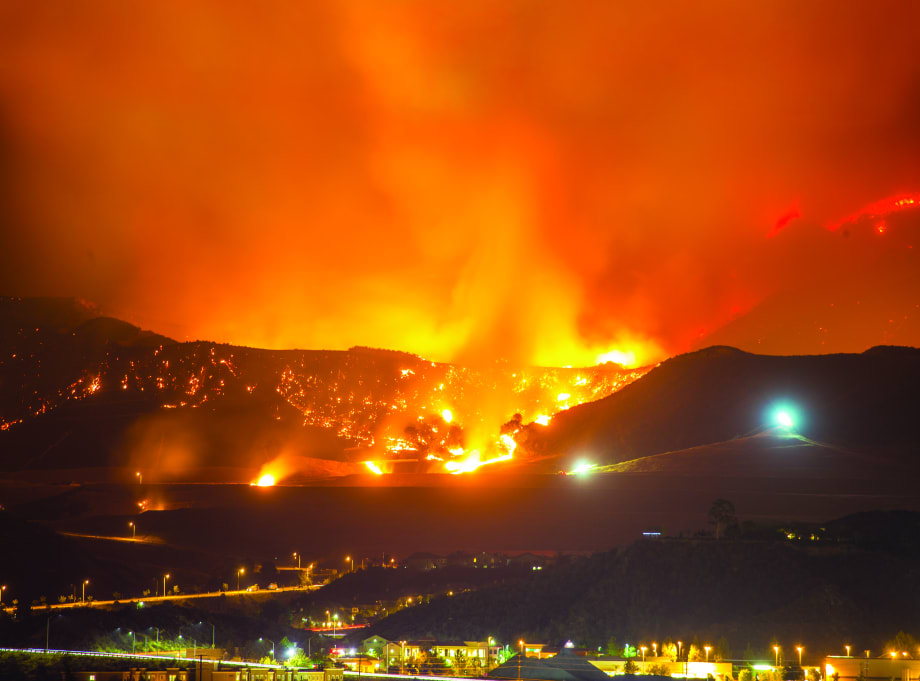
Beginning on Oct. 8, 2017, multiple wildfires swept through Sonoma, Napa, and Lake Counties in Northern California. The fires were 100% contained in the first week of November, but not before 44 people lost their lives, more than 114,000 acres of land had burned, and 5,300+ homes were destroyed, along with a current damage estimate of $9 billion in insurance claims. The disaster is now recognized as the costliest group of wildfires in U.S. history in terms of insured loss.
As the the fleet manager for the County of Sonoma, I am part of a team of 23 that comprises the Fleet Operations Division of the General Services Department. Our division has earned 31 local, regional, state, and national awards over the past 10 years, including Sonoma County’s Louis “Pete” Peterka Emergency Management Award in 2015.
Here are a few lessons my fleet operation learned during and after the fires:
Cellular Communications Can Be a Challenge
It is easy to take for granted the reliable cellular service you have prior to an emergency. Seventy-seven cellular sites were destroyed or damaged by the fires, which created communication problems during the first week until repairs and the use of mobile cellular units were in place. We found one cellular service provider to have better coverage during the initial week and a half of the fires than another major provider, but then the quality of coverage swapped between the two major providers.
Towing Service Contracts Come in Handy
We discovered that towing service providers quickly became unavailable because of the unusual need to move generators throughout the county to power lights and facilities. Bad winter storms can stretch towing service providers thin in our county, but the fires created an additional load on their services beyond what we could have predicted.
Make Sure You’re Stocked Up on Tires
We quickly ran out of tires for patrol vehicles because of deputies having to drive over debris. Because these vehicles operated in life-threatening areas, the first responders had to drive on a flat tire until they were out of harm’s way at the expense of needing to replace a tire (or several). A benefit of having a single-source parts management contract was the vendor was able to quickly acquire a large amount of tires from any source that had them in inventory.
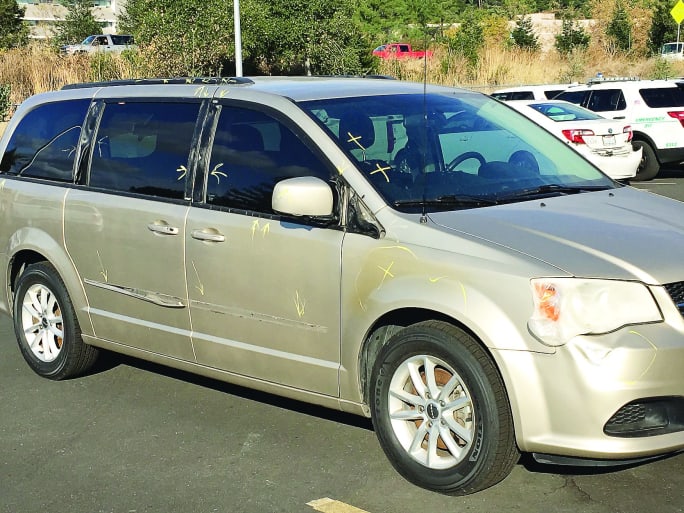
A crucial step in recovery is identifying damage. That damage may not always immediately apparent.
Photo: Sonoma County
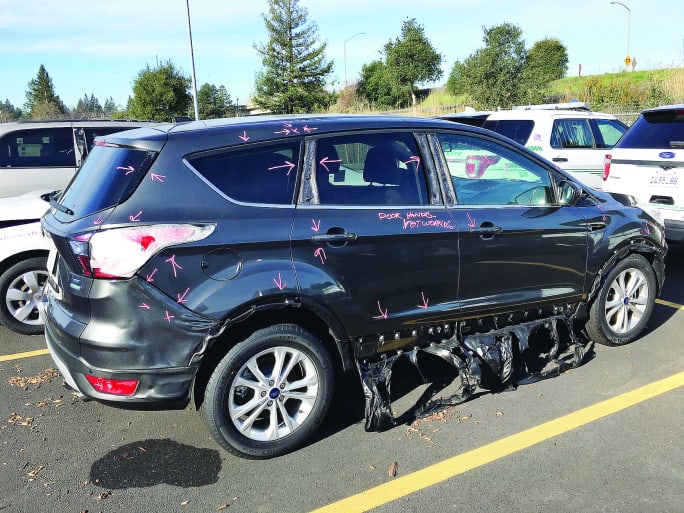
Photo: Sonoma County
We found several vehicles that showed no signs of contact with fire, but were total losses from the intense heat that cracked the paint; melted plastic bumpers, plastic headlights, or interior trim panels; and caused the laminate vinyl layer in the windshield and side windows to bubble apart. If the interior of a vehicle smells like smoke, you will never successfully get the smell out of all of the fabrics, plastics, or vinyl materials.
Be Flexible and Adapt
A receive, store, and supply (RSS) warehouse was needed for all of the different commodities that would need to be distributed during and after the fires. We had a plan in place to utilize our old light equipment fleet maintenance facility, but as the direction of the fires closed in on our county center, we had to quickly adapt to another location. We used our heavy equipment fleet maintenance facility as an RSS warehouse and our team quickly responded as a warehouse manager, inventory control workers, forklift operators, material handlers, and delivery drivers to meet logistical fire response and shelter needs. An unprecedented 48 evacuation shelters were opened within 48 hours.
Be Strategic with Fuel Deliveries
We quickly went from trying to schedule fuel station deliveries based on burn rates (no pun intended) to having one truck arrive every day and drop as much fuel as would fit into the tanks. A majority of mutual aid vehicles began arriving 48 hours after the start of the fires, and fuel consumption quadrupled quickly. At times, law enforcement escorts had to be arranged for the fuel trucks to move efficiently through impacted delivery routes.
Mutual Aid Vehicles Will Need Maintenance Too
Sonoma County was very fortunate to have an enormous amount of mutual aid arrive from other agencies quickly. The outside agency vehicles had the same problems with tires, air filters, and fluid levels as our own fleet, but we did not have agreements in place to service or perform repairs on their vehicles. Our County Counsel department was quick to react and establish agreements so we could keep the mutual aid vehicles in service to help protect our community.
Don’t Forget Old School Processes
Both of our maintenance facilities were without power, phones, internet, Wi-Fi, and natural gas for heating for up to a week. Tracking the issuance of motor pool vehicles, fuel usage, maintenance and repair work, inventory control, and working hours all had to be done manually without the use of computers, printers, or copy machines. Proper documentation is critical for potential cost reimbursement from the Federal Emergency Management Agency (FEMA) and even though everyone reacted quickly to the disaster, we had to slow down and ensure we had all of the necessary data to enter into our fleet management information system (FMIS) at a later date.
Cabin Air Filters Are Just as Important as Engine Air Filters
The first responder vehicles that we serviced and repaired during the fires had cabin air filters plugged just as badly as the engine air filters. These vehicles were traveling into the heart of the fires, and having clean air in the cabin was a must for the men and women protecting life, property, and the environment.
The Work Does Not End When the Fires Do
Some of the challenges we have begun to overcome as we transitioned operations from emergency response to recovery include the discovery of damage on vehicles used during the fires, input of collected manual data into our FMIS, data collection reconciliation, insurance claims processing, inventory replenishment, the separation of emergency operations labor billings from the fleet budget, lost billable hours calculations, a temporary increase in fleet size due to recovery operations staffing and vehicle needs, and working with team members who lost their homes.
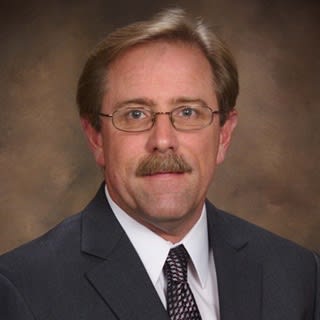
About the Author
David Worthington is the fleet manager for the County of Sonoma, Calif. He can be reached at David.Worthington@sonoma-county.org.