You get what you pay for, the old saying goes, and for government fleet managers purchasing new equipment, lifecycle cost analysis can be a way to make sure they don’t pay too much.
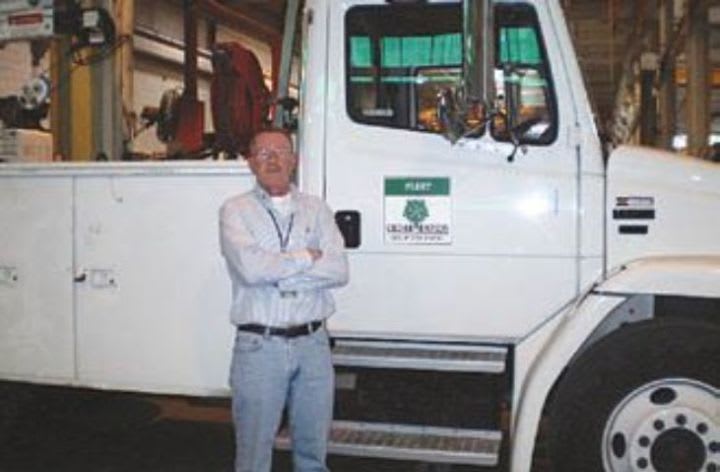
Christopher Amos, commissioner of equipment services for the City of St. Louis, uses lifecycle costing routinely and advocates its use by every government fleet manager.
"It’s a little more work up-front to write specs with lifecycle cost elements in them; however, the improved quality and savings in the long run makes it worth the effort," Amos said.
While the decision to buy, lease, or rent vehicles or equipment is easier when based on lowest net acquisition cost, Amos noted, "That is the lazy person’s out and not what we get paid to do. When there are legitimate differences between competing products that can be defined in the specifications and quantified in the bid evaluation process, then governments are obligated to make the extra effort to do so."
"Fleets that don’t put forth the extra effort deserve what they get — which is usually junk," Amos said. "Good quality, fuel-efficient, low-emission vehicles and equipment are rarely the cheapest to acquire, but are often the most affordable based on lifecycle costs."
Lifecycle Costing Defined
Amos defined lifecycle cost analysis as a modeling technique that considers all fixed and operating expenses of a vehicle or fleet function from acquisition to disposal. Most commonly, he said, "It is a helpful tool when trying to decide which of competing vehicles to acquire, the optimum replacement point for a classification of vehicles in a given application, where to best employ alternative fuel or hybrid vehicles in the fleet, and whether to perform functions in your own garage or outsource them."
Amos, with Ruth Alfson, manager of the Fleet Center of Excellence, Serco Group, Dayton, Ohio, teaches the ins and outs of lifecycle cost analysis as part of the NAFA Fleet Management Association education program. He emphasized a major reason for incorporating lifecycle cost analysis in the purchasing process: the effect of depreciation.
Amos said depreciation is the primary fixed cost, "The 800-lb. ‘gorilla’ in the room." Fleets that don’t use lifecycle cost analysis are ignoring the gorilla, he said.
Beyond that, operating costs such as fuel economy, maintenance, and the cost of downtime mitigation (e.g., spare units, rentals) or "opportunity cost" of downtime are also important to controlling fleet costs, Amos said.
Purchasing equipment on the basis of lifecycle cost analysis is an idea that sometimes runs into resistance from supervisors, Amos and other government fleet managers agreed.
"Fleets sometimes have to get past a narrow definition of ‘low bid’ with their supporting procurement officials," Amos said, noting that the term "low bid" is specifically defined by most U.S. states and Canadian provinces.
"The key is that these lifecycle cost elements have to be written into the bid specifications along with valid evaluation criteria to be used in selecting the lowest lifecycle cost bid," Amos said.
When buying major classes of vehicles or equipment, Amos includes "at least some lifecycle cost elements in the specifications to be the tie-breaker between the bids. In fact, I use lifecycle costing to establish fleet standardization wherever possible to further reduce the cost of maintaining and repairing the fleet and training the operators."
Mike Wilson, fleet services manager for the University of Iowa in Iowa City, said of lifecycle cost analysis, "For us it’s a state definition: purchase price plus cost of fuel minus resale value."
Iowa state law requires the use of that lifecycle cost formula in the purchase of vehicles, Wilson said. The lowest lifecycle cost is regarded as the low bid. Asked whether there were any variations or exceptions, he said, "If there is a non-American-made vehicle, we have to add 5 percent to the lifecycle cost — a requirement of state law designed to encourage the purchase of American-made vehicles."
[PAGEBREAK]
Building from the Ground Up
As the first fleet services manager in the history of Cedar Rapids, Iowa, Dennis Hogan is in a position to build a fleet operation from the ground up.
In the past, according to Hogan, all Cedar Rapids’ vehicles were departmentally owned, and each department purchased, operated, maintained, repaired, and sold its vehicles.
That system changed when the city government dissolved its commissions and hired a city manager who, among other moves, opted for a consolidated fleet operation. Hogan was hired last year to implement the consolidation, and lifecycle cost analysis is integral to getting the job done, he said.
"Lifecycle costing is one thing we have to employ," Hogan said, in part "because we have no real feel for what we’ve done in the past or why we’ve done it."
Without it, Hogan said, he would be making decisions based on low price "that in actuality could cost us significantly more over the life of the equipment."
Detailed knowledge of the intended use of a vehicle is crucial to creating a useful lifecycle cost model, Hogan said. "Obviously, some departments are harder on equipment than others," he said. "I give weight to those maintenance costs accordingly."
Evaluating the maintenance for a particular vehicle might not always be a straightforward matter, Hogan indicated. He factors in whether the vehicle was serviced by an in-house garage or by local contractors.
"If it’s serviced by an internal garage then we know what kind of work is being done," he said. "With an outside contractor, we are in a negotiated agreement with them, assuming they’re doing the kind of work that we anticipated."
Dave McFarland, former fleet coordinator for Rapid City, S.D., is a believer in lifecycle cost analysis who said he understood why it sometimes runs into opposition.
"Lifecycle costing can be controversial because you’re looking at not only the resale value, but also owning and operating costs, and sometimes that can be argumentative," said McFarland, who worked to implement lifecycle costing in Rapid City’s fleet. The program had not been adopted by the time he moved to a private sector job this year.
McFarland noted because of the variables involved, individual participants may arrive at different lifecycle costs for the same piece of equipment.
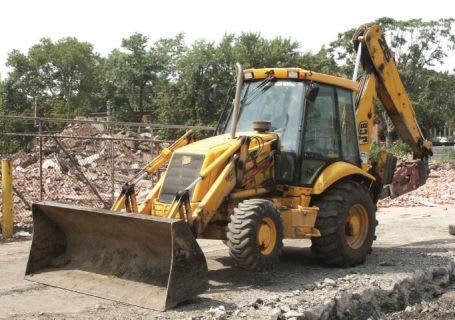
For example, going on the Internet and looking at auction results for a certain make and model of equipment might actually muddy the picture instead of clarifying it. Even if the specs for two vehicles or pieces of equipment are exactly the same, their applications and service histories are likely to differ, affecting estimates of the equipment’s worth.
"There is going to be a variation," McFarland said. However, there are ways of dealing with such challenges. For example, when he was working in the public sector looking at auction results for a piece of equipment, McFarland said, "I used an average. I tried to find as many examples as I could for a certain year, make, and model of a machine."
Generally, McFarland said, using lifecycle cost analysis is more involved and more difficult than purchasing based on the lowest bid. "It’s definitely harder," he said. "There’s a lot more work involved. You’ve got to have a number of people on board that understand the real concept for it to work."
McFarland, like Amos, Hogan, and Wilson, finds lifecycle costing worth the effort.
"If it’s done right it can be a very valuable tool. I’m a firm believer in it," McFarland said.