




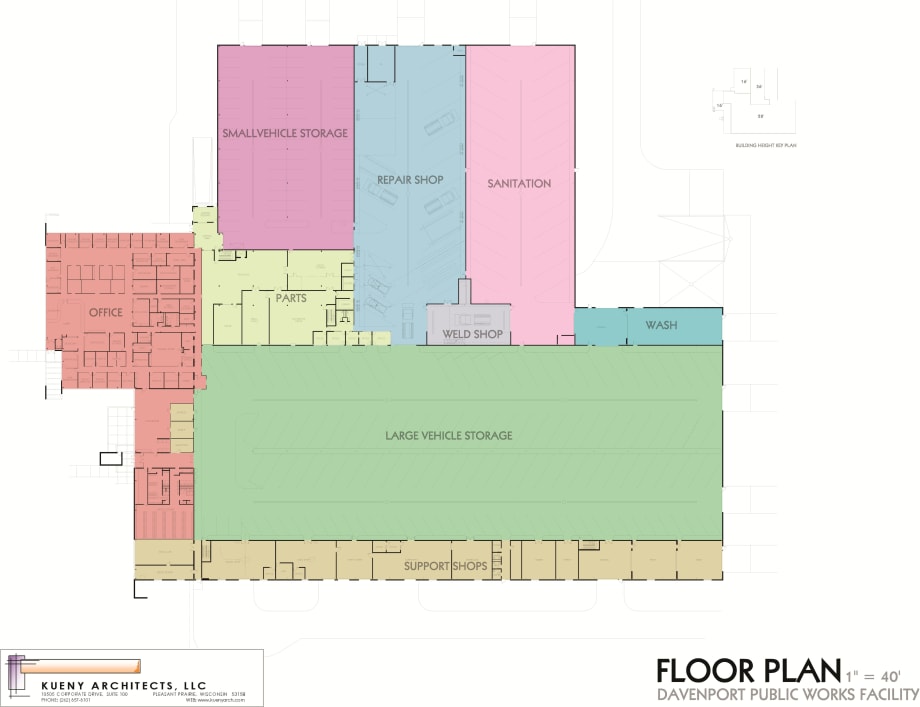
The City of Davenport, Iowa's Public Works fleet facility was programmed and designed by Roger Thompson and Jon Wallenkamp.
At A Glance |
When designing a fleet facility:
|
The design of a fleet facility can help or hinder day-to-day fleet operations. Fleet managers looking to build a new facility must take into account various considerations, from the large-scale to the minute.
Roger Thompson, president of Effective Management Decisions, works as a special municipal operational planning consultant with many architectural and engineering firms. During his 16-year tenure as a fleet management consultant, Thompson noticed, "People were working in antiquated facilities or facilities designed by [someone who] didn't understand operations. They designed problems as opposed to correcting problems."
One City asked him to make recommendations to its architect in planning a new fleet facility, and since then, Thompson has worked on the design of more than 80 fleet facilities across the U.S. and Canada.
Choosing the Right Location
"Figure out what you're going to build before you buy a site," Thompson advised. He has worked with facilities wherein land is bought for a good price, and the planning takes place before anyone realizes the site is too small. He's also seen situations with terrible line of sight coming in and out of the site, particularly dangerous for large trucks that take a long time to accelerate and decelerate.
The facility should also be centrally located. "Having vehicles and equipment [travel] long distances to get to the core service facility can cause a municipality millions of dollars over time," he said, especially with the rising price of fuel.
Thompson also advised fleets to get other departments in on the project. By seeking insourcing and partnerships with other departments, such as police, student transportation, public works, or airport, fleet services can also ask for assistance in funding facility construction.
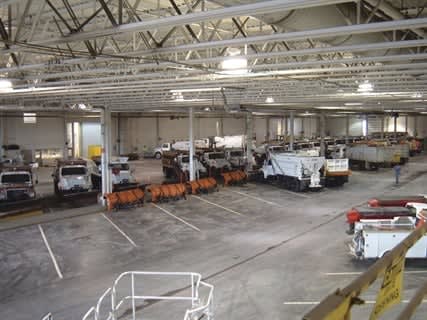
Kueny Architects worked on the planning and design of the City of Davenport, Iowa's Public Works fleet facility.
Implementing New Facility Considerations
When designing a facility, Thompson recommended looking at current operation functions and possible future functions. "People were not taking into account changing technology, and I still see this today," he said. "Nobody's thinking about CNG [compressed natural gas] and the building facilities that will have to be altered."
As more and more facilities turn to natural gas for refuse and transit fleets (as well as other vehicles), buildings must be adjusted to be able to handle lighter-than-air gas. To allow room for gas to accumulate in the event of a catastrophic leak, all roof-mounted electrical systems and wirings must be mounted one foot lower than normal to prevent roof blowout. In addition, he recommended blowout panels - in case something happens, individual panels blow out rather than lifting off the entire building roof.
Another consideration regarding natural gas use is setting up the natural gas line for a future CNG compressing station, even if plans are not in the near future. "If you're going to build a new site, why not put it in now rather than a few years along, [when you have to] rip up the site?" Thompson explained. A smaller up-front cost in anticipation of natural gas use will result in large savings later on. He also said to allow space for a compressing station that can compress gas on-site.
Match up the number of mechanics to the number of bays. While some may think extra bays allow for expansion, this can cut into operational cost. "Many operations work on an hourly rate, and that hourly rate is burdened with the space fleet occupies," he explained. "If the space is too great, the hourly rate can go up, and it makes them non-competitive to the private sector."[PAGEBREAK]
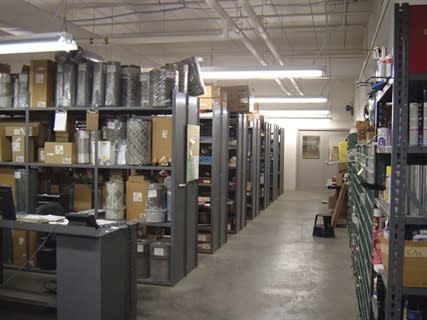
The City of Davenport, Iowa's 240,000-square-foot facility includes a repair shop, indoor storage for 205 vehicles, and a parts room.
Exploring Commonly Overlooked Issues
Thompson has seen trends in over-looked issues when building a facility. "Nobody's looking at all the heavy lifting," he stated as an example. For a facility that houses CNG transit vehicles with components on the roof, he suggested a bridge crane in the shop to allow mechanics easier access, expediting repair and eliminating the need to lift heavy components.
Thompson has also seen more nitrogen tire filling stations installed at fleet facilities, used to improve fuel efficiency. Some facilities are installing rotary compressing stations that are open to the public, which allows the municipality to apply for grants.
Other common issues are small ones that altogether can make a big impact on fleet operations. A well-designed facility should include:
True-color lighting for mechanics to accurately see color wires.
Floor drains by the overhead door if the facility has direct line access, and down the center in a drive-through configuration. If nearer to the vehicles, the drain may become collectors for dropped bolts and tools.
Replace some grates with steel plates to allow mechanics to roll toolboxes across the floor.
Clearance from the bottom of a bridge crane to the floor of the shop should be a minimum of 26 feet for maximum crane performance.
If considering two bridge cranes, know that building cost will increase, as the structure must be capable of supporting whatever the cranes pick up. From a cost-benefit perspective, one is usually enough.
Go with a premium overhead door. "They're much more expensive, but it's worth it in the long run," Thompson said, adding that overhead doors get the most bashing. Options include high-speed roll-up doors and rubber membrane doors that reduce damage and maintenance.
For comfortable floor heat, consider creating hydronic heat by burning waste oil, supplemented by gas (depending on the amount of waste oil).
For fleets that maintain salt spreader equipment, the reclaim units of vehicle wash systems should be configurable to be turned off to use fresh water. Thompson said when numerous salt trucks come through, the reclaim system may not be able to handle all the salt and will begin spraying the trucks with salt water. Purchase a reclaim system with a manual or automatic discharge valve.
Rainwater harvesting in rainy climates can be used for truck washes as makeup water. Keep things simple by using gravity feed, Thompson suggested.
Determining LEED Certification Level
There's good news for fleets looking to construct a LEED-certified facility. (LEED is an internationally recognized green building certification system.) "It's very difficult to not build a LEED-certified facility anymore because most of the construction materials you buy are sustainable products - right down to the carpeting that you put in the facility," Thompson said.
Other ways to make a building "green" are rainwater harvesting, generating power from the sun, and using natural light. It's also important to keep in mind that there are higher levels of LEED certification: silver, gold, and platinum. Thompson warned, however, that attempting to get to these levels may require huge costs. "There are a whole host of things you can do to make your facility green, but you don't want to spend all your money to get to the platinum service," he said.
Other "green" techniques can lead to more hassles than help, he added. He cited garages with no overhead doors to save on mechanical system operation - the municipality had to build an outer perimeter fence to secure the facility. Some shops with no drains create ponding areas that divert chemicals and water, but if there is a spill, cleanup takes longer.
Updating Fleet Facilities
Fleets without the backing to construct a new facility may get the go-ahead to renovate or update an existing facility. However, Thompson warned, "Renovating facilities can sometimes cost you more money than building a new [facility]."
This depends on the age of the facility (some still have asbestos) and what needs to be updated. Thompson, with Architect Michael Hicks from Weston and Sampson Engineering and Architect Jon Wallenkamp from Kueny Architects, who work with Thompson on facility projects, recommended an energy audit of the facility. Nine times out of ten, this will lead to a change to more energy-efficient lighting, such as LED, Thompson said.
Wallenkamp said an auditor would do a complete inventory of the systems in place and also run a report showing energy usage levels and code compliance. Wallenkamp also helped produce a building audit form that allows user group input from various employees ranging from maintenance technicians to office workers.
Auditors look at mechanical systems to see if carbon monoxide and carbon dioxide sensing systems are in place. Other steps include bringing the building up to OSHA code and looking at lubrication distribution systems.
An auditor would study the building structure as well. "If you're doing renovations, you should know if it's structurally going to work," Wallenkamp said.
"If it's not cost-effective to renovate your facility, your cheaper option [may be] to build a new facility," Thompson and the architects stated.
Sources:
Roger Thompson, president, Effective Management Decisions
Jon Wallenkamp, architect, Kueny Architects, LLC
Michael Hicks, architect, Weston and Sampson Engineering