On learning of his Hall of Fame induction, Craig Croner could only do what he does best: give thanks to those who helped him along the way.
Croner said he felt “really thrilled and humbled at the same time.” He credited the people in the industry who supported him and singled out John Hunt, a close friend and mentor figure who died a few years ago. “I really looked up to John,” he said. The recognition prompted him to pause and reflect on everyone who helped him along the way.
Ad Loading...
In an industry built on relationships, service, and resilience, Croner stands as a reminder that strong leadership is rooted in the people and their stories.
“The plaque, it may have my name on it, but it's really about everybody in my career that helped me along the way,” he added.
We sat down with Croner to find out more about how his legacy came to be.
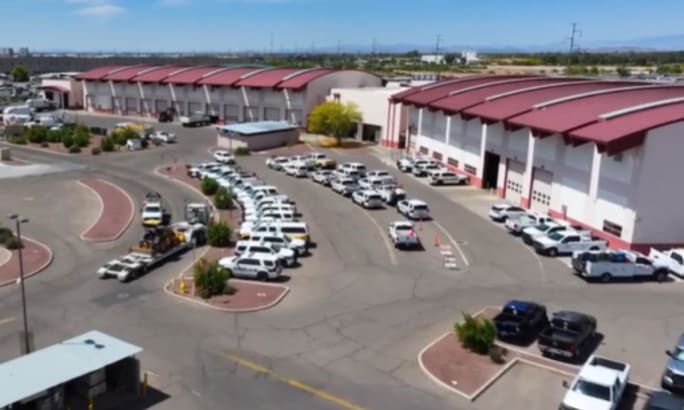
The facilities at Glendale, Arizona.
Credit: Glendale, Arizona
Developing A Public-Sector Mindset
Croner’s influence in government fleet management is grounded in a deep understanding that the public sector is fundamentally different from private industry. Having worked in both environments, he has seen firsthand how priorities shift depending on who you serve.
In the private sector, decisions often revolve around profitability and convincing a single owner or executive to approve a budget or funding. In government, there is oversight, many competing interests, and levels of leadership involved in any decision you make as a fleet manager.
Ad Loading...
That is, what Croner says, separates private from public fleet operations.
He believes that having a Certified Public Fleet Professional (CPFP) is essential for any government fleet manager. Croner, who earned his CPFP credential in 2008, sees this certification as part of the framework that reinforces accountability, transparency, and strategic decision-making in service of the public trust. "It definitely makes you a little better informed in the space of government fleet," he said.
He added that it is particularly helpful for understanding the complexities of government procurement.
“When you think about government fleet, your focus really should be from a taxpayer perspective. Are you being a good steward of the tax dollar?" he asked.
That mindset is built into how cities buy. In municipal operations, procurement involves multiple layers of oversight and strict regulatory frameworks. Understanding how to purchase equipment and why those safeguards exist is critical.
Ad Loading...
“As you study for that certification, it brings everything into alignment with how you procure something, and there's a big difference in procurement between what you do in the private sector and what you do in the public sector,” Croner said. “There are rules and regulations that we have to follow that the private sector doesn't have to do.”
Prioritizing Data Over Emotion
Lifecycle cost analysis, repair and maintenance data, and performance metrics guide Croner’s replacement strategies and capital planning. By building strong business cases grounded in evidence, he has been able to best present their needs to the officials and leaders who make budgeting decisions.
This philosophy guides his management style.
“If I'm making a business decision, I really want to remove the emotion out of that decision. And the way you do that is with hard facts,” Croner noted.
But data alone isn’t enough. Municipal fleets operate amid competing interests like emergency services, utilities, sustainability initiatives, and budget pressures, all of which vie for limited resources.
Ad Loading...
Croner describes the budget as a pie that rarely grows and sometimes shrinks. The challenge lies in allocating that pie in a way that balances urgency, value, and long-term strategy.
Croner’s role remains consistent: to provide comprehensive, objective data and ensure decision-makers understand the implications from every angle, even when external policy priorities influence decisions.
A Reminder: Beware the Shiny Objects
Over the years, as technology has evolved, so has Croner’s approach to budding tech. His attitude toward adopting new technology has shifted from the eager early adopter to the disciplined strategist.
“When I was younger, I used to want to be the first to do anything… be on that cutting edge,” he reflected. “From my standpoint, what I like to do is I like to look at it and then pilot technology and then get a really good understanding of what the technology is going to do. What's the long-term strategy?”
Croner tackles these challenges by “starting with the end in mind.” This philosophy is central to his success as a fleet manager, and he strives to instill that same process into his team.
Ad Loading...
“'Start with the end in mind' is what I try to tell my people. If everything were perfect, what would the end goal be once it's implemented? What are the objectives and the goals you're trying to achieve?” Croner explained. “So, if you start with that in mind as you work towards implementation on a small scale, you can start to tease out some of the objectives, and you can see if that's going to pan out or not.”
Today, he pilots technology on a small scale with clearly defined objectives and evaluates return on investment over a three-year horizon. The goal is always “low cost, high reward”.
At Glendale, Croner’s disciplined approach has led to meaningful innovation. The city implemented Geotab telematics and integrated it with its FASTER fleet management information system. The integration now enables automated vehicle walk-around inspections that can generate work orders in real time, improving responsiveness and reducing administrative burden.
"The software implementation between the two vendors is done; however, we are just starting to roll it out operationally to our Solid Waste and Transit bus teams. Operator training should start in March," he clarified.
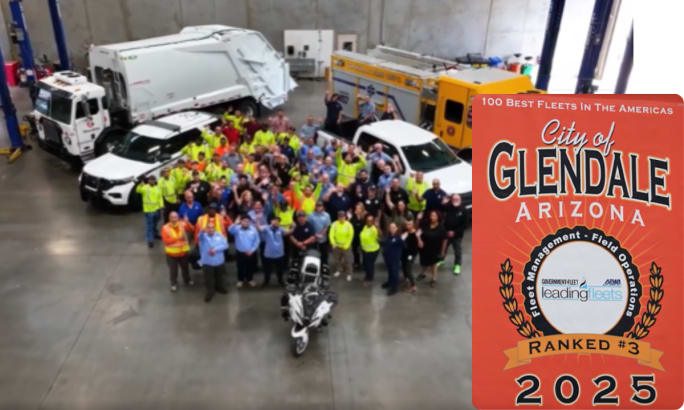
The team at Glendale, AZ.
Credit: Glendale, Arizona
Leading Through Trust Across the Workforce
Perhaps the most defining aspect of Croner’s leadership is his ability to build trust across a diverse workforce.
Ad Loading...
He recalled a time when he implemented GPS as a budding technology; he understood that operators might perceive it as intrusive.
“The first thing an operator is going to say is, 'well, you might as well put an ankle bracelet on me,'” he acknowledged.
Rather than dismiss concerns, Croner reframed the conversation with real-world examples. In one case, GPS data helped clarify fault in an accident, protecting employees from unfair blame. In another, it enabled a supervisor to locate a code compliance officer who had suffered a heart attack, providing critical peace of mind to his family.
By sharing these stories, Croner helped shift the narrative of GPS from surveillance to GPS as a means of increased safety and support.
His approach to culture follows the same principle. During his first six months in Glendale, he spent time in the shop getting to know his team and understanding what motivates them.
Ad Loading...
“People appreciate somebody who actually cares about them on a personal level,” he said.
That investment in people has fostered a culture where goals are met not through pressure, but through shared purpose and collaboration.
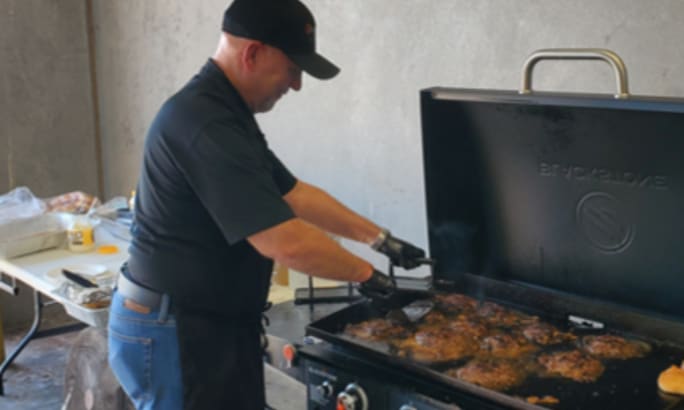
Craig Croner is seen here commanding the grill.
Credit: Glendale, Arizona
The Future is Still Human
Looking ahead, Croner sees AI as both a challenge and an opportunity for municipal fleets. While AI may automate certain functions, he remains confident that human judgment will remain central.
“I think that's going to be the biggest challenge to see how you kind of separate all the noise from what's really important and where that can be implemented with the lowest cost, highest reward. I think that's going to be the biggest challenge in the fleet for the next 5 to 10 years,” Croner said.
For Croner, the future of fleet management isn’t about replacing people with technology. It’s about equipping people with better tools, clearer data, and stronger strategies.
Ad Loading...
2026 Public Fleet Hall of Fame Nominations Are Open
Peers can be your shortcut. Conferences and associations show how other fleets win resources and improve uptime. So what are the top performers doing differently?
Work Truck, Automotive Fleet, and Government Fleet have partnered to conduct a salary survey to determine the average salary for a fleet management position in commercial and public sector fleets.
Hybrids bridge the gap between ICE vehicles and EVs, making them a smart choice for fleets that want to reduce emissions but aren’t ready to fully electrify. Hybrids, which are powered by internal combustion engines and electric motors, capture the benefits of electric power without the barriers many organizations find challenging.
When it comes to the public sector, outcomes are usually driven by three areas fleet leaders can actually control, but it’s combining these into one operating model where operations see the most success.
Limited wash locations can increase travel time, fuel costs, and admin work for fleets. Here’s how one government fleet expanded access and simplified operations.
To keep you in the loop, this episode is a quick reset on what mattered during the past month, from how to turn award season into a practical self-audit to what “leadership” looks like.