
With approximately 21,000 vehicles in its fleet, the State of Georgia operates one of the largest government fleets in the country. As such, the State must constantly reassess fleet policies, procedures, and vendor contracts in an effort to stay up-to-date on the best and most cost-effective programs and partnerships available.
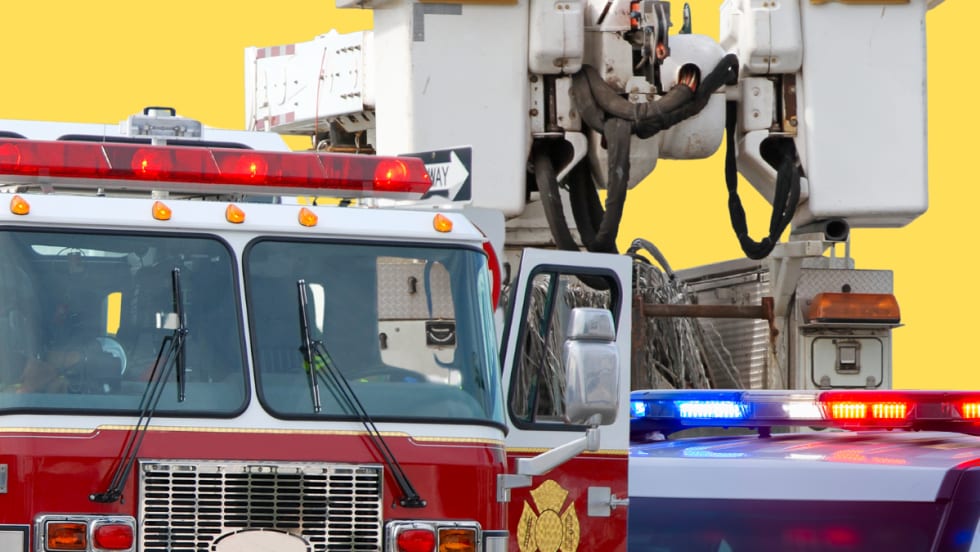
Each of the 161 State agencies is responsible for the care of the State vehicles assigned to them, which include sedans, pickup trucks, police units, fire trucks, ambulances, tractor-trailers, and other highly specialized vehicles. Approximately 143 State agencies utilize fleets that range from one vehicle to 4,500. The agencies with larger fleets include the Georgia Department of Transportation, Department of Corrections, and the 36 colleges and universities under the title of Board of Regents.
While State employees drive fleet vehicles to do their jobs, vehicles are also occasionally provided to non-profit entities and their employees.
Fleet Management Partnership Leads to Significant Savings
After implementing several loss-control measures in 2009, the State's Department of Administrative Services' (DOAS) Office of Fleet Management (OFM) sought to further reduce costs, this time in the area of vehicle repair. These initiatives stemmed from the OFM's departmental mission to house and utilize data to drive down the cost of maintaining its fleet.
"Realizing that everyone is struggling with budget problems, the difficult task is to promote investment. The key is not the expense, but rather the return on investment," said Ed Finnegan, director, Office of Fleet Management for the State of Georgia.
One such State investment included signing up with fleet management company Automotive Resources International (ARI). While the partnership led to cost savings initially, the DOAS/OFM made the decision to renegotiate its contract to better mesh the programs offered by ARI with the needs of the State agencies.
The new ARI agreement is now a "statewide contract," leading to a savings of thousands of dollars for agencies involved in writing bid specifications and managing evaluation processes associated with initiating RFPs, RFIs, and RFQs. And because the State self insures and has an in-house claims office for all auto exposures, the claims handling section and the subrogation program were excluded from the new agreement.
[PAGEBREAK]
Georgia Expands Fleet Management Partnership to Additional Vehicles
The new need-specific partnership between the State and ARI has led to approximately one-third of the State's vehicles participating in the program.
"The program has expanded considerably this year, and we are presently working with ARI to push this program out to other government entities," Finnegan said. "Several states currently have expressed interest in piggybacking off of our contract, and we welcome those discussions."
Benefits of the new partnership include:
A reduction in monthly administrative costs from $5.95 to $4.82 per vehicle (a 19 percent reduction). This reduced rate would save a fleet with 1,200 vehicles about $16,272 annually just in monthly management expenses.
ARI now offers even deeper discounts of up to 40 percent for state agencies choosing to use National account versus local vendors (e.g., Goodyear, Firestone, Pep Boys, etc.).
A savings of $330,000 based on the "field adjustments" made by ARI CSE technicians in conjunction with OFM employees.
A reduced monthly fee brings the savings to the agencies in "hard costs" to nearly a half million dollars.
To further minimize fleet costs, Finnegan relies on his in-house partnerships, including the DOAS' Risk, Purchasing, and Surplus divisions. He also advocates an "enterprise approach" to the vehicles bought, the way they are maintained, and the training of the drivers.
"In our operation, the money supporting all of those programs comes from the same source. I would suggest there be a higher awareness of the savings that are available when these components work together," he said. "Purchasing provides vehicles that are fuel efficient and safe. Risk trains the drivers in safety procedures. Fleet maintains the vehicles. Surplus gets a higher return due to the condition of the salvage. Fewer accidents, less downtime, fewer injuries, safer workforce, less premium, lower expenses. They all connect."
This calendar year offers OFM great opportunities, including the new launch of ARI insights, the State's new vehicle management program. While separate from the maintenance program, it offers the same expert support and tremendously upgrades the State's capability to capture and push out meaningful data.
Source
Ed Finnegan, director, Office of Fleet Management for the State of Georgia. E-mail: Ed.Finnegan@doas.ga.gov