When Ben Ceca started his technician job at Montclair State University in New Jersey in 2013, he didn’t know that within months, he would move up two levels to become the next assistant director for fleet services. He also didn't know he would be managing a fleet that would be doubling in size and an expansion of the shop from two to six bays. What he did know, coming in with 17 years of technician experience, was that the fleet operation needed some changes. Once he became the assistant director, Ceca set out to make these improvements by incorporating added safety measures and utilizing modern technology while tackling rapid fleet growth.
Improving Shop Safety
Ceca’s first change was to improve shop safety.
“I made some changes based on industry best practices,” he explained.
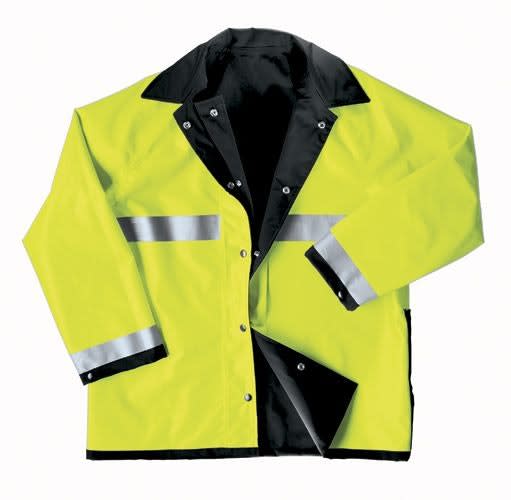
These included supplying safety glasses and face shields to technicians doing the job of cutting and grinding, as well as purchasing welding helmets with shields. The fleet department also purchased high-visibility vests, uniforms, earplugs, earmuffs, gloves, knee pads, knee mats, and steel-toe or composite-toe shoes.
Ceca obtained Occupational Safety and Health Administration (OSHA) safety certification and operator training certification on aerial lifts, bucket trucks, and backhoes. With these certifications, Ceca said he was able to train and certify operators throughout the university that use these pieces of equipment.
In 2015, fleet services implemented the 6S lean process improvement program that includes Safety. The other steps are: Sort, Straighten, Shine, Standardize, and Sustain.
At first, technicians were hesitant with the rapidly changing safety procedures. Ceca saw a need for frequent safety reminders to the staff, so he initiated five-minute staff safety huddles in the morning to go over new changes. This allowed technicians to ask any questions or state any concerns they might have had. During these huddles, videos on shop safety were shown along with the discussions.
Building a Replacement Plan
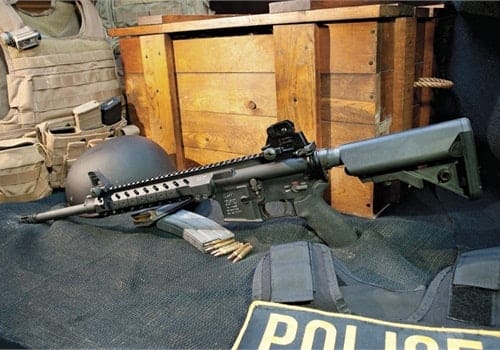
The Montclair State University fleet includes passenger vehicles, vocational trucks, buses, and police vehicles.
“Aside from safety, when I first started in my new position, I did an overview of the fleet. I was surprised that the fleet had vehicles dating back as far as 1989. These vehicles were still in use by university employees. I was also surprised that there were no replacement plans for our vehicles. We basically took the vehicle out of service if it was beyond repair,” Ceca said.
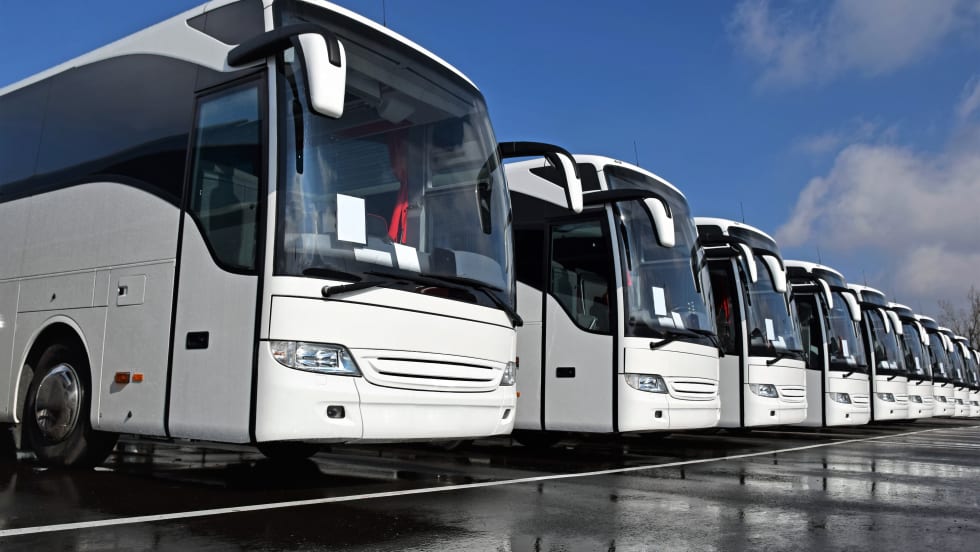
In order to provide justification for purchasing new buses, Ceca focused on data collection. A consultant collected data on how many passengers utilized the transportation system at Montclair State University, determining that buses transported 1.5 million passengers in one year. In addition, a third-party inspector examined the condition of the buses, determining that the buses needed to be replaced. Ceca presented this data to upper management, stating that the buses would need to be replaced to continue to service the number of riders, and his proposal was accepted. The university replaced six 62-passenger buses, eight 24-passenger buses, and three paratransit buses. This was all done throughout a four-year span.
Emergency vehicles, police cars, and ambulances, were also assessed and replaced accordingly.
There is now a replacement plan for all vehicles at Montclair State University. Buses have a seven- to 10-year replacement plan, police vehicles are on a five- to eight-year replacement plan, and the rest of the fleet is on a seven- to nine-year replacement plan.
Adjusting for Fleet Growth

The fleet moved from a two-bay shop to a six-bay shop to better service larger buses and the increase in vehicles.
In 2013, the fleet consisted of approximately 125 vehicles. In the last six years, this number has doubled to 250 registered vehicles and 22 buses.
“Doubling our fleet was necessary. Student enrollment has grown significantly to approximately 22,000 students in 2018," Ceca said. Also, with facility services moving to a newer location further from the core campus, there was a need to accommodate for all these changes.
In addition to ensuring the replacement of aging buses and vehicles, Ceca also made sure to increase the fuel supply to accommodate for the increase in fleet. The fleet department purchased two 4,000-gallon above-ground fuel tanks, one for gasoline and one for diesel. The fuel system monitors usage for accountability and has a high-speed pumping capacity that has decreased wait times at the pump station. The system also automatically notifies the vendor when fuel delivery is needed.
Fleet growth has enabled Ceca to hire additional staff technicians to maintain and service vehicles. The fleet staff now consists of four technicians and one support staff member who is shared with another department.
He has also bought new tools and equipment for the shop so technicians have all they need to get the job done right. For example, the department was able to purchase updated diagnostic tools, which allows technicians to perform work in-house instead sending the work out for service — which in turn saves the university money.
Ceca stated that his goal is that future additions to the fleet will include fuel-efficient and electric vehicles.
Implementing Telematics
Ceca is currently working on a project to implement telematics to monitor vehicle condition and curb idle time on vocational vehicles.
“Idling has become a problem. When a vehicle idles, we worry about what that can do to the environment, but also it has a financial impact on the university. By implementing telematics, we will be able to obtain reports on idle times and vehicle conditioning. These reports will be reviewed and shared with the department managers. Managers will be able to provide appropriate education to their staff. This in turn will decrease idle time and improve vehicle wear and tear, which will be good for the environment and save the university money," he said.
Handling Small Fleet Challenges
“Having a small fleet, and a small team, comes with its challenges — challenges such as not enough manpower and manufacturer training,” Ceca said. He explained that technicians are often sent to transit agencies or dealerships for training, and some training can be two days long and require an overnight stay. Having a technician out for two days exacerbates the fleet's other problem — being short-staffed, especially during the fleet's busiest time of the year, when school is in session. When the fleet faces challenges such as being short-staffed, Ceca said prioritizing work is key.
"Transitioning from a technician at Montclair State University to assistant director of fleet services within months of being hired has had its challenges, but working to educate staff on safety and helping Montclair State University Fleet Services grow has been rewarding," Ceca said
His 17 years’ experience working as a technician has helped guide him through the transition, but he also acknowledges the support and guidance of upper management. Attending industry conferences throughout the years and networking with other fleet managers has also added to his career advancement.