Red Government Fleet with star logo
MenuMENU
SearchSEARCH

Using Telematics to Justify Low-Mileage Vehicles

Vehicles at the Federal Law Enforcement Training Centers (FLETC) are high use, but low mileage. Here’s how it uses telematics to track, report, and justify its vehicles.

Thi Dao
Thi DaoFormer Executive Editor
Read Thi's Posts
November 30, 2021
Using Telematics to Justify Low-Mileage Vehicles

FLETC vehicles begin as  (1) functional training vehicles, used for exercises such as high-speed pursuit. They then become (2) speciliazed training vehicles, used for more demaning training needs; then as (3) visual training aids; and finally (4) disposal, including explosives training and testing.

4 min to read


What vehicles end their life cycles being bombed? Perhaps a movie-star vehicle or two, but more consistently, this distinction belongs to fleet assets of the Federal Law Enforcement Training Centers (FLETC).

A component of the U.S. Department of Homeland Security (DHS), FLETC trains nearly all federal law enforcement agencies and officers, including those in Homeland Security, Department of Justice, Environmental Protection Agency, Department of the Interior, and Inspectors General offices. Because of the variety of training scenarios, FLETC has a varied fleet of patrol vehicles that includes sedans, SUVs, and trucks of all makes, as well as administrative vehicles, totaling about 1,200 vehicles.

DHS has had a telematics mandate since 2017, and it uses telematics to collect utilization statistics from the 51,000-­vehicle fleet spread across multiple components. For FLETC, telematics is helping prove that although its vehicles fall under the utilization threshold, they are being fully used.

Quick Facts about the FLETC Fleet:

Federal Law Enforcement Training Centers (FLETC), a component of the U.S. Department of Homeland Security, trains federal law enforcement agencies and officers, and sometimes local law enforcement. This includes vehicle training.

  • Locations: 4, with vehicles at all sites and federal automotive technicians at two sites

  • Fleet: 1,200 vehicles

  • Average annual miles: 1,200 to 2,000

  • Lifecycle for administrative sedans: 8 years, no mileage limit

  • Types of vehicles: All types, including sedans, SUVs, and pickups, and all law enforcement makes/models

  • Telematics systems used: Geotab and FuelMaster

How Vehicles Are Used

FLETC provides driver training at its four Training Delivery Points (TDPs). Training takes place on emergency response ranges and non-emergency vehicle operations courses, which include a 10-exercise cone course with 2,000 cones.

“Many accidents are within parking lots, you know, the patrolman backing up into something,” said Shaun Flint, fleet manager, Assets and Logistics Management Division (ALM), Mission and Readiness Support Directorate (MRSD), explaining the importance of the cone course.

There’s also a counterterrorism range consisting of mock villages with scenarios to drive through. That’s where ramming takes place, he said.

In addition, trainees handle real-life traffic stops on campus. They’re taught to expect anything — sometimes it’s a situation where they’re expected to deescalate. Other times, the scenario might involve diplomatic details, bombs, or mental health situations.

“You think about an officer’s contact with a civilian and you use your imagination to think of the very worst scenario possible in the world; we probably have a training scenario for it,” said John Youhas, deputy chief.
FLETC is adding electric vehicles to its administrative fleet. 

Low Mileage, High Use

Vehicles rarely leave the four TDPs, so they get low mileage. Chris Caldwell, ALM fleet management specialist, explained the DHS utilization standard is between 10,000 and 15,000 miles annually, but FLETC vehicles get 1,200 to 2,000 miles annually.

Since odometer readings alone don’t provide a clear use picture, the division uses engine hours and idle time to determine vehicle use, Caldwell said. He explained that a vehicle being used for two different two-hour classes may only get 10 or 15 miles all day, but they’re in use, often in idle.

In reporting data to DHS, Caldwell also sends max vehicle speed, oil and maintenance information, and how many times a vehicle has been started.

Before telematics, everything was done on paper and spreadsheets. Automated reporting has cut back on time dedicated to data collection and management, allowing the division to pull reports for annual requirements, data calls, disaster assistance, etc., said Caldwell, who was on the team for the telematics initiative.

While utilization data is not used to reduce the active training fleet vehicle size, it has been used to reduce the administrative fleet size. Flint said administrative sedans that don’t reach a 50% average mileage (average among administrative sedans only) need justification.

“We’re finding that divisions may have administrative vehicles that haven’t been gassed for several months or may have fewer than 50 annual miles on the odometer,” said Jannett Bradford, Ph.D., ALM division chief. “Telematics gives you the data to say, ‘You don’t need an assigned vehicle.’ It’s tough to argue with that.  Instead, the division can then sign out a vehicle from the motor pool as needed, thus allowing the fleet manager to re-assign the vehicle to a division with a demonstrated greater need.” 

Because vehicles don’t get a lot of miles on them, FLETC’s replacement criteria is eight years, no matter the mileage — higher than DHS’s five years, 60,000 miles and the federal standard of three years, 60,000 miles. Even so, some only have 30,000 miles on them before retirement.

“Mileage doesn’t matter to us because it could be assigned to a certain program [where it] just gets used four times a year, but we have to have that platform because we need it for that training class,” Flint said.

For example, Border Patrol students often use 4x4s at the Artesia, New Mexico, TDP. Or those training in diplomatic security may use specialized protection vehicles. Fleet management defers to instructors when it comes to determining vehicle platforms.

“The instructor staff know which vehicle platforms should be used for optimal law enforcement training operations,” Bradford said.

Vehicle Lifecycle

When Jannett Bradford, Ph.D., Assets and Logistics Management division chief for the Federal Law Enforcement Training Centers (FLETC), says the organization handles vehicles from cradle to grave, she means it! A training vehicle can be kept as long as 25 years and goes through the following life cycle:

  1. Functional training vehicle, e.g., for high-speed training (4-6 years)

  2. Specialized training vehicle, e.g., for PIT (pursuit intervention technique) maneuvers and/or with a disabled ABS (anti-lock braking system) (3-4 years)

  3. Visual training aid vehicle

  4. Disposal, including explosives training and testing with the Bureau of Alcohol, Tobacco, Firearms and Explosives (ATF)

COVID Changes the Game

The pandemic shut down the training center before it came back on to, first, train while distancing, and then later, train fully vaccinated students.

While distancing, the instructor, who used to sit in the back seat of the vehicle with the student, instead rode in a separate car. This increased the need for vehicles for a while, but with training not fully booked, Flint said the team was able to accommodate this change.

After FLETC began only taking vaccinated students, students and instructors could double up on vehicles again.

“We are back, almost to normal,” Bradford said in August. “I think hopefully we’ve seen the worst of it.”

Subscribe to Our Newsletter

More Telematics

SponsoredJanuary 19, 2026

Basic Tracking vs Next Generation Fleet Technology

Fleet software is getting more sophisticated and effective than ever, tying big data models together to transform maintenance, safety, and the value of your existing tech stack. Fleet technology upgrades are undoubtedly an investment, but updated technology can offer a much higher return. Read how upgrading your fleet technology can increase the return on your investment.

Read More →
SponsoredJanuary 19, 2026

3 New Ways Fleet Software Pays: ROI opportunities for modern fleet managers

Public fleets face constant pressure to do more with limited budgets. This eBook outlines how modern fleet software helps agencies extend asset life, reduce unplanned downtime, and improve safety by automating maintenance, using smarter video insights, and unifying fleet data. A practical look at how technology can drive measurable ROI for taxpayers.

Read More →
SponsoredDecember 5, 2025

The Road to Smarter Electric Van Transitions: A practical roadmap for integrating electric vans into your fleet

Electric vans are becoming a strategic tool, not just a sustainability move. Get a roadmap that breaks down costs, charging planning, upfit compatibility, and what fleets should evaluate before making the switch.

Read More →
Ad Loading...
Telematicsby Jeanny RoaAugust 20, 2025

Distracted Driving and Samsara AI Safety

The U.S. public sector continues to use AI technology to combat the dangers of distracted driving.

Read More →
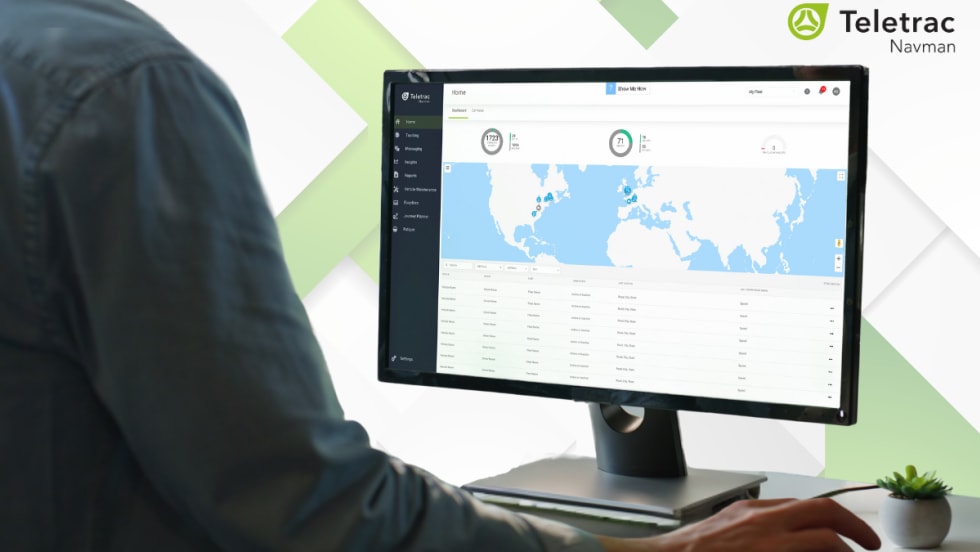
Person using Teletrac Navman’s TN360 fleet management platform on a desktop monitor displaying a world map and vehicle data, with the Teletrac Navman logo on a light background.
Telematicsby News/Media ReleaseJuly 11, 2025

Teletrac Navman’s TN360 Now Connects with Factory-Fitted Telematics for Easier Fleet Oversight

Agencies can now tap into factory-installed vehicle data within TN360 without taking vehicles out of service for hardware installs.

Read More →
Telematicsby News/Media ReleaseJune 10, 2025

Element, Samsara Partner to Launch Comprehensive Fleet and Operations Management Offering

This joint offering streamlines procurement and onboarding for shared customers to deliver greater safety and efficiency for fleets.

Read More →
Ad Loading...
Photo: Mark W. Clark
TelematicsAugust 19, 2024

7 Ways Fleet Intelligence Can Improve Safety, Savings, and Service

Fleet intelligence technology delivers actionable insights to optimize multiple aspects of government fleet safety and service.

Read More →
Telematicsby News/Media ReleaseJuly 19, 2024

How a South Carolina Fleet is Using Telematics to Improve Safety, Traffic, and Efficiency

Charleston County, South Carolina, has partnered with Geotab to bolster fleet operations through a telematics program.

Read More →
SponsoredJune 10, 2024

The Complete Fleet Management Software Buyer’s Guide

Purchasing Fleet Management Software (FMIS) is a critical decision requiring a significant investment and can transform your fleet operations. An outdated or non-user-friendly system can lead to missed opportunities for efficiency and cost savings. Whether you’re new to FMIS or looking to upgrade, our comprehensive guide covers the basics, latest advancements, and essential features to consider. Download our guide today to make an informed decision and optimize your fleet management.

Read More →
Ad Loading...
Telematicsby Nichole OsinskiMarch 15, 2024

How a Tennessee City is Using Samsara for Visibility into Safety, Service Delivery

Through the Samsara Connected Operations Cloud, the Memphis Public Works Division has been centralizing data across its 17 departments while also using the open API to integrate this data with critical business systems.

Read More →