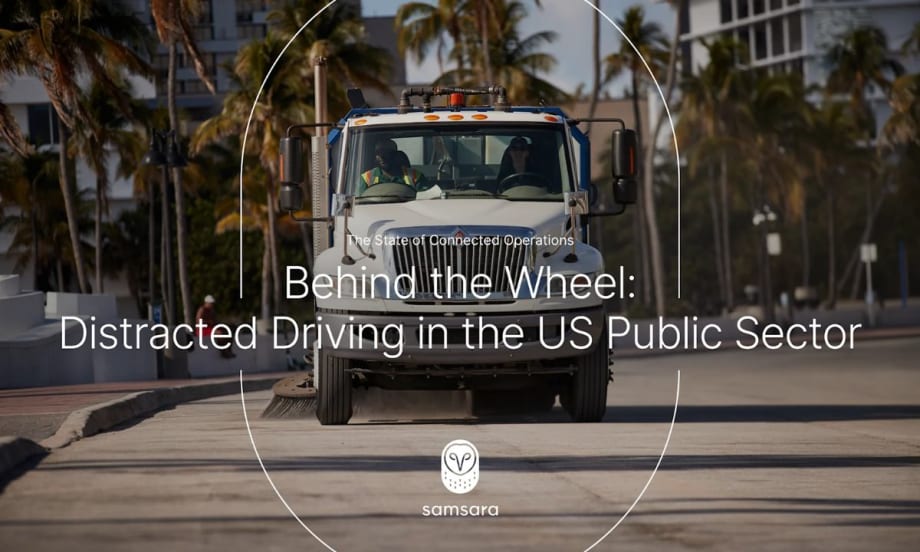
Samsara recently surveyed 250 government-employed commercial drivers across city and state agencies. In their findings, 38% of respondents reported a personal injury resulting from distracted driving, and 59% believe that technology can be a tool in reducing distracted driving incidents.
Several leading municipalities have already incorporated Samsara’s AI-powered technology and are seeing huge increases in safety:
The City of Memphis reduced distracted driving by 75% with real-time, in-cab AI-based coaching.
New Orleans EMS cut mobile phone use by 46% and speeding by 37% in one year with Samsara AI-powered Dash Cams.
The City and County of Denver’s fleet reduced serious accidents by 60% in just one year, thanks to real-time coaching and AI-powered detection.
Data
We spoke with Samsara’s Senior Vice President of Product and Engineering, Johan Land, to get more insight into the data they collected.
One of the most eye-opening findings in this survey was the prevalence of distracted driving. More than 90% of drivers have been affected by distracted driving. When they looked at the underlying statistics, they found that cellphone use was the top cause. Cell phone use includes checking social media, texting, and watching videos.
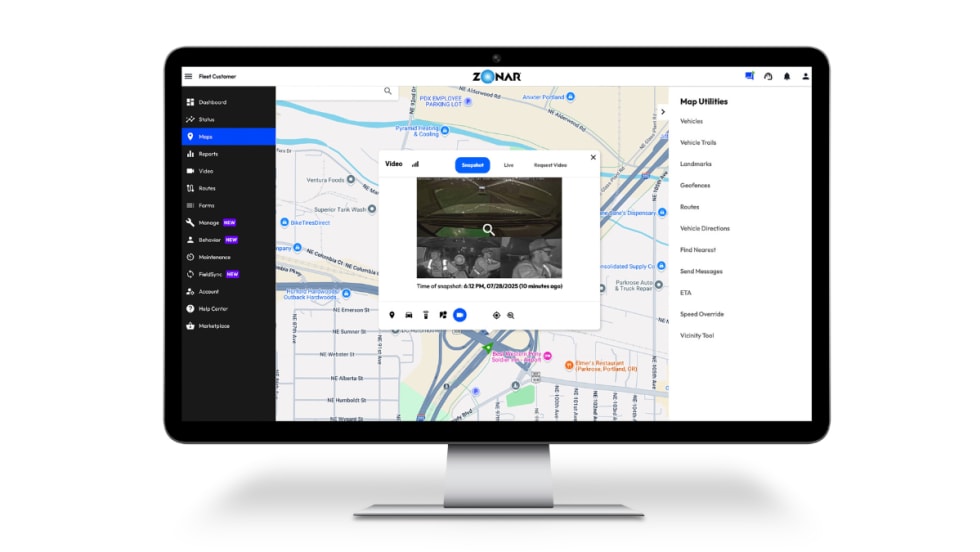
To combat distracted driving, Samsara AI Safety offers solutions to identify and reduce distracted driving incidents by alerting drivers within milliseconds of detecting unsafe driving behaviors.
Samsara AI can detect unsafe driving behaviors across the five leading causes of distracted driving:
Mobile use
Speeding
Tailgating
Weather
AI processes and analyzes the video in real time, alerting the driver before an accident happens.
Real-Life Adoption
Driver turnover is at an all-time high of 90%, according to the American Trucking Association.
“No matter the industry, fostering a positive safety culture can help drivers feel valued and cared for. We’ve seen this with county and statewide departments to global companies like DHL Supply Chain, which saw a 50% decrease in driver turnover with support from its safety and well-being initiatives,” Land said.
One real-world use case is the City of Memphis, which achieved a 75% reduction in distracted driving by implementing AI safety video monitoring. The on-demand video retrieval capabilities enabled by Samsara AI enabled the city to exonerate city employees from not-at-fault claims, saving thousands of dollars in insurance payouts.
Additionally, 95% of drivers felt that the real-time, in-cab coaching features had a positive impact on their driving habits.
Cost is always a concern when planning to implement new technology. Samsara says it is important to view technology as a long-term investment in operational efficiency, with the benefits outweighing the risks.
Land encourages the government to support safety AI adoption, saying that, “Subsidies, grants, or tax incentives can help agencies overcome these initial cost barriers, allowing them to trial and deploy proven solutions at scale. By incentivizing safety technology adoption, governments can drive measurable reductions in accidents, injuries, and liability, ultimately protecting workers and the public while enabling agencies to reinvest savings into community services.”
He added that with an estimated 2.5 million yearly crashes caused by distracted driving, it is imperative for governments to incentivize the adoption of safety technology like AI.