Although fleet managers have various philosophies about running their departments, they agree that very early preparation is an important policy toward being well prepared for snow season.
Photo: Government Fleet
6 min to read
It might sound like a simple philosophy, but when you ask government fleet managers how to make sure their departments are prepared for the upcoming snow season, they say planning well before winter hits is key.
“It’s just basic preparedness,” said Bill Coughlin, then-director of fleet maintenance for the City of Boston. “Spend the money and fix it in the front so it doesn’t break down on the road later.”
The Prep Work Never Stops
At a Glance
Government fleet managers with experience in snowy conditions say to prepare all year for the next snow season. Some steps include:
Keep salt spreader chains clean and oiled
Keep a checklist to inspect every possible component that could falter during snow season
Treat employees with respect and limit overtime to keep them sharp and safe.
Doug Ingle agrees. While serving as fleet manager for the City of Hickory, North Carolina, Ingle and his staff started preparing the winter snow equipment in the late summer or early fall each year. Preparing the salt spreaders was just one aspect of that work.
Long before the start of each snow season, the department made sure the chains in the spreaders were not frozen up, because leaving salt in them causes the chain and the body of the spreader to rust.
“We try to oil all that down,” said Ingle, who retired from the department in July 2015 after 12 years of service. He is the former president of the Southeast Governmental Fleet Managers Association (SGFMA), which holds an annual conference that includes training sessions on fleet-related topics including snow removal practices. “Anything we could have done to prepare for a snow event, we tried to do.”
Once snow season ends, the fleet department for the city of Troy, Michigan, almost immediately begins preparing for the next one. The conducts a walk-through of all the equipment to check for any damage the snow removal might have caused.
Sam Lamerato, CPFP, now-retired superintendent of fleet operations for the city, said team members check to see if salt trucks need preventive repair; if front bumpers, suspension, and underbody scrapers have been damaged; and if plows have hit curbs or have damage that needs to be straightened out. Those are just a few examples.
For those and additional items, Lamerato and his team produced a comprehensive checklist that serves as a guide to keep the fleet on the road and out of the shop once the snow begins to fall. The checklist, available here, includes components that might fail during a snow event.
“Our saying has been, ‘When it’s time for the equipment to perform, the time to prepare the equipment has passed,’” he said. “We put all of our resources and talent on this equipment before the winter season to be sure that all our operators can go out there and take care of business.”
Although the three fleet managers have various philosophies about running their departments, they agree that very early preparation is an important policy toward being well prepared for snow season.
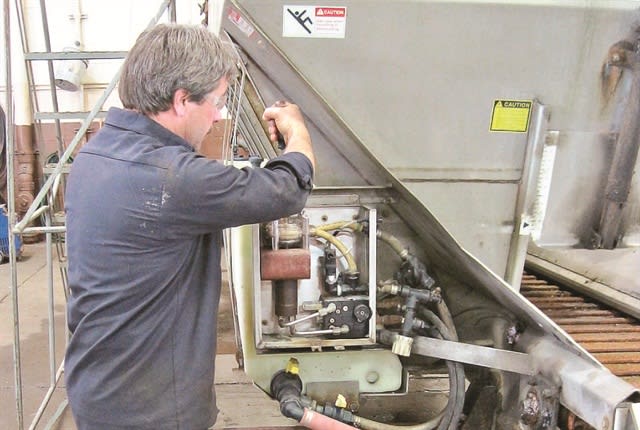
Fleet technicians at the City of Troy, Mich., begin snow preparations long before snow season starts. Photo courtesy of City of Troy
Basic Preparedness Is Key
Coughlin, who retired at the beginning of 2024, was foreman of the heavy shop for the City of Boston, which endured the second-greatest snowfall in its history during the 2014-15 winter: 104 in. He took as director of central fleet management after the storm, but he was right in the thick of things in the heavy shop foreman role. His staff worked around the clock for 20 days straight.
“Thankfully, the guys get along rather well,” Coughlin said, adding that his fleet boasted a better-than-95% service rate at any time from December to March. “We began prepping for the [next] snow season in June.”
Coughlin oversees over 1,100 pieces of equipment for the City of Boston’s central fleet management division, and he and his staff operates three automotive repair facilities for light-duty, medium- and heavy-duty, and radio/telematics/graphics.
His department operates on a set schedule of tasks to prepare for the snow season. “We’re checking virtually the whole truck from stem to stern, greasing anything, replacing anything that has any type of wear on it, inspecting brakes, and adjusting all the spreaders,” he said. “It’s like normal upkeep, but normal due to the weather we had last year.”
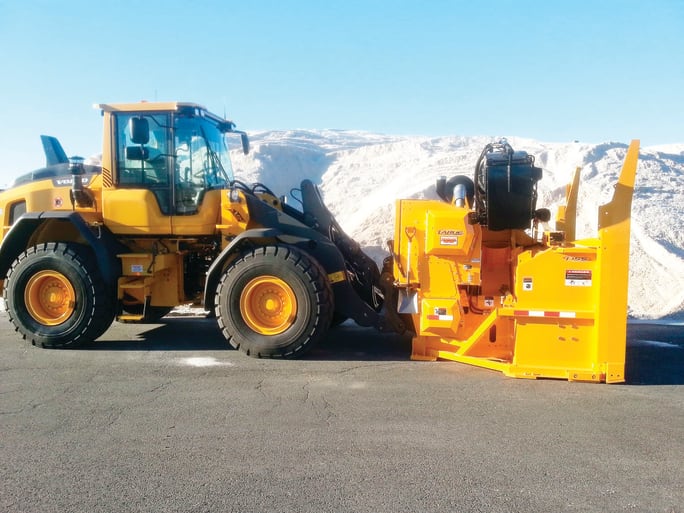
In anticipation of a snowy winter, the team added a few large snow blower attachments for its loaders and a few new six-wheel dumps with spreaders. Like its other efforts to prepare for the snow season, his department also worked ahead of time to ensure its fueling sites were up to date with stage 1 vapor recovery requirements. The pumps had to be replaced before 2017.
If you ask him for any further advice for government fleets to prepare for snow season, he again keeps it simple. “Preventive maintenance service is big. That’s what keeps us rolling. Check and inspect the entire vehicle.”
The City of Boston’s snow fighting fleet includes this loader with a snow blower attachment.
Photo: City of Boston
Use Hook Lift Trucks & Brine
For the City of Hickory, located about 50 miles northwest of Charlotte, Ingle oversaw all the city’s equipment and vehicles except for fire trucks. That included about 30 trucks equipped for snow and ice removal. Using brine on the roads is a method he feels is important to keep the snow from sticking to the road. The city mixes the salt water mixture itself.
Hook lift trucks also helped. These are trucks that government agencies can use in many ways so they can use them all year instead of letting them sit idle after winter. Users can put dump bodies, rollback bodies, and many different attachments on the trucks for use throughout the year.
Lamerato oversaw about 500 pieces of equipment for about 14 city departments.
Approximately 48 in. of snow fell in the area in a single winter. The year before that: a record 96 in. Lamerato noted that although his department made it through the record snowfall in good shape, “We really burned through the product.”
The city went through cutting edges and curb guards quicker than the manufacturers could make them. Last year was better as cities learned from the previous year and stocked up on inventory earlier.
He attributes his department’s success during heavy snow seasons to beginning to work on the snow equipment “pretty much as soon as the snow is done.” In other words, the department prepares all year for the next snow season. The group fits in all the snow season preparation it can while also working on its street sweepers and other equipment for use in the spring.
Lighting, suspension, springs, tires, batteries, brakes, and flow and pressure check of the hydraulic system are among the additional items on the checklist. “There’s an air valve to the brake pedals that is very important because it gets salted and corrodes,” Lamerato said.
Lamerato shares additional tips for fleets to get through snow season in good shape:
Have a strong vehicle replacement program. That is especially important when it comes to vehicles that are called upon to push heavy loads of snow, sometimes for 48 hours or longer continuously. Plan ahead so you don’t keep vehicles years too long due to budget constraints.
Use carbide underbody scraper blades. Because of its use of carbide blades, the city goes through them about every six to eight shifts rather than one shift per set of blades. On front snow plows, the city uses rubber and polyurethane cutting edges, which bounce over barriers rather than cause damage to the front plow, truck frame, and suspension. “That has saved us hours and hours of maintenance on our front plows and suspension of trucks,” Lamerato said.
Train operators well on proper use of the equipment. Lamerato has brought in equipment manufacturers to conduct training. He recommends taking videos of the training so fleet departments can conduct refresher courses.
Start a networking program with other fleet managers in the area. He also meets regularly with parts vendors, letting them know what his needs will be for the upcoming snow season. “Meet with them in the spring, telling them that by September you fully expect to have this many snow blades, this many cutting edges, and this many curb guards in stock, and make sure they’re on board with you and can meet your demands,” he said.
Take Care of the Team
Bill Couglin, director of central fleet management for the City of Boston, says treating employees well is one of the most important aspects to running a fleet smoothly during snow season.
“The biggest thing is the men and the equipment,” he said. “The men take care of the equipment; you take care of the men.” How does he do that? “Treat them proper, with respect.”
Doug Ingle, retired fleet manager of the City of Hickory, North Carolina, supervised eight mechanics along with a floor supervisor and secretary. He and staff have worked 24/7 during snow and other emergency events, splitting time into 12-hour shifts. Employees are told at the time of hire that they are expected to work extra hours in emergencies. But his department did all it could to help the workers during that time, feeding them and supplying cots for occasional naps.
“We tried to keep the morale going as much as possible, because we needed them,” Ingle said. “They got paid time and a half, so they like that part also.”
Sam Lamerato’s team at the City of Troy, Mich. works two 10-hour shifts during emergencies, then shuts down for four hours.
“We do not work around the clock,” Lamerato, who is fleet superintendent, said. “For a tech to be on his feet working for that many hours and knowing he possibly has an hour ride home and hour ride back the following day because of the weather and road conditions, that’s a lot to ask a tech to do and still be sharp and safe.”
Editor's Note: This article was originally published in 2015 and was last updated in July 2024 for continued relevancy.
Limited wash locations can increase travel time, fuel costs, and admin work for fleets. Here’s how one government fleet expanded access and simplified operations.
Fleet software is getting more sophisticated and effective than ever, tying big data models together to transform maintenance, safety, and the value of your existing tech stack. Fleet technology upgrades are undoubtedly an investment, but updated technology can offer a much higher return. Read how upgrading your fleet technology can increase the return on your investment.
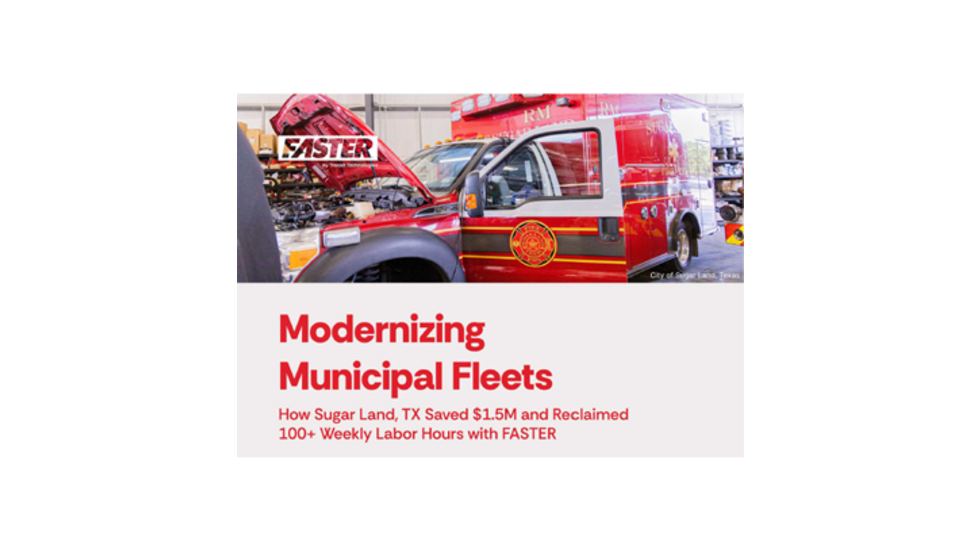
See how the City of Sugar Land modernized its 550-vehicle fleet, reclaimed 100+ labor hours weekly, and unlocked $1.5M in budget impact — all with FASTER Asset Solutions.
Electric vans are becoming a strategic tool, not just a sustainability move. Get a roadmap that breaks down costs, charging planning, upfit compatibility, and what fleets should evaluate before making the switch.
Fleet managers must eliminate distractions and disruptions in order to increase workplace efficiency, while being aware that employees have their personal lives to attend to as well.