Why Your Public Safety Fleets Need Telematics Devices
See real-world use cases that prove telematics data is invaluable for your emergency response fleets. Plus, a major telematics provider addresses data safety concerns.
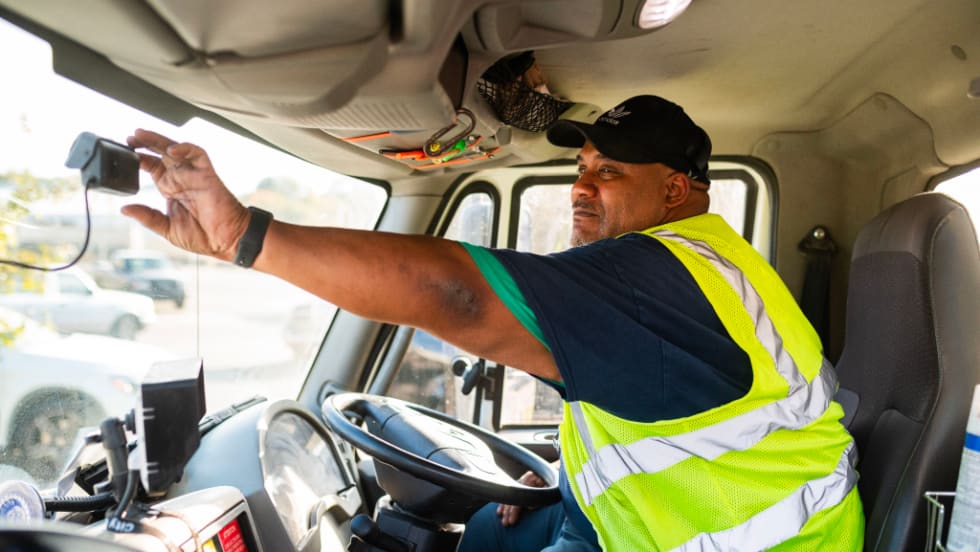
Public safety agencies rightsize their fleets using data captured by telematics devices.
6 min to read
Telematics has revolutionized the way fleets operate. By providing real-time data on vehicles’ locations, speed, and driving behaviors, telematics systems enable fleet managers to optimize fleet performance, reduce fuel costs, and improve overall safety.
The law enforcement sector in particular, though, doesn’t seem to be adopting the use of the technology as much as other segments of the fleet industry.
Addressing Hesitancy Among Law Enforcement Fleets
At its core, a telematics device exists to provide data on a vehicle’s health and usage. It also tracks a vehicle’s location. That factor leads many law enforcement agencies to fear using the technology. For the agencies, it’s a matter of public safety; they don’t want officers’ location data to end up in the wrong hands. Some fleet managers even fear hackers can gain access to vehicles remotely.
This concern isn’t new for Geotab Associate Vice President of Public Sector Solutions Chris Jackson.
“The security piece is one of the items we speak on all the time,” Jackson said. “We have extensive security credentials that we maintain, because we do operate with federal jurisdictions that require us to maintain security postures that then are applicable to the rest of our public safety clients, as well as any of our other public sector clients. So the security of the device is absolutely paramount.”
Because of the security requirements Geotab must meet for its federal clients, the same protections exist for fleets on the local level. Geotab’s devices have a FIPS 140-2 certification. In order to receive that certification, all components of a security solution — the hardware and the software — must be tested and approved by National Institute of Standards and Technology-accredited independent laboratories.
Why Tracking Location is a Good Thing
Tracking vehicle operators’ locations not only allows fleet managers and department administrators to know where their drivers are for dispatching, but it can also have other benefits.
In 2017, a pipe bomb partially detonated in a busy subway station in Manhattan. When the New York City Police Department (NYPD) did its after-action review of the event, it looked at officers’ locations using the GPS devices in their vehicles.
Recently retired deputy commissioner of support services for the NYPD Robert Martinez said the department completed an analysis of the number of vehicles that reported to the incident within different time spans after it happened — 15 minutes, 30 minutes, one hour, two hours, and so on. The department used that information to fine-tune its policy for personnel self-reporting to major incidents. Having too many officers in one place can be dangerous because other such incidents have resulted in a second attack on officers responding to the first incident.
The subway incident also helped the department look at its resource management in response to crises.
Improving Vehicle Utilization in Your Fleet
Rightsizing a fleet can be tricky for government operations. Data captured on telematics devices can reveal whether certain vehicles are needed.
The State of Utah’s Department of Corrections had the technology installed on roughly one-third of its fleet. A 2019 Geotab case study revealed that the department was able to get a snapshot of vehicle utilization across the fleet using data like odometer mileage, engine hours, on-duty versus off-duty use, and time spent in pursuit mode.
Telematics data helped the department downsize its fleet by 60 vehicles in two years. Fleet manager Dan Black determined that underused vehicles in the fleet could be removed from service and replaced with alternatives to owning them — such as a short-term rental.
Life and Death Situations: When Vehicle Alerts Matter
A telematics device installed in this Franklin County, Ohio, vehicle allowed the fleet department to be alerted when a driver was in an accident. The vehicle ended up in an area that was not visible from the roadway.
The Franklin County, Ohio, fleet department quickly learned the value of telematics devices for its operations when one of its drivers was in an accident.
Fleet Management Director Charlotte Ashcraft receives alerts when devices detect an accident in her vehicles. In one instance, she received an alert while she was sitting at her desk. She looked up the vehicle’s location and saw it was off the side of a roadway. The driver’s supervisor was unable to contact him, so he went to the location of the alerted incident. The driver was inside the vehicle, disoriented, and in an area that was not visible to other drivers.
The alert Ashcraft received allowed the driver’s supervisor to respond and ensure he got the medical attention he needed.
Defending Your Drivers With Telematics
Telematics devices can be configured to capture an array of data, including things like vehicle speeds, as well as lights and sirens usage. This can work in local governments’ favor if there are liability concerns after vehicle collisions.
“If they’re on a call and they are using their lights and sirens and going into an intersection, if they're hit, they can use that data to say, ‘I was traveling into an intersection safely and according to our policy, which is reduced speed, with lights and sirens on.’ They can use the data to help defend themselves.”
If EMS patients make claims toward ambulance drivers about speed, fast braking, or other harsh driving behaviors, telematics data can also reveal whether their claims are legitimate.
In Belleville, Ontario, the Police Service installed telematics devices in its fleet to provide transparency and accountability. In one incident noted in a recent Geotab case study, a resident called the department to complain about a police car that had roared past their home at an excessive speed without its lights or sirens activated. However, the data proved otherwise.
“I told the person, ‘Well, actually, we have technology in the vehicle that tells us when the lights and sirens are activated and they were in this scenario,’” Belleville Police Service Chief Mike Callaghan said. “It puts those complaints to bed very quickly.”
Preventing Wear and Tear on Vehicles
Telematics devices can track risky driving behaviors that can lead to wear and tear on vehicles.
Keeping public safety vehicles in reliable, working condition is crucial. A poorly operating ambulance or fire truck can mean the difference between life and death. Vehicles can age more quickly when drivers engage in dangerous driving habits.
In one case study, Indianapolis EMS determined its telematics devices could lead to better vehicle health. The department first installed the devices in the wake of a fatal crash involving one of its ambulances. Soon after the installation, the fleet management team detected “undesirable” driving patterns among some of its drivers. That insight allowed the team to educate its drivers about the importance of maintaining the vehicle using safe driving practices. It has paid off.
Cutting down on wear and tear on the ambulances’ brakes alone has come close to paying for the department’s installation of Geotab telematics devices because, “the vehicles are being driven a little slower,” the Indianapolis EMS team reports in a Geotab case study.
The Belleville Police Service also installed the technology to preserve the public’s trust.
“Let's be very frank, in the world of policing right now, we've seen a significant change in the perception and the accountability components within our policing,” Callaghan says. “There's an old saying that ‘Not only must you appear to be transparent, but you must be transparent.’ And that's where we believe that we're headed with the telematics data. The tech journey is one, I think, that every police service should be looking at and moving down towards, because at the end of the day, we have to be accountable.”
Fleet software is getting more sophisticated and effective than ever, tying big data models together to transform maintenance, safety, and the value of your existing tech stack. Fleet technology upgrades are undoubtedly an investment, but updated technology can offer a much higher return. Read how upgrading your fleet technology can increase the return on your investment.
Public fleets face constant pressure to do more with limited budgets. This eBook outlines how modern fleet software helps agencies extend asset life, reduce unplanned downtime, and improve safety by automating maintenance, using smarter video insights, and unifying fleet data. A practical look at how technology can drive measurable ROI for taxpayers.
Electric vans are becoming a strategic tool, not just a sustainability move. Get a roadmap that breaks down costs, charging planning, upfit compatibility, and what fleets should evaluate before making the switch.
Purchasing Fleet Management Software (FMIS) is a critical decision requiring a significant investment and can transform your fleet operations. An outdated or non-user-friendly system can lead to missed opportunities for efficiency and cost savings. Whether you’re new to FMIS or looking to upgrade, our comprehensive guide covers the basics, latest advancements, and essential features to consider. Download our guide today to make an informed decision and optimize your fleet management.
Through the Samsara Connected Operations Cloud, the Memphis Public Works Division has been centralizing data across its 17 departments while also using the open API to integrate this data with critical business systems.