In a broader shift toward decentralized emergency management, a federal executive order now directs state and local governments to take a more prominent role in preparing for disasters—an approach that continues to influence how public agencies, including fleets, plan for future crises.
The directive marked a turning point in federal emergency policy, placing greater responsibility on local agencies to ensure operational readiness, coordinate response efforts, and document their preparedness in ways that can impact future funding.
What the Move Means for Fleets
For public fleets, this shift has translated into several key areas of focus:
Operational readiness: Keeping emergency-response vehicles and support equipment maintained, fueled, and deployment-ready year-round.
Interagency coordination: Aligning with public works, emergency management, and first responders to ensure a unified response strategy.
Asset tracking and reporting: Using telematics and fleet management systems to monitor availability, location, and status in real time.
Training and compliance: Ensuring fleet personnel understand emergency protocols and meet evolving NIMS compliance standards.
Supply chain resilience: Securing backup contracts for fuel, parts, and maintenance to support sustained operations.
Performance-based funding access: Documenting preparedness efforts to remain eligible for grants tied to disaster readiness.
Regional collaboration: Contributing to mutual aid frameworks and regional fleet plans to improve scalability and support.
Agencies that treat emergency planning as a core operational function and not just a compliance task are better positioned to respond quickly and effectively when disasters strike. Understanding how this policy shift translates into day-to-day fleet operations requires a closer look at how preparedness is being operationalized at the local level.
Expert Insight: Financial Planning Beyond Grants
Speaking with IAEM-USA 2nd Vice President Todd DeVoe, CEM, assistance in the form of grant funds from FEMA has had its ebbs and flows.
After it was established in 1979, FEMA wasn’t a heavily grant-producing organization focusing more on direction and support for local and state governments during large-scale events, according to DeVoe.
Hurricane Andrew, however, shifted this under the James Lee Witt and Clinton administration when more weight was placed on preventive measures and providing money to state and local governments toward prevention programs.
After Hurricane Katrina and the events of 911, FEMA expanded from there.
“In the past, local government was responsible, and still is, for local preparedness programs and the financials of that,” DeVoe explained, noting that initiatives such as the Building Resilient Infrastructure and Communities (BRIC) Program and Hazard Mitigation Grant Program (HMGP) further bolstered grant funding. “I think local government kind of got used to getting grant money pretty regularly and in decent numbers.”
Now, DeVoe sees this new order as that 'ebb'—a return to an older model of emergency management, where governors and local leaders were expected to take the lead on preparedness and mitigation, rather than relying heavily on federal assistance.
How Fleets Should Plan Ahead
Planning for future events, fleets will need to take a close look at their operation’s budget. As federal grant funding becomes less guaranteed, public agencies that have long relied on those funds to support preparedness efforts may find themselves in a difficult position.
“It goes back to the idea of looking at your budget, right?” DeVoe said. “I've been lucky in the sense that I've worked for agencies that weren't grant-dependent. Our staffing and programs were part of the city’s general fund, and grants were a bonus—not our lifeblood.”
That hasn’t been the case everywhere. In some jurisdictions, federal funding covers the majority of emergency management operations. For those agencies, DeVoe noted, this shift may require a painful but necessary recalibration.
“There are some states where their entire emergency management program—or the majority of it—is funded through federal grants,” he said. “They’re going to find it a little difficult coming into the near future, and they’re going to have to bite the bullet and put it into their general budget.”
This, DeVoe suggested, is a moment of reckoning for public agencies that have grown accustomed to consistent grant support. “We’ve gotten used to being on grant,” he said. “But we should have always known—or at least planned for—the fact that grants can go away. That’s the nature of them.”
For fleet operations, this means budgeting for emergency readiness as a core operational cost, not an optional line item dependent on external funding. Agencies that build emergency planning, staffing, and equipment maintenance into their general budgets will be better equipped to adapt to the evolving expectations of local preparedness.
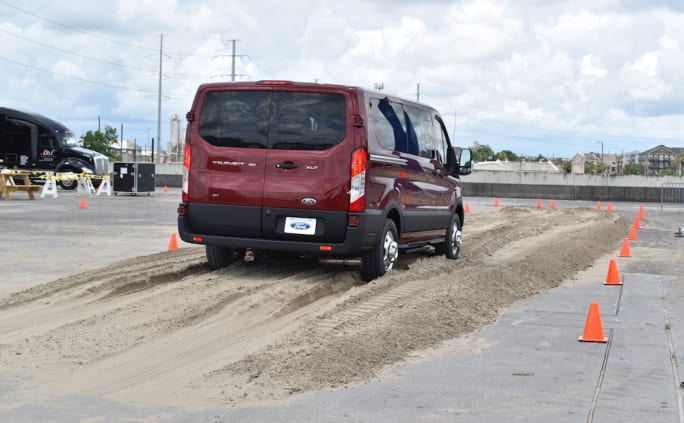
Starting with preparedness and infrastructure, fleets should have an outlined plan when it comes to emergency preparation and operating needs.
Photo by Roselynne Reyes
The second part to this, DeVoe urged, is for fleets to do a cost benefit analysis of individual operational programming to see what’s effective and what’s not and where money is being directed.
“I think we’ll have to roll our sleeves and make those painful cuts where they need to be made,” DeVoe said. “It might be a little painful at the beginning, but if we do this correctly, we'll be able to weather this proverbial storm, and hopefully come out stronger when it comes to local preparedness programs.”
DeVoe advised that fleets need to understand the budget process, especially for those who are new to a fleet management system and trying to get a better look at budgetary issues. This should also be applied to hard assets that are being rotated. One question that should be asked is: ‘What is the lifecycle of that particular item that you're looking at and what is your replacement cost?’
Once that is answered, DeVoe recommends budgeting for that into the operation’s two, three, and five-year plan around replacement items. Doing so not only ensures fiscal preparedness, but can also give agencies a clearer picture of capital needs as they move away from grant-dependent models.
“We got so used to having grants coming in — you could buy a bunch of stuff at one time — but the only problem with that is that they all age out at the same time,” DeVoe said using the example of when he had bought trailers and vehicles for disaster response on a grant in the past.
Planning for Replacement Before It’s Too Late
DeVoe emphasized that one of the most overlooked aspects of emergency planning is the long-term financial strategy tied to major equipment purchases—especially those originally funded through grants. The challenge, he noted, is that many agencies took advantage of grant opportunities to build out their fleets and emergency response inventories, but failed to plan for the inevitable replacement costs.
“Funds were used for BearCats, fire apparatus, units and whatnot,” he said. “You know, those are all now at the 10-year point of their life cycle, and this is where you start having to do replacement—but did you budget for that when you got it?”
In many cases, the answer is no.
“I can't speak for everybody, but I know of a few agencies that, when they got their fleet—or their fire trucks, specifically fire engines and hazard vehicles—they didn’t start planning for replacement once they got them,” DeVoe said. “And I can tell you they’re struggling right now, trying to find replacement funds for some of these vehicles that need to be cycled out after 10 years of service.”
This lack of long-term planning can create sudden financial strain, particularly in agencies that are already adjusting to reduced federal grant support. For fleets, the takeaway is clear: building a sustainable replacement schedule into the general budget isn’t just best practice—it’s essential to operational continuity.
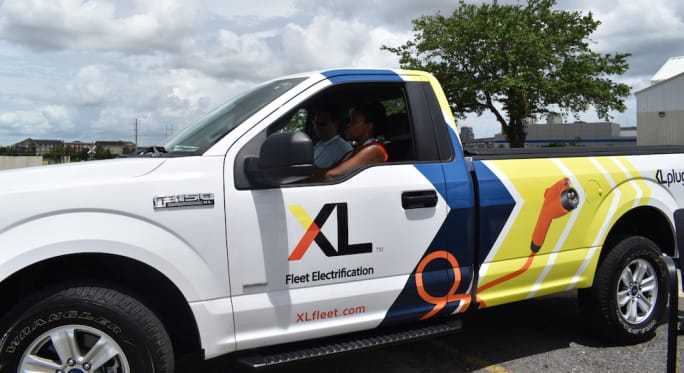
An emergency plan should provide more targeted training for drivers and technicians, especially around operating vehicles in extreme conditions such as flooded roads, high winds, or areas with heavy debris.
Photo by Roselynne Reyes
While the transition away from grant reliance may feel daunting, DeVoe emphasized that agencies don’t need to have every answer immediately. What matters is starting the process with a clear understanding of priorities, timelines, and available resources.
“Take a deep breath, take this one step at a time, because you're going to get through this,” DeVoe said. “It might be a little painful, but in the end I think fleets are going to come out of this stronger and with more reliable processes for the community.”
Local Implementation: How One County Is Putting It into Practice
While many agencies are still adapting to the evolving expectations around local preparedness, Monroe County Fleet Management in Florida offers a clear example of what alignment with the executive order can look like in practice.
Located in a region regularly threatened by hurricanes and coastal flooding, the county has developed a comprehensive fleet strategy focused on resilience, efficiency, and interagency coordination.
While many agencies are still adapting to evolving expectations around local preparedness, Monroe County Fleet Management in Florida offers an example of how public fleets can align with federal guidance. Located in the southernmost part of the state, encompassing the Florida Keys and a portion of the Florida mainland, Monroe County is no stranger to tropical storms and hurricanes.
Since 1926, it has been hit by 26 hurricanes and experiences a hurricane approximately every four years, according to the National Weather Service. Its low-lying geography and limited evacuation routes make it especially vulnerable to storm surge and flooding.
In response to these conditions—and in alignment with the federal executive order on disaster preparedness—the county has developed a strategic fleet plan focused on resilience, efficiency, and coordination.
Starting with preparedness and infrastructure, the fleet has outlined plans to conduct monthly storm preparation exercises while investing in multi-purpose vehicles capable of operating in varied disaster conditions.
To improve operational efficiency, Monroe County is in the process of upgrading its fleet management system from FASTER WIN to FASTER Web, with plans to integrate fuel management and telematics platforms. This transition is expected to support real-time tracking, predictive maintenance, and more informed vehicle allocation for both routine operations and emergency response.
The fleet is also concentrating on adopting a more risk-informed approach to procurement, prioritizing vehicles and equipment that can perform reliably in a range of disaster conditions, including both urban and rugged environments.
In line with the executive order’s emphasis on interagency coordination, Monroe County works with the State Emergency Response Team (SERT) on joint response planning and maintains mutual aid agreements with neighboring counties.
The fleet aims to ensure continued compliance with FEMA and the Florida Division of Emergency Management standards to support interoperability with state and federal agencies. Participation in multi-jurisdictional training exercises is part of the county’s broader goal to ensure fleet personnel are prepared to operate within coordinated response frameworks.
There are also plans to provide more targeted training for drivers and technicians, especially around operating vehicles in extreme conditions such as flooded roads, high winds, or areas with heavy debris.
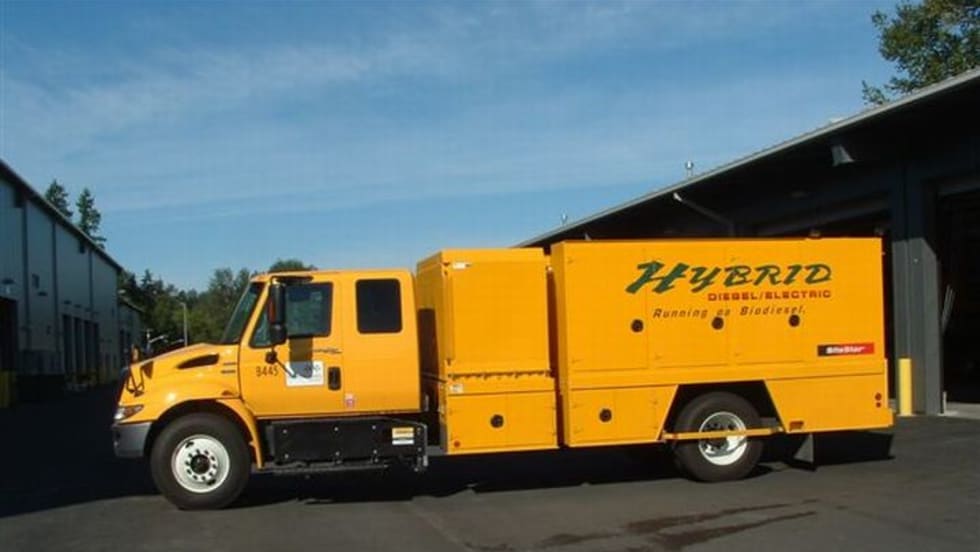
Monroe County is also exploring the integration of hybrid vehicles into its fleet to reduce reliance on traditional fuel sources and extend operational ranges during fuel shortages or infrastructure disruptions.
The fleet is also evaluating advanced, cost-effective communication systems to maintain connectivity with the Emergency Operations Center (EOC) and field personnel during power outages or network failures.
Data collection and performance monitoring are already supported through existing telematics systems, which track fuel usage, vehicle performance, and maintenance schedules. The county is working with its Environmental and Coastal Operations (ECO) division to incorporate predictive analytics and hazard modeling into fleet readiness planning.
This would allow vehicles to be strategically pre-positioned in advance of hurricanes or other disaster events based on real-time data and forecasts.
Finally, due to the challenges resulting from natural disasters, fuel availability and storage are a major consideration for the county’s emergency response capabilities, especially in regard to ensuring uninterrupted fuel supply.
Because of this, the county is exploring alternatives for fleet fuel storage, such as the 6 Six 990-gallon diesel fuel trailers, which have been strategically placed throughout Monroe County to provide a localized supply during emergencies. In addition, all fixed and portable generators undergo annual load-bank testing and preventive maintenance, including fuel polishing and treatment, by June 1 each year, ahead of peak hurricane season.
The shift toward localized emergency planning doesn’t mean fleets are on their own—but it does mean the responsibility is more squarely in their hands. Agencies that invest in long-term planning, internal coordination, and sustainable budgeting will be better positioned to adapt to this new reality.
As DeVoe noted, the process may not be easy, but it is necessary. For fleets, the goal isn’t to do everything at once—it’s to start now, stay intentional, and build the kind of operational resilience that doesn’t depend on what may or may not come from Washington.