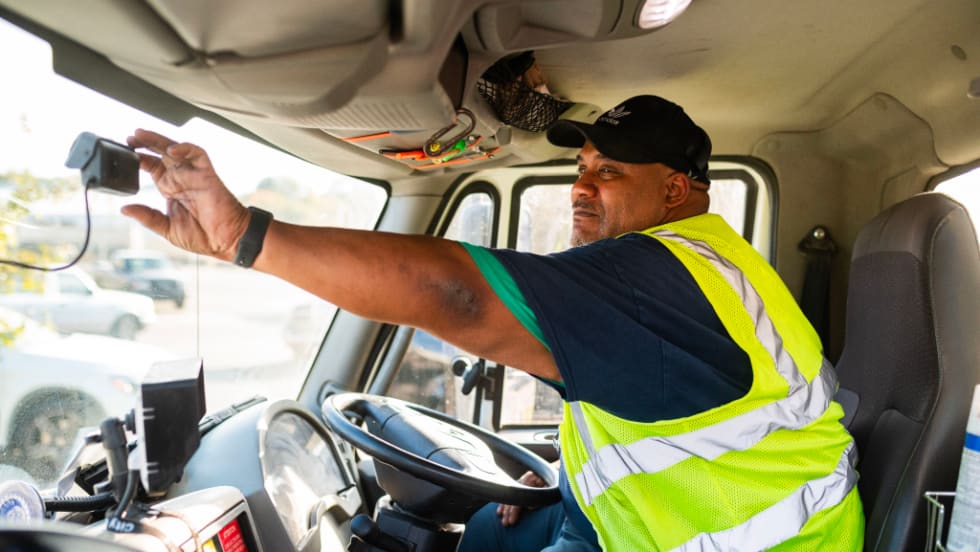
ISLIP, N.Y. — GPS tracking devices installed on government-issue vehicles are helping communities around the country reduce waste and abuse, in part by catching employees shopping, working out at the gym or otherwise loafing while on the clock, according to The Associated Press.
The use of GPS has led to firings, stoking complaints from employees and unions that the devices are intrusive, Big Brother technology. But city officials say that monitoring employees' movements has deterred abuses, saving the taxpayers money in gasoline and lost productivity.
"We can't have public resources being used on private activities. That's Management 101," Phil Nolan, supervisor of the Long Island town of Islip.
Islip saved nearly 14,000 gallons of gas over a three-month period from the previous year after GPS devices were installed. Nolan said that shows that employees know they are being watched and are no longer using Islip's 614 official vehicles for personal business.
Some administrators around the country emphasized that the primary purpose of the GPS devices is not to catch people goofing off but to improve the maintenance and operation of the vehicles and to design more efficient bus, snowplow and trash-pickup routes. Among other things, the devices can be used to alert mechanics that a car's engine is operating inefficiently.
Still, in Indiana, six employees of the Fort Wayne-Allen County Health Department lost their jobs last year after an administrator bought three Global Positioning Satellite devices out of her own pocket and switched them in and out of 12 department vehicles to nail health inspectors running personal errands on the job.
Employees were caught going to stores, gyms, restaurants, churches and their homes. (And the administrator was reimbursed the $750 she spent.)
One of those who got in trouble, 27-year employee Elaine Pruitt, decried what she called "sneaky" methods. She said she had fallen ill and stopped at her home for a long lunch break, returning to work just 38 minutes late.
Previously, "as long as we got our work done, there was never any problem. All of a sudden, it became wrong if you stopped at a grocery store for some gum," she said.
In Boston two years ago, a snowplow driver was accused of hiding his GPS device in a snowbank and then going off to do some private plowing. The driver pleaded guilty to a misdemeanor larceny charge and was fined $300.
In Denver, 76 vehicles equipped with GPS this year were driven 5,000 fewer miles than the unequipped fleet had during the same period the year before. Denver plans to outfit police cars, snowplows and trash trucks with GPS soon.
"It's growing by leaps and bounds," said Chris Ransom of Networkcar, one of the country's leading providers of GPS systems. "I'd say we're seeing double-digit growth among the municipalities, whether it's statewide or down to the local county."
In Delaware, GPS was used to confirm two employees using state vehicles were going home early, said Terry Barton Jr., fleet administrator for the state. He would not say what action, if any, was taken against the employees.
"If they're in charge of the car and they decide to go visit their Aunt Mary, we'll know that they went someplace they weren't supposed to. It has a chilling effect," he said.
Barton said Delaware paid $425 per unit for the GPS devices, as well as $24.99 a month per vehicle for tracking services. Information from each car is sent back to a central location, where things like fuel consumption and speed are recorded. He estimated the investment will be recouped in 3 1/2 years.
"If we're getting fuel reduction, less accidents and have our people slowing down, it more than pays for itself," Barton said.
The Teamsters are negotiating more contracts that protect workers from being spied on or punished as a result of the devices, union spokeswoman Leslie Miller said. She said the union's tentative contract with United Parcel Service prevents the company from firing any employee for a first offense uncovered by GPS unless there is proof of intent to defraud, reported The Associated Press.
Sean Thomas, chief of staff for the Manchester, N.H., mayor's office, said a plan to use GPS units on garbage trucks was scrapped after "some union push-back. "They said, `You are watching us like Big Brother,'" Thomas said.
GPS is helping improve efficiency in other ways.
Houston officials say they have used GPS on garbage trucks to design more efficient trash-collection routes, reducing fuel costs and other expenses.
This winter, the New Hampshire Transportation Department will begin testing GPS devices in some sand spreaders.
"It's so when Mrs. Smith on Warren Street calls and says we haven't plowed her street, we can say, `Yes, we have,'" said Phil Bilodeau, Concord, N.H., deputy director of general services. "It's not to check up on drivers, although they would say it is for that purpose."