




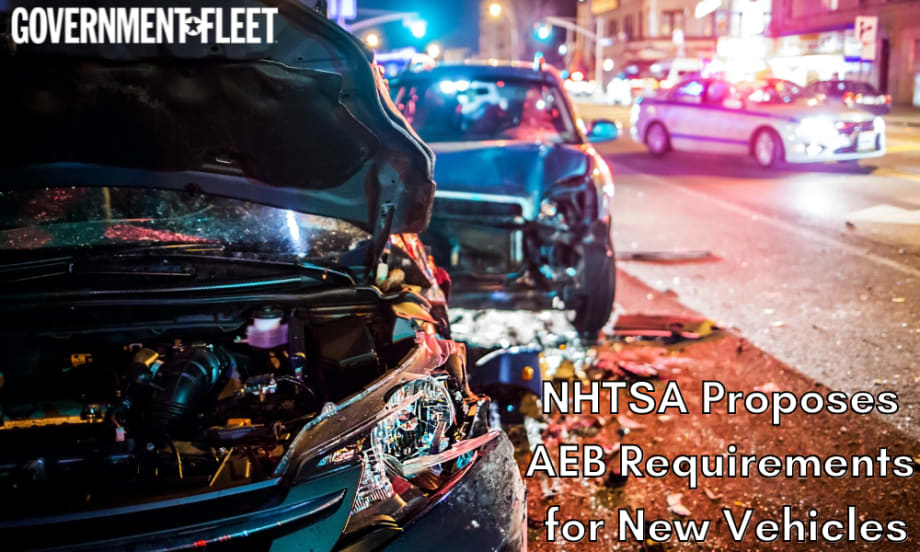
The U.S. Department of Transportation’s National Highway Traffic Safety Administration (NHTSA) announced a Notice of Proposed Rulemaking (NPRM) that would require automatic emergency braking (AEB) and pedestrian AEB systems on passenger cars and light-duty trucks.
The notice is a direct response to a provision in the Bipartisan Infrastructure Law to create a rule to establish minimum performance standards requiring that all passenger vehicles manufactured for sale in the United States be equipped with an AEB system. A Preliminary Regulatory Impact Analysis that presents the benefits and costs associated with the proposed rule also accompanies the NPRM.
Reducing Crashes with AEB Technology
The proposed rule is expected to dramatically reduce crashes associated with pedestrians and rear-end crashes.
NHTSA projects that this proposed rule, if finalized, would save at least 360 lives a year and reduce injuries by at least 24,000 annually. In addition, the AEB systems would result in significant reductions in property damage caused by rear-end crashes. NHTSA believes crashes would be avoided altogether, while others would be less destructive.
“Today, we take an important step forward to save lives and make our roadways safer for all Americans,” U.S. Transportation Secretary Pete Buttigieg said. “Just as lifesaving innovations from previous generations like seat belts and air bags have helped improve safety, requiring automatic emergency braking on cars and trucks would keep all of us safer on our roads.”
The proposed rule is a key component of the Department’s National Roadway Safety Strategy (NRSS), which was launched in January 2022 to address the national crisis in traffic fatalities and serious injuries.
The NRSS adopts the safe system approach and builds multiple layers of protection with safer roads, safer people, safer vehicles, safer speeds and better post-crash care. As part of the safe system approach, this rule highlights safer vehicles and USDOT’s effort to expand vehicle systems and features that help to prevent crashes.
The NRSS is complemented by safety funding included in President Joe Biden’s Bipartisan Infrastructure Law. In February, the Department announced more than $800 million in grants to help communities carry out projects that can address high-crash areas.
DOT also launched the next phase of the NRSS — its Call to Action campaign — and released a one-year progress report and accompanying data visualizations that highlight the extent and magnitude of the U.S. roadway safety problem.
How AEB Technology Works on Vehicles
An AEB system uses various sensor technologies and sub-systems that work together to detect when the vehicle is close to crashing, and then automatically applies the vehicle brakes if the driver has not done so, or applies more braking force to supplement the driver’s braking as necessary to avoid or mitigate the severity of the crash.
“We’ve seen the benefits of the AEB system in some passenger vehicles already even at lower speeds, and we want to expand the use of the technology to save even more lives. That’s why our proposed rule would require all cars to be able to stop and avoid contact with a vehicle in front of them up to 62 miles per hour. And the proposal would require pedestrian AEB, including requiring that AEB recognize and avoid pedestrians at night,” NHTSA Chief Counsel Ann Carlson said. “This proposed rule is a major safety advancement.”
How the Rule Affects Automakers
If the rule is adopted as proposed, nearly all new U.S. light-duty vehicles (gross vehicle weight rating of 10,000 lbs or less) will be required to have AEB technology three years after the publication of a final rule.
Late last year, Government Fleet reported that the Insurance Institute for Highway Safety announced a total of 15 automakers had fulfilled a voluntary pledge to equip the bulk of the light-duty vehicles they produce for the U.S. market with AEB systems.
Other Vehicle Safety Proposals by NHTSA
Last month, NHTSA announced it is proposing updates to its flagship vehicle safety consumer information program, the New Car Assessment Program, or NCAP.
The agency issued a request for public comment on new pedestrian crashworthiness tests that measure how well vehicles protect those outside the vehicle, which can reduce pedestrian fatalities. The proposed changes will provide consumers with valuable safety information and are part of the Biden-Harris Administration’s efforts to improve safety on our nation’s roads.
This proposal is part of the agency’s comprehensive efforts to encourage pedestrian safety improvements in vehicles by adding tests that will show whether a vehicle can offer better protection to pedestrians in the event of a collision.
The tests will provide consumers with crucial safety information about pedestrian safety and protection.
NHTSA is also proposing to identify new model year vehicles that meet the agency’s testing criteria by assigning credit using check marks on the agency’s website.
NHTSA will take comments on the proposal for 60 days.