Red Government Fleet with star logo
MenuMENU
SearchSEARCH

NYC DCAS Completes Truck Side Guard Requirement

The side guards fit the side of a large vehicle and are designed to prevent pedestrians and bicyclists from falling into the exposed space between the front axle and rear axle of the vehicle.

Christy Grimes
Christy GrimesFormer Senior Editor
Read Christy's Posts
February 15, 2023
NYC DCAS Completes Truck Side Guard Requirement

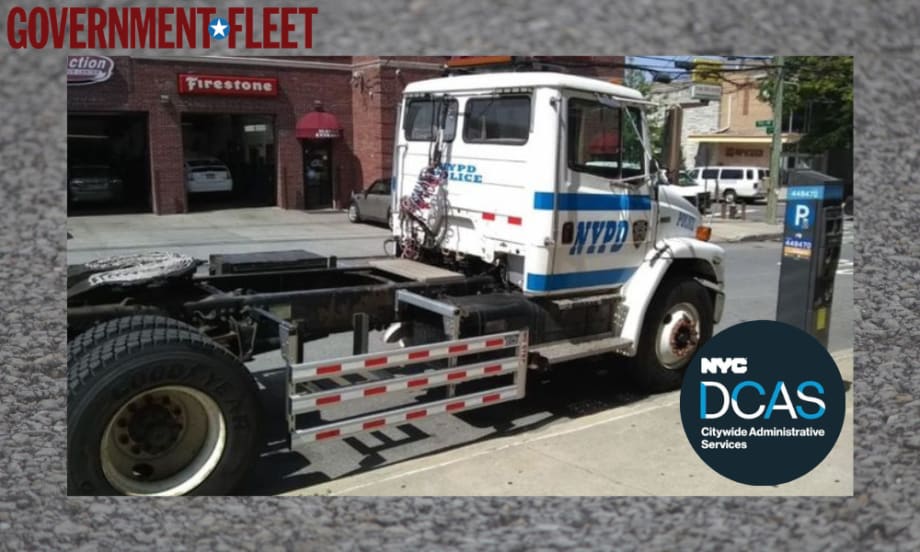
An NYPD truck is seen with side guards installed. DCAS reports that the city has the largest side guard program in the U.S.

Photo: NYC DCAS

3 min to read


Trucks within the New York City Department of Citywide Administrative Services (DCAS) are fully compliant with a new law in the city that requires them to have side guards. The law required that the trucks have the sideguards installed by January 2023. A spokesperson for DCAS confirmed to Government Fleet that the department met that requirement last month.

About the Law

A local NYC law, enacted in 2021, required side guards to be installed on trucks within the city fleet, including certain city-contracted vehicles. The law specifically requires side guards on large vehicles, which are defined as those with a manufacturer’s gross vehicle weight rating exceeding 10,000 lbs. However, street sweepers, fire engines, car carriers, off-road construction vehicles, any other specialized vehicles, or those where side guard installation would be deemed impractical were exempt.

The side guard law is an initiative within New York City's Vision Zero Action Plan, which is part of a global campaign to eliminate deaths and severe injuries among motorists, pedestrians, and cyclists.

What Are Side Guards?

The side guards fit the side of a large vehicle and are designed to prevent pedestrians and bicyclists from falling into the exposed space between the front axle and rear axle of the vehicle. A DCAS spokesperson explained that a motorcyclist, e-bike operator, or even a small car could also become trapped without the side guards.
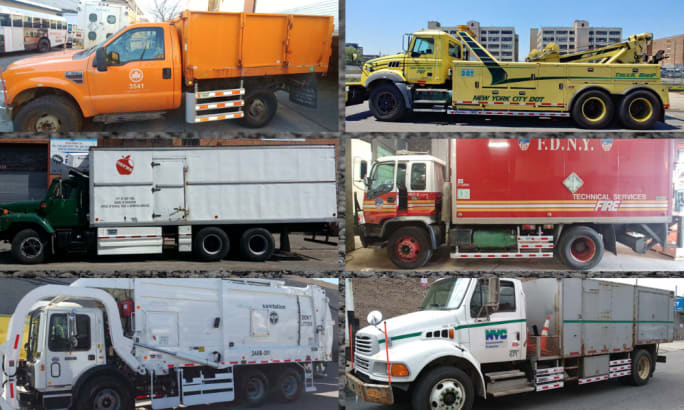
NYC's side guard law extends to large trucks within the city fleet, as well as certain contracted trucks. Several fleet vehicles are seen here with side guards installed.

Photo: NYC DCAS/Government Fleet

Unless otherwise authorized by the department, the side guards must allow for a maximum 13.8-in. ground clearance, maximum 13.8-in. top clearance up to four ft in height, and a minimum 440-lb. impact strength; must achieve a smooth and continuous longitudinal (forward to backward) impact surface flush with the vehicle sidewall; may include rail style guards, provided that such rails be no less than four in. tall and no more than 11.8 in. apart; and may incorporate other vehicle features such as tool boxes and ladders, subject to the approval of the department, according to the law. Click here to see some of the city's fleet vehicles that have side gaurds installed. 

As of now, 4,000 vehicles in NYC have side guards installed, making this the largest side guard program in the U.S., according to a DCAS spokesperson.
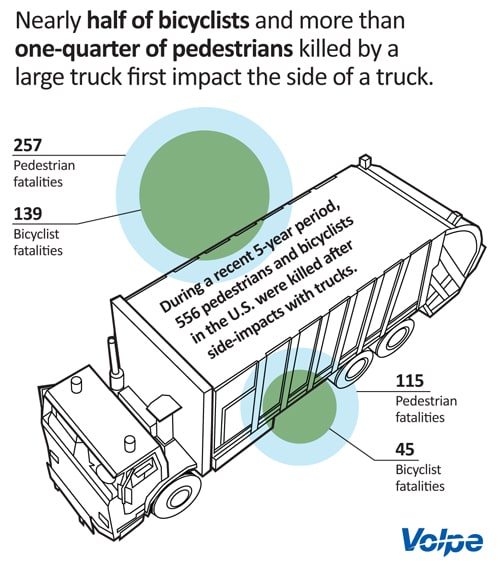
This graphic from 2016 reveals more than 500 pedestrians and bicyclists were killed after side-impacts with trucks.

Photo: U.S. DOT Volpe National Transportation Systems Center

In 2016, the U.S. DOT Volpe National Transportation Systems Center reported that during a recent five-year period, 556 pedestrians and bicyclists in the U.S. were killed after side-impacts with trucks.

"Truck sideguards are common-sense safety rails that will save lives, especially when large trucks operate in crowded cities. Sideguards have been standard and mandatory for decades in many parts of the world and New York City is leading the way to introduce them in the United States," DCAS Deputy Commissioner and Chief Fleet Officer Keith Kerman said.

Other cities in the U.S. including Cambridge and Boston, Massachusetts, as well as Chicago have similar laws in effect.

Yearslong Safety Initiative

DCAS first launched the side guard initiative in 2013 focusing on city fleet trucks and commercial waste trucks, but it was expanded in 2021 to extend to certain contractors (those with contracts over $2 million). As part of the expansion, the city council accelerated the due date for the side guards for the city's fleet from 2024 to 2023.

When the initiative was first launched 10 years ago, there were no side guard suppliers or installers available to DCAS. The department found an initial vendor, who focused on air flow reduction on trucks, and began its work in 2015. DCAS has since helped establish a side guard supply industry, certifying five side guard suppliers and eight installers to date. 

DCAS has been ordering all new trucks with side guards included for over five years now, a spokesperson said.
More Safety

SponsoredJanuary 19, 2026

3 New Ways Fleet Software Pays: ROI opportunities for modern fleet managers

Public fleets face constant pressure to do more with limited budgets. This eBook outlines how modern fleet software helps agencies extend asset life, reduce unplanned downtime, and improve safety by automating maintenance, using smarter video insights, and unifying fleet data. A practical look at how technology can drive measurable ROI for taxpayers.

Read More →
SponsoredJanuary 14, 2026

Behind the Wheel: Distracted Driving in the US Public Sector

Distracted driving is a persistent challenge for public sector fleets, impacting community safety, operational costs, and driver well-being. Samsara’s latest State of Connected Operations report found that 76% of public sector drivers have experienced a “close call” due to distraction—underscoring the urgent need for action.

Read More →
Safetyby Jeanny RoaDecember 22, 2025

Holiday Travel Surge: What Government Fleet Managers Need to Know About Increased Road Risks

As year-end travel reaches record levels, fleet managers must anticipate increased road congestion and safety challenges for government vehicles and drivers.

Read More →
Ad Loading...
SafetyDecember 11, 2025

How Government Fleets Can Reduce Distracted Driving: Key Takeaways

Crashes, near misses, and costly collisions still occur every day. How agencies can better protect their drivers, roadside workers, and communities.

Read More →
SponsoredDecember 5, 2025

The Road to Smarter Electric Van Transitions: A practical roadmap for integrating electric vans into your fleet

Electric vans are becoming a strategic tool, not just a sustainability move. Get a roadmap that breaks down costs, charging planning, upfit compatibility, and what fleets should evaluate before making the switch.

Read More →
Safetyby News/Media ReleaseOctober 29, 2025

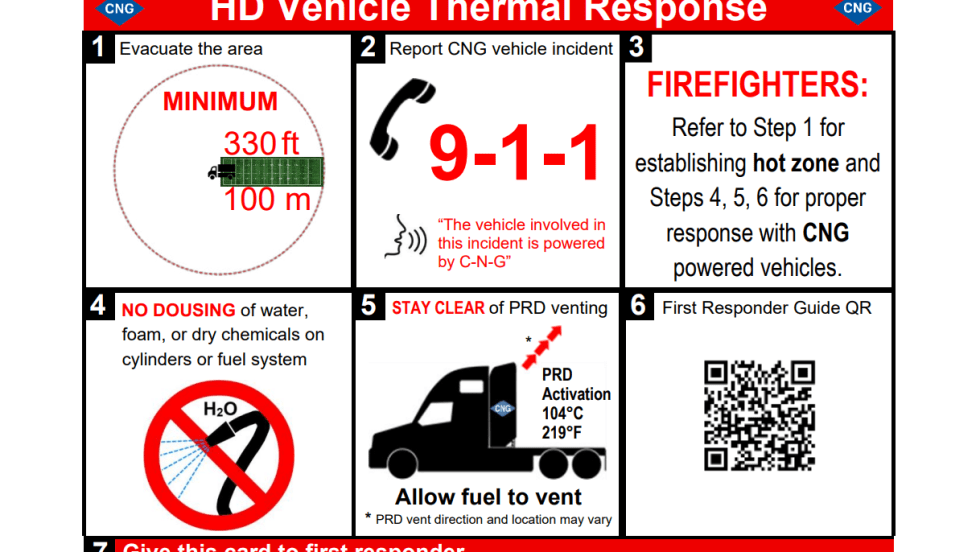
New CNG Vehicle Incident Response Resource Released

The downloadable safety guide contains detailed “Vehicle Crash and/or Leak Response” instructions in addition to “Vehicle Thermal Response” instructions.

Read More →
Ad Loading...
Close-up of a person reviewing charts and a document featuring the Samsara logo, representing research findings on disaster preparedness and operational resilience.
Safetyby News/Media ReleaseOctober 21, 2025

New Samsara Data Reveals Dangerous Gap in Disaster Readiness

A new Samsara report highlights widespread gaps in disaster preparedness among public and private organizations, with most leaders lacking confidence in their ability to respond to major crises.

Read More →
Close-up of a vehicle speedometer representing NYC DCAS efforts to implement Intelligent Speed Assistance technology across city fleet vehicles.
Safetyby News/Media ReleaseOctober 21, 2025

NYC to Make Intelligent Speed Assistance Standard Across More Than 7,000 Fleet Vehicles

New York City is expanding the use of Intelligent Speed Assistance technology across all non-emergency fleet vehicles, marking the world’s largest municipal ISA program, according to NYCDCAS.

Read More →
Safetyby Jeanny RoaOctober 15, 2025

Speed Smarter, See Better: Fleet Innovations from Somerset

Keith Kerman shares how Intelligent Speed Assist and Executive Order 39 aim to make municipalities safer for all.

Read More →
Ad Loading...
SafetyOctober 14, 2025

Inside Alexandria’s Tons of Trucks: A Model for Citizen Engagement in Fleet Operations

A look at how direct public engagement can help fleet departments build transparency, understanding, and trust with the communities they serve.

Read More →