




Red Government Fleet with star logo
MenuMENU
SearchSEARCH

Terex Advocates New Work Zone Capacity Comparison for Digger Derricks

To help utility companies and contractors select the right size of digger derrick to complete the majority of their day-to-day tasks, Terex Utilities is promoting a new comparison called Work Zone Capacity as a new industry standard.

June 6, 2013
Terex Advocates New Work Zone Capacity Comparison for Digger Derricks

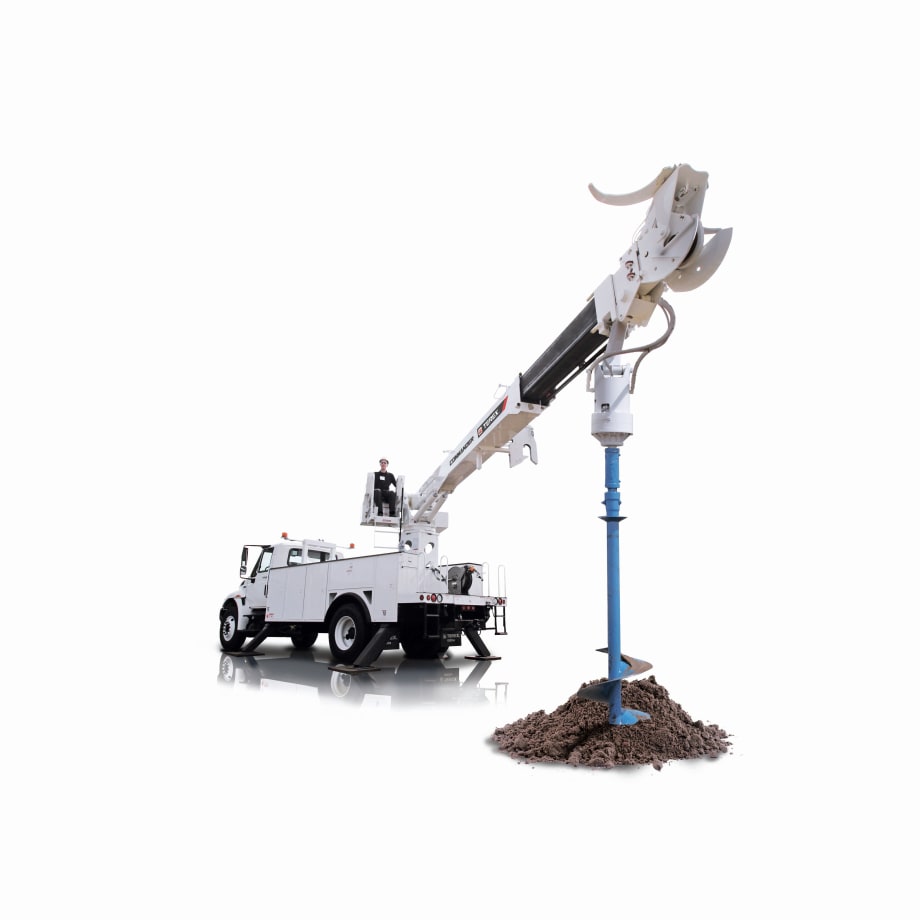
Photo courtesy of Terex


2 min to read


Photo courtesy of Terex


To help utility companies and contractors select the right size of digger derrick to complete the majority of their day-to-day tasks, Terex Utilities is promoting a new comparison called Work Zone Capacity as a new industry standard. Work Zone Capacity highlights the ability of a digger derrick to perform the tasks that these trucks are built for — digging holes and setting poles.

The new Work Zone Capacity standard reflects not only the digger derrick’s boom lifting capacity, but it also accounts for the digger derrick’s auger digging and lifting capacity. These capacities need to match the work the operator is trying to do. For instance, utility fleets do not want to buy a digger derrick with a capacity in the work zone that does not allow them to lift an auger full of material out of the hole. The new Work Zone Capacity gives utility companies the tool to select a truck properly sized to perform all of the jobs it is tasked to do.

“To select the right digger derrick for the job,” said John Pantkze, project manager, Terex Utilities, “the truck should be able to dig a hole and set the pole without the need to reposition the digger derrick. This means that operators need to consider not only the lifting capacity at a 10-ft load radius (the current industry comparison standard), but also the digging and lifting capacity out of the hole at the operator’s typical working radius (often in the 20- to 40-ft range at 0 to -15 degrees, depending on the size of the digger derrick). The object of the new Work Zone Capacity standard is to match these capacities to the job.”

It’s important for operators to really understand all of the capacities of their digger derricks, not just those capacities readily available on the manufacturers’ specification sheets, Pantzke said.

“With the range of work that a digger derrick is tasked to do, the usual specifications and comparisons only tell part of the story and can lead to oversights when selecting equipment,” he said.

To calculate a digger derrick’s Work Zone Capacity, operators need to take into account the soil conditions and density of the material the truck will be working in, as well as the auger sizes they will be using and number of flights needed. Then, operators can use a specialized calculator designed by Terex to determine a digger derrick’s Work Zone Capacity.

For more information about the new Work Zone Capacity standard, visit www.terexutilities.com.
More Maintenance

tech-corner-diagnostics
Maintenanceby Mike ClearyFebruary 4, 2026

Tech Corner: Strategies for Diagnostic Success

It takes years to become a great diagnostic technician. Here's what separates the techs who guess from the techs who know.

Read More →
SponsoredFebruary 1, 2026

Why One Car Wash Wasn’t Enough For This Fleet

Limited wash locations can increase travel time, fuel costs, and admin work for fleets. Here’s how one government fleet expanded access and simplified operations.

Read More →
SponsoredJanuary 19, 2026

Basic Tracking vs Next Generation Fleet Technology

Fleet software is getting more sophisticated and effective than ever, tying big data models together to transform maintenance, safety, and the value of your existing tech stack. Fleet technology upgrades are undoubtedly an investment, but updated technology can offer a much higher return. Read how upgrading your fleet technology can increase the return on your investment.

Read More →
Ad Loading...
SponsoredJanuary 14, 2026

It’s here: The 2026 Fleet Technology Trends Report

What does AI mean for fleets? Get the answer — and learn other top tech trends.

Read More →
MaintenanceDecember 19, 2025

Keeping Snow and Ice Removal Equipment at the Ready

The best time to prepare winter equipment is before you’ll need it. Here are pre-season tips to keep your equipment on the road and out of the shop.

Read More →
SponsoredDecember 11, 2025

Case Study: How the City of Sugar Land Digitized Its 550-Vehicle Fleet, Saving 100+ Labor Hours Weekly and $1.5M in Budget Gains

See how the City of Sugar Land modernized its 550-vehicle fleet, reclaimed 100+ labor hours weekly, and unlocked $1.5M in budget impact — all with FASTER Asset Solutions.

Read More →
Ad Loading...
SponsoredDecember 5, 2025

The Road to Smarter Electric Van Transitions: A practical roadmap for integrating electric vans into your fleet

Electric vans are becoming a strategic tool, not just a sustainability move. Get a roadmap that breaks down costs, charging planning, upfit compatibility, and what fleets should evaluate before making the switch.

Read More →
Maintenanceby Staff WriterSeptember 15, 2025

7 Design Principles of Highly Effective Garages

Learn how to create a place where employees feel prepared to do their jobs safely.

Read More →
Maintenanceby News/Media ReleaseSeptember 10, 2025

Amerit Acquires Derotic Emergency Equipment

The acquisition will be integrated with Vector Fleet Management, expanding its reach in the government, emergency, and specialty vehicle sector.

Read More →
Ad Loading...
MaintenanceJuly 25, 2025

The Coffee, the Cell Phone, the Cigarette: Managing Shop Distractions

Fleet managers must eliminate distractions and disruptions in order to increase workplace efficiency, while being aware that employees have their personal lives to attend to as well.

Read More →