Tesla has issued a voluntary recall on more than two million vehicles to update software to fix a system called Autosteer that's meant to ensure drivers are paying attention when they use Tesla's Autopilot technology.
It's important to note that this is not a traditional recall. The vehicles simply require an over-the-air software update, and a trip to a Tesla dealer for repair is not necessary.
What's Included in the Recall
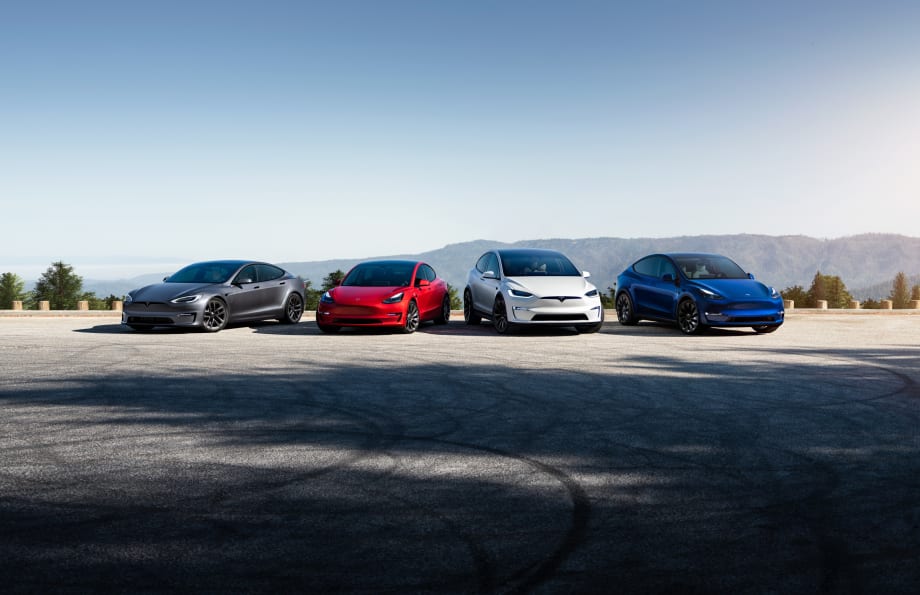
The recall includes all model year 2017-2023 Model 3 vehicles and all model year 2020-2023 Model Y vehicles that are equipped with Autosteer and were produced through Dec. 7, 2023. Both models are popular choices for law enforcement fleets looking to electrify.
The recall also includes 2012-2023 Model S vehicles that are equipped with Autosteer and were produced between Oct. 5, 2012, and Dec. 7, 2023, and all model year 2016-2023 Model X vehicles.
The recall only affects vehicles in U.S. and Canada.
Vehicles equipped with an in-cabin camera and Autopilot Hardware 3.0 or Autopilot Hardware 4.0 that are running software version 2023.44.30 or later are not included in the recall. Those vehicles have already been remedied and no further action is needed.
What is Autosteer?
Tesla's Autosteer feature builds upon its Traffic-Aware Cruise Control, keeping vehicles in their driving lane when cruising at a set speed, according to the company's website.
According to a press release from the automaker, in certain circumstances when Autosteer is engaged, the feature’s controls may not be sufficient to prevent drivers from misusing the SAE Level 2 advanced driver-assistance feature. SAE Level 2 is a measurement of vehicle autonomy capabilities.
In SAE Level 2 vehicles, the vehicle can control both steering and accelerating/decelerating. In these vehicles, a human sits in the driver's seat and can take control of the vehicle at any time.
Autopilot includes features called Autosteer and Traffic Aware Cruise Control (TACC). In coordination with the TACC feature, Autosteer can provide steering, braking, and acceleration support to the driver in limited operating conditions.
Autosteer is designed and intended for use on controlled-access highways when the feature is not operating in conjunction with the Autosteer on City Streets feature.
As the vehicle operator, the driver is responsible for the vehicle’s movement with their hands on the steering wheel at all times, remaining attentive to surrounding road conditions and intervening as needed to maintain safe operation.
When Autosteer is engaged, it uses several controls to monitor that the driver is engaged in continuous and sustained responsibility for the vehicle’s operation as required.
If the driver attempts to engage Autosteer when conditions are not met, the feature will alert the driver it is unavailable through visual and audible alerts, and Autosteer will not engage.
Similarly, if the driver operates Autosteer in conditions where its functionality may be limited or has become deteriorated due to environmental or other circumstances, the feature may warn the driver with visual and audible alerts, restrict speed and/or instruct the driver to intervene immediately.
The recall comes after a two-year investigation by the National Highway Traffic Safety Administration into a series of crashes that happened while the Autopilot system was in use.
According to The Associated Press, NHTSA has dispatched investigators to 35 crashes involving Tesla vehicles since 2016 in which the agency suspects the vehicles were running on an automated system. At least 17 people have been killed.
NHTSA concluded that Autopilot's method of ensuring drivers are paying attention can be inadequate, leading to potential misuse of the technology.
The Remedy for the Recalled Vehicles
Affected vehicles received an over-the-air software remedy, which was expected to begin deploying to certain affected vehicles on or shortly after Dec. 12, 2023, with software version 2023.44.30.
These include vehicles equipped with an in-cabin camera and Autopilot Hardware 3.0 or Autopilot Hardware 4.0.
Remaining affected vehicles, including vehicles equipped with Autopilot Hardware 3.0 but without an in-cabin camera and vehicles equipped with Autopilot Hardware 2.5, Autopilot Hardware 2.0 or Autopilot Hardware 1.0, will receive an over-the-air software remedy at a later date.
The added controls and alerts are meant to further encourage drivers to adhere to their "continuous driving responsibility" whenever Autosteer is engaged, according to documents submitted to NHTSA.
Depending on vehicle hardware, the additional controls will include, among others:
Increasing the prominence of visual alerts on the user interface.
Simplifying the engagement and disengagement of Autosteer.
Additional checks upon engaging Autosteer and while the feature is being used outside controlled access highways and when approaching traffic controls.
Eventual suspension from Autosteer use if the driver repeatedly fails to demonstrate continuous and sustained driving responsibility while the feature is engaged.
Calls for Tighter Autonomous Vehicle Safety Regulations
U.S. Senators Edward J. Markey and Richard Blumenthal, who have pushed for autonomous vehicle safety technology, issued a joint statement after the recall was announced, calling it "critically needed to make Tesla’s cars safer," and referring to it as "egregiously overdue."
In a statement posted to X, formerly known as Twitter, on Dec. 11, Tesla stated that its vehicles are safer when Autopilot is engaged.
The statement came in response to a Washington Postarticle on an analysis that reportedly found at least eight fatal or serious Tesla crashes occurred on roads where Autopilot should not have been enabled.
In Tesla's response, it noted that in the 4th quarter of 2022, it recorded one crash for every 4.85 million miles driven in which drivers were using Autopilot technology. For drivers who were not using Autopilot technology, Tesla recorded one crash for every 1.40 million miles driven.
Tesla went on to say that "the data is clear: The more automation technology offered to support the driver, the safer the driver and other road users."
U.S. Transportation Secretary Pete Buttigieg has previously told the AP that he's concerned about Tesla's marketing of its Autopilot system because the vehicles can't drive themselves.
While Buttigieg said he believes self-driving vehicles have enormous potential to reduce roadway deaths, he doesn't think the technology has been proven yet.