Any government agencies are setting clean fleet goals in an effort to reduce gasoline and diesel use, reduce harmful emissions, and save money. Sometimes, this is a policy set by elected officials, and other times, it’s a goal set by fleet management.
Fleet operations have different methods of meeting their goals for cleaner vehicles. Whether the goal to stay fiscally conservative or to reduce emissions even if costs are higher, here’s what fleets around the country have been doing.
‘Practical’ Methods for a Cleaner Fleet
Dakota County in Minnesota set out to reduce its greenhouse gas emissions from a 2005 baseline and since then, it has reduced emissions by 34%, Fleet Manager Kevin Schlangen, CAFM, CEM, CPFP, reported. This surpasses the county’s goal of 15% reduction by 2015 and 30% reduction by 2025.
In a fiscally conservative county, elected officials expect a financial return on investment (ROI) for new projects. And in a state with few grant options for alternative-fuel vehicle procurement, Schlangen turned to other methods.
“We’ve done all of our [greening] through what I want to call ‘practical’ solutions,” he said.
These include buying hybrid vehicles, right-sizing to smaller vehicles where possible, buying vehicles with smaller engines where possible, and implementing telematics to reduce idling and monitor and coach driver behavior.
Telematics may be the most costly of these steps, but Schlangen said the cost of telematics is entirely paid for by savings in reduced salt and fuel use (the county first installed telematics to track salt trucks during the winter). A pilot project in 2005 resulted in a 25% reduction in salt use and a second pilot project in 2011 resulted in an 8% improvement in MPG. The county now has telematics installed on all on-road vehicles, work trucks, and law enforcement units.
Fleet vehicles also use biodiesel as mandated by state law — using B-5 in the colder months and B-20 in warmer months. Gasoline in the state is E-10, and while the fleet has flex-fuel vehicles, they won’t be fueled with E-85 unless it’s cost effective.
“We haven’t been burning much of that because it costs us more to burn E-85,” Schlangen explained. “We look for direction from our county board, and our greening initiatives are based on a solid financial return on investment. Right now because of the reduction we’ve already achieved, they’re not looking for us to do more with E-85.”
Dakota County, Minn.'s fleet greening policy includes buying hybrid vehicles (like the one pictured).
Focusing on Natural Gas
After a few efforts in the past three decades, the City of Milwaukee renewed its sustainability work. In 2013, it released an official sustainability plan, named RefreshMKE, which called for 25% of transportation fuels to come from renewable resources by 2025, using 2005 as a baseline year.
Because renewable fuel options are limited, the goals of the project are now focused on alternative fuels, said Jeff Tews, CPFP, fleet services manager. To reduce diesel fuel use, fleet management is also turning to compressed natural gas (CNG), mostly in the refuse fleet.
The fleet’s CNG vehicle makeup now includes 60 refuse packers, as well as five cargo vans and three compact cars.
“We’re trying to do our part. With the refuse packers and natural gas vans, last year they displaced 12% of all gasoline/diesel that Public Works used. Every time we replace a truck, that percentage goes up,” Tews reported. There are 151 total refuse packers, leaving a lot more room for diesel displacement as the fleet is transitioned over when vehicles age out.
When the city made the decision to go with CNG, the cost of diesel was $4.40 per gallon. With lower fuel prices, the estimated return on investment isn’t quite as fast. However, even at current prices ($1.06 per gallon for CNG versus $2.83 for diesel, for fuel savings of $1,900 a year on the refuse trucks) the city will still see a return on investment for the trucks in 4.4 years because it received grant funding for the incremental cost of the CNG engines.
In addition to converting the rest of the refuse fleet to run on CNG, Tews is eyeing heavy-duty dump trucks for their high use. The city also has 42 hybrids and one plug-in hybrid vehicle.

The City of Sacramento, Calif., is going electric with Chevrolet Bolts.
Turning to Electric Vehicles
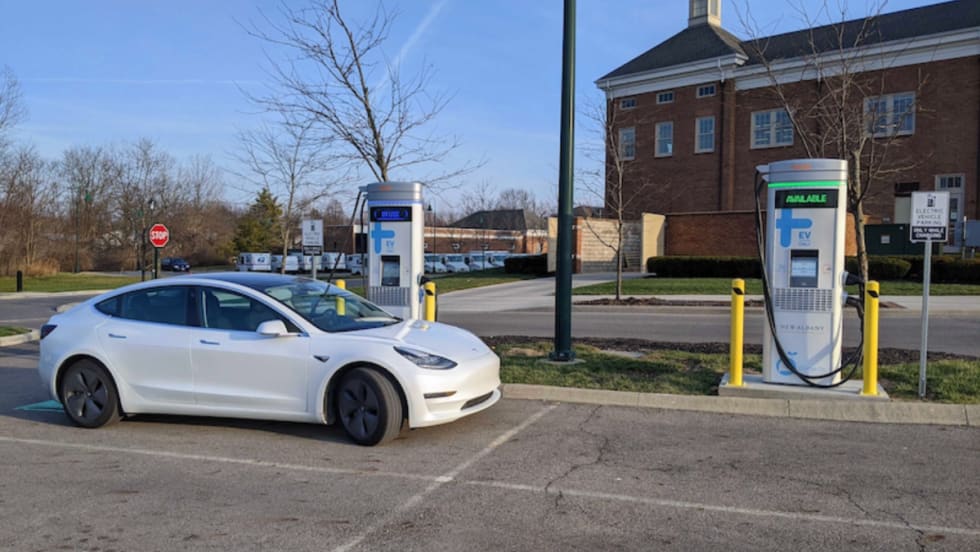
In December 2017, the City of Sacramento, Calif., updated its fleet sustainability policy to require that 50% of all light-duty passenger vehicles purchased must be zero-emission vehicles (ZEVs) by the end of the 2018 fiscal year. The Fleet Management Division initiated the change, which also states that 50% of all vehicles purchased by 2018 must run on some type of alternative fuel.
Mark Stevens, fleet manager, said administrative vehicles average 40-50 miles of driving per day, as measured by the fuel management system, making electric vehicles a good choice.
In the fiscal year ending July 2018, the fleet purchased 35 Chevrolet Bolts. With grant funding, most cost $25,500 each, about the price the city pays for a gasoline car. This fiscal-year, the city has already purchased 18 and will likely buy a total of 25 Bolts. The rebate amount is less this year, meaning the city is paying about $29,500 for each vehicle.
“Because of our sustainability policy, our council understands it will be more expensive to purchase alt-fuel vehicles, but they accept that fact,” Stevens said. “The primary purpose is emissions [reduction], not just reduced purchase price.”
But despite the higher upfront cost in comparison to a gasoline vehicle, Stevens expects total cost of ownership to be lower in the long run.
“There are no oil changes, smog checks, or brake systems wearing out. Operating costs will decrease tremendously,” he explained.
He’s waiting until the vehicles have been in service for a full year before calculating total costs and savings.
Stevens said he doesn’t take charging infrastructure costs into account when making the decision to purchase electric vehicles. Fleets have to pay for gasoline and diesel fueling infrastructure, so why should EV charging infrastructure be treated any differently, especially if the city makes a commitment to this form of energy?
He is confident the rest of the fleet will meet the 50% alternative-fuel mandate. The city’s vehicles also use renewable CNG, renewable liquefied natural gas, propane autogas, E-85, hydrogen fuel, and renewable diesel.
No Mandates Needed
In Virginia, the City of Chesapeake fleet is also focused on reducing its use of traditional fuels based on what makes sense economically, which is especially important as the city has no clean fleet mandates, said Fleet Manager George Hrichak, CEM, CPFP.
“Most of my initiatives are on the economic side. If I can get a good return on investment on adopting alternative fuels, I’ll do it,” he said.
The fleet’s biggest investment is in CNG. That includes one slow-fill station and 50 vehicles, most of which are trash trucks.
In the first four months of the current fiscal year, fuel savings alone was $114,609, Hrichak reported. Combine that with lower maintenance costs — 40 cents per mile less — and that leads to combined savings of $173,000 just in the first four months.
Fleet staff calculated it would take 4.1 years to get an ROI for the slow-fill station and three years for a recently opened fast-fill station. ROI is calculated with savings from fuel and vehicle maintenance costs.
Other alternative fuels the city uses include propane autogas and E-85. In 2017, the city received a propane tank installed at a “ridiculously low price,” and Hrichak is encouraging drivers to use the fuel because it’s cheaper than gasoline.
No Single Solution
Transitioning to a cleaner fleet doesn’t always mean a significant upfront investment. It doesn’t require a policy coming from management or elected officials. And while grant funding may help, it’s possible to build a cleaner fleet without the extra funds. Fleet managers are making decisions every day that help reduce fuel spend and harmful emissions.