The city of Madison has been running a Pierce Manufacturing Volterra electric pumper every day for over two years, taking on a couple thousand calls.
There seems to be a lot of skepticism about whether an electric fire truck is capable of handling the rigors of firefighting. More often than not, the response to news about electric fire trucks is doubtful at best. “The real-world practical application of this type of vehicle will confirm or deny many of our paradigms, hopefully not at the cost of public health and safety,” reads one comment on a recent Government Fleet story about a department’s electric fire truck purchase. “The only rational thing about the electric fire truck was that it had a diesel generator for back up- so it is carrying an engine and fuel to support the all-electric operation when the juice runs out. ‘Excuse me while we charge up -- only a few minutes until we can start pumping water again,’” reads another.
Government Fleet took these concerns to a department that can respond to skepticism about the technology arguably better than anyone else: the Madison, Wisconsin, Fire Department. The city has been running a Pierce Manufacturing Volterra electric pumper, the first electric fire truck in service in North America, every day for over two years, taking on a couple thousand calls.
About Madison’s Electric Pumper
Madison FD’s electric pumper gets 37 miles of range. While that may sound low, it’s important to remember that most urban fire departments in larger cities cover a fairly small radius — two miles in Madison’s case — so the range works in this application. The pumper is placed at Station 8, taking on an average of 10 to 12 calls per day, and an upwards of 24 calls on busy days. In the two years the truck has run, it has never run out of battery.
While the pumper is used in an urban setting, Madison Fleet Superintendent Mahanth Joishy believes it can work in rural areas too.
“It'll work in any environment a regular fire truck does,” Joishy said.
When testing the pumper, Joishy wanted to ensure it could handle a high call volume.
“It's a busy fire engine; we put it at a busy house for a reason,” Madison Fire Department Assistant Chief of Operations Scott Bavery said.
The pumper Madison Fire Department currently has in service differs from those available for purchase today due to the testing and knowledge gained from the collaboration between the City of Madison and Pierce Manufacturing.
Pierce Manufacturing Director of Electrical and Software Technology Eric Linsmeier says the production model will have added range. Madison’s pumper has about 155 kilowatt-hours of energy; the production model is closer to 245 kWh. The city of Madison placed an order for the production model as soon as it became available.
Madison began the conversation about having an electric fire truck several years ago. The effort was led by Former Fire Chief Steven Davis, who wanted to reduce the department's carbon footprint in its overall operations. The fire department approached the fleet division, which was onboard to support them.
“We aren't forcing this on anyone. You can't force it on anyone; it wouldn't work. Every fleet manager knows this. We all buy vehicles on behalf of other departments on frontline missions. And we're a support department. So all we can do is support what the departments need,” Joishy said.
Pierce Manufacturing reached out to the Madison Fire Department and fleet to work with them on creating the electric pumper; the process took roughly a year. The pumper was put in service in May 2021 and the department has gone through vetting, testing, and operational use for over the last two years and will continue to do so.
The truck has a diesel backup both for the engine and for the pumper, but it’s not a hybrid. That’s because the truck doesn’t create electric energy from the engine. When the battery runs out, the diesel engine kicks in.
Introducing the Pierce Volterra to Firefighters
Pierce designed the Volterra EV apparatus to operate the same as its internal combustion engine trucks, so firefighters who are already used to driving a Pierce truck will not have a learning curve.
“We spent a lot of time thinking about how to incorporate components into a vehicle making operation seamless so the operator really doesn't know that they're operating an electric apparatus over a traditional internal combustion apparatus. In the Volterra pumper, it isn't obvious it's an EV by looking in the instrument panel or any other controls. It operates exactly the same as all of our other trucks,” Linsmeier said.
This is something Joishy has found valuable for both the fire department and the fleet division.
“There's a lot of value in that familiarity of our firefighters and the familiarity of our mechanics that need to work on these vehicles. It's all familiar,” Joishy explained.
Pierce’s team also had a different approach with using its technology in the vehicle. The company looked for ways to insert its technology into a fire apparatus instead of trying to find a way to build a new apparatus body around the emerging technology.
Bavery has gotten good feedback from firefighters. Because the truck creates less noise pollution, firefighters don’t need to use headsets to communicate in the cab while the vehicle is in motion, like they do in the ICE trucks that are louder to operate.
Charging the Pierce Volterra EV Apparatus
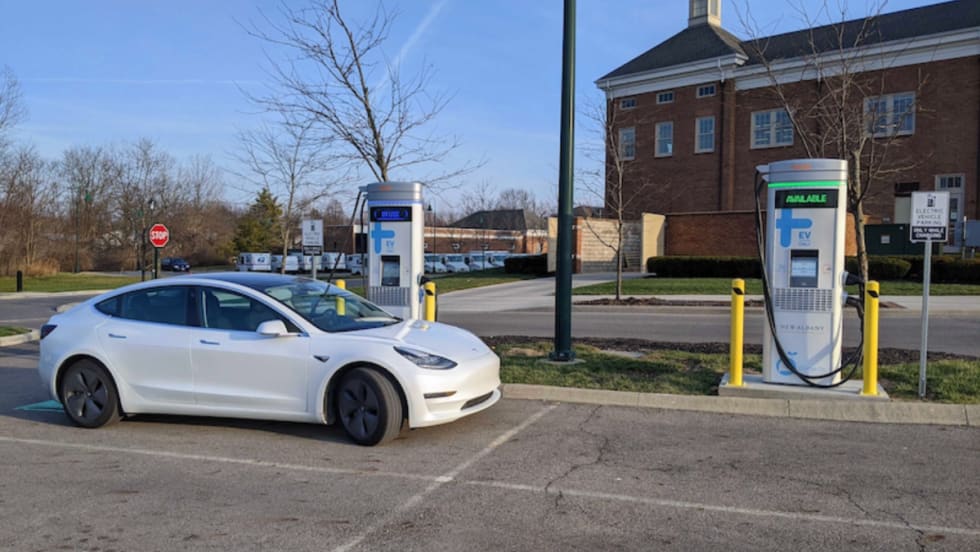
Planning infrastructure to charge a heavy-duty piece of equipment like the Pierce Volterra EV apparatus took cross-department collaboration. The fleet division worked alongside the fire department, Madison Gas and Electric, the city engineering department, and Pierce Manufacturing to plan and install an ABB 150 kW charger at Station 8. The installation required a lot of work because the fire station needed an electrical panel upgrade. This is where the collaboration efforts were important.
When the fire crew returns to the station with the pumper after a call, they plug it in to allow it to charge, so that it stays charged as often as possible.
![[|CREDIT|]](https://assets.bobitstudios.com/image/upload/f_auto,q_auto,dpr_auto,c_limit,w_684/pm.5110618_511woolmark_policeuniforms-1195_mr_1759886985767_zfexqx.jpg)
Madison’s pumper has about 155 kilowatt-hours of energy; the production model is closer to 245 kWh.
In most scenarios, the Volterra can regain full charge in one hour. Depending on the state of charge, normal charging times are often quite less.
Having the charging infrastructure at the fire station allows firefighters to save time they would otherwise spend on trips to and from the gas station.
In Joishy’s opinion, the only negative of the project was the funding needed for the charging infrastructure. This is something other fleets will face as they introduce heavy-duty EVs.
Between labor costs for the installation and electrical upgrades at the station for it to handle the charging, the process was expensive.
“I think the biggest challenge will be infrastructure when it comes to heavy-duty electric, and not the actual vehicle operation itself,” Joishy said. “That is something that anyone getting into electric trucking and busing is going to have to deal with: are their facilities ready for it? Can their local grid handle it? I believe the biggest hurdle for electric trucking and busing is going to be infrastructure, not the vehicles and not the operations of the vehicles. So we cannot buy more than a handful of electric trucks with all that we're trying to do.”
Does an Electric Fire Truck Lead to Cost Savings?
One of the most common questions Bavery has gotten from fire chiefs and other local leaders is how much money the truck will save them. His answer? The department will never recover the cost of the truck it purchased.
“I think what you're going to see over time is that some of that competition [through other manufacturers creating their own electric fire trucks] will hopefully reduce some of those costs and improve the product,” Bavery said.
Still, the department has seen savings elsewhere. It reported that it saves about $15,000 per year on fuel.
Electric vehicles also tend to need maintenance less often than traditional ICE vehicles since they have fewer components. This is another area where the department expects to save money on the production model.
For departments that already do much of their own preventive maintenance on their fire trucks, the work will be similar on the electric fire truck.
“Because of our approach and the way we placed our components, we don't have high voltage cables or other components strung through the chassis. They're all co located in one location, which is right behind the cab,” Linsmeier said.
This allows anyone who is already a qualified emergency vehicle technician to complete basic work on the truck, like brake work, pump maintenance, or valve replacement. Because of the way the components are situated, technicians don’t need high-voltage training in order to complete those tasks.
Pierce does offer some classes from an orientation perspective for fleets that are new to its vehicles, but because the Pierce Volterra electric fire truck operates just like any of its other trucks, additional training is not needed.
The Bottom Line: Is an Electric Pumper Reliable?
The city of Madison, Wisconsin, has nearly 100 electric vehicles in its fleet. Joishy is confident in their ability to do their job and does not have any concern in placing his customers in them.
“I would not put [anyone] in a vehicle that wasn't completely safe and functional and could do whatever they needed to do… We have our police chief in a Tesla. I wouldn’t put him in a vehicle that didn't work great for the mission. And all of our missions are critical, including our emergency services, and our health department, and our mayor's office,” Joishy said.
His advice for fleet managers and fire chiefs hesitant to try the technology? Change will be required sooner rather than later.
“Change is inevitable. And this is the roaring 20s. For sustainable transportation, there's no better time than now to get it. I like to say there's no bad time to plant a tree. If you've never dealt with this before, it's not too late,” Joishy said. “It's urgent that fleets that have never tried this before start trying now. And that will help all of us because prices will come down if demand goes up. And we need to demand from our manufacturers that they move faster to get us this kind of vehicle and this kind of equipment.”
As with any new technology, fleet managers or fire chiefs may still have questions about the electric pumper. If you would like to learn more about Madison’s use of the Pierce Volterra pumper, you can reach out to Joishy at MJoishy@cityofmadison.com or Bavery at SBavery@cityofmadison.com.