



Red Government Fleet with star logo
MenuMENU
SearchSEARCH

Catching Up on Vehicle Replacements

Eight years after the Great Recession, fleets across the country are still recovering. Fleet managers share how their teams got through it and obtained the necessary funding for replacements.

November 16, 2017
Catching Up on Vehicle Replacements

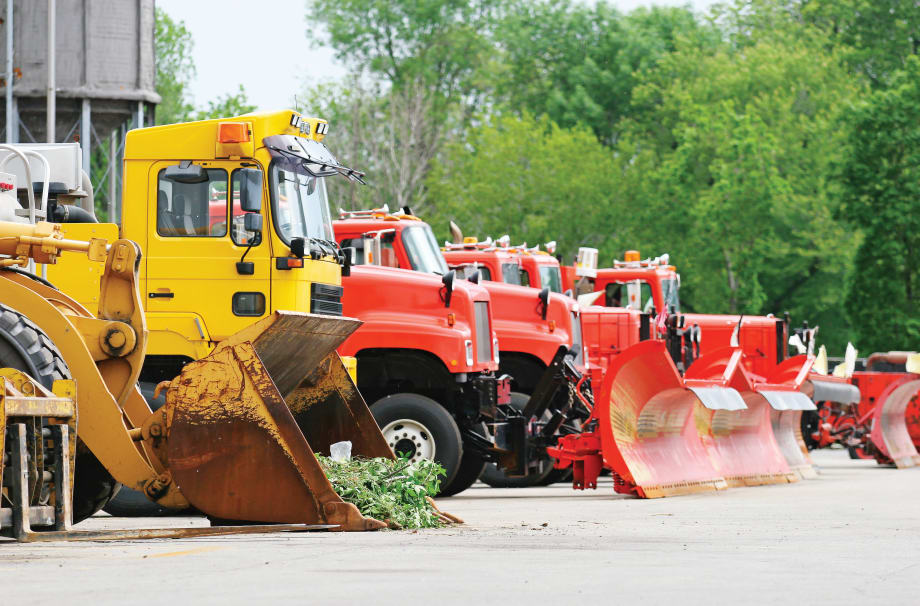
Due to the variety of public sector fleets, it can be difficult to set standards for replacements. Heavy-duty equipment, for example, cannot be measured against the same standard as sedans. Photo: Getty Images

4 min to read


Due to the variety of public sector fleets, it can be difficult to set standards for replacements. Heavy-duty equipment, for example, cannot be measured against the same standard as sedans. Photo: Getty Images

By the time the Great Recession ended in 2009, governments had been hit hard, and fleets were no exception. Funding was cut across the board, which meant reducing expenses to stay within limited budgets. As a result, many had to delay vehicle replacements, leading to aging vehicles and increased maintenance costs.

Eight years later, some fleets are still recovering. We spoke to a few fleet managers about how their fleets dealt with delayed replacement and how they tackled purchasing once funds became available.

A Snowball Effect

The City of Raleigh, N.C., fleet consists of about 2,000 vehicles and 2,000 pieces of equipment. When the recession began, departments voluntarily delayed vehicle replacements. As it continued, more cuts were needed and fleet had to select vehicles for deferred replacement. Travis Brown, vehicle fleet services superintendent, said vehicles were chosen based on historical records.

At a Glance

Following the Great Recession, fleets:

  • Deferred vehicle replacements

  • Faced rising costs due to aging assets

  • Determined what to replace first.

“If it was a vehicle that had some age to it, had high mileage but not too high, and wasn’t in really bad shape and the maintenance costs had been fairly low, we would probably select those to keep a little longer,” Brown explained.

Of course, there are other ways to deal with limited budgets. Dakota County, Minn., eliminated 129 pieces of equipment, bringing the fleet down to 380 power units and 311 trailers, attachments, and small equipment.
Rick Hilmer, fleet manager for Prince George’s County in Maryland, said his county was hit hard. A significant portion of the county’s tax revenue came from residential real estate. It operates under a property tax cap, which meant it could not raise rates to recover lost funds once the housing bubble burst.

For five years, the fleet’s only purchases were to replace public safety vehicles lost the year before, while aging vehicles remained on the road. Of the county’s 1,800 police units, nearly half exceeded the fleet’s age or mileage requirements. The fleet was able to reduce its size by 10%, but more cuts were needed.

Between vacant and filled positions, fleet lost 20% of its workforce. In addition, furloughs continued for several years, so the fleet had to repair aging vehicles with limited manpower.
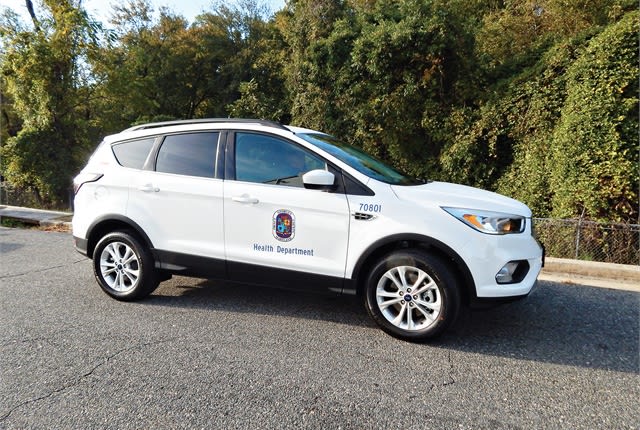
Prince George’s County, Md., ramped up vehicle replacements with help from user departments, who advocated for more fleet funding. Photo courtesy of Prince George's County

Recovery Mode

Over time, the economy recovered and funds became available to purchase more vehicles. But with so many vehicles to replace, which ones get priority?

Dakota County adopted a points system that assigns a point value to every vehicle based on a set of criteria (see table on page 16). Kevin Schlangen, CAFM, CEM, CPFP, fleet manager, said the system allows him to see what needs replacement first. It also benefits in the long term, as the fleet can use this to justify future purchases.

The Raleigh fleet began easing back into its normal replacement cycles four to five years ago, and made replacement decisions with help from its maintenance management system, which also assigns point values to vehicles. Fleet received enough funding to replace about 15-20% every year. Now the fleet is back to its regular replacement cycle.

In 2015, Prince George’s County officials approached fleet with a proposition: Replace the fleet in five years. Under this plan, fleet would receive $30 million every year. But recovery is not a return to business as usual for Hilmer. With these new funds, he is taking the opportunity to transform the fleet.

Hilmer said he is interested in adopting new technologies to modernize the fleet and make it greener. Unfortunately, he was unable to take advantage of emission-reduction grants offered shortly after the recession began because they were fund-matching grants. But now, the fleet plans to use the grants available and spend aggressively. When the five-year plan was first introduced, alternative-fuel vehicles comprised about 2% of the 5,000-vehicle fleet. Two years later, it’s up to 8%.

Getting the Ball Rolling

The fleets we spoke to are in the process of replacing old vehicles, but it took time to get to this point. Here are a few strategies that helped get the recovery process started.

  • Keep data. Surely, this isn’t the first time you’ve heard about the importance of data. All three fleet managers interviewed mentioned the importance of data in making decisions and justifying them. Travis Brown, vehicle fleet services superintendent for the City of Raleigh, N.C., noted that telematics can collect this data. His fleet management software allows him to determine what needs replacing.

  • Keep administration in the loop. Whether it’s a council, board, or elected leader, it’s important to keep decision-makers informed. Data should be used to explain what your fleet is doing, and why more funding is needed. “A lot of the officials in these positions are business owners,” Kevin Schlangen, CPFP, CAFM, CEM, fleet manager for Dakota County, Minn., said. “They’re expecting you to give them a solid business plan on why you’re replacing it. And that has to come from more numbers and more factors than just age and miles or hours.”

  • Don’t go it alone. Fleets aren’t public facing, so the best way to gain support is from customers. Rick Hilmer, fleet manager for Prince George’s County, Md., said officials approached him about replacing vehicles after user departments advocated for more fleet funding.

Miles to Go

According to the National League of Cities’ annual City Fiscal Conditions Survey, cities’ general fund revenues still have not fully recovered from the recession and stand at less than 98% of 2006 levels. General fund revenue growth is also slowing and is projected to stagnate with 0.9% growth in 2017. In contrast, expenditures are anticipated to increase by 2.1%.

It’s a stark reminder that recovery periods end, too. This is why it is important to catch up when possible and ensure that these funds are being maximized.

“As soon as you can, get back on your regular cycle. It’ll cost you less in maintenance costs,” Brown said. “And with the technology in a lot of the vehicles, they’re not getting any cheaper.”

Don’t forget the old units, either. Brown noted that fleets should get rid of the vehicle being replaced as soon as possible in order to recoup the most funds.

Similarly, Schlangen said new funds only cover about 70% of his fleet’s purchases. The other 30% should come from remarketing revenue and grants.

When Do You Replace?

One way to ensure vehicles are replaced when needed on a consistent basis is to provide justification. Dakota County, Minn., uses the following points system to explain why a vehicle needs replacement. This concept is based on an American Public Works Association (APWA) vehicle replacement guide.

Factor

Points

Example: A Patrol Sedan

Age

One point for each year of chronological age, based on in-service date

5 years since it was placed in service = 5 points

Miles/Hours

On-road units with a 7L or larger diesel engine receive one point for each 20,000 miles. All other on-road units receive one point for each 10,000 miles.
Off-road equipment with a diesel engine over 150 hp receives one point for each 1,000 hours, or 200 hours if its diesel engine offers 150 hp or less

90,000 miles = 9 points

Type of Service

Vehicles assigned 1, 3, or 5 points. Administrative sedans receive 1 point. Severe-duty equipment receives 5 points

Severe-duty patrol car = 5 points

Reliability

1 to 5 points assigned based on how often the unit is in for repairs. A 5 would be in 3 or more times a month , a 1 would be in every 3 months or less

Poor reliability = 5 points

Maintenance and Repair Cost

1 to 5 points assigned based on maintenance costs. If maintenance and repair costs are 20% or less of the purchase price, 1 point is assigned. If costs are 100% or more of the purchase price, 5 points are assigned

Repair costs are 70% of its purchase price = 3 points

Condition

0 to 5 points assigned based on body condition, rust, interior condition, accident history, anticipated repairs, and other criteria.

Poor condition = 5 points

Energy Efficiency

0 to 6 points assigned.
2 points for utilization/sharing across fleet groups
2 for right-sizing of replacement unit
1 for flex-fuel-compatible or biodiesel-compatible engines
2 for hybrid, electric, or alternative-fuel engine
2 for alternative power unit or anti-idling technology

E-85 compatible = 1 point

Point Ranges:
Condition I: Under 18 Points, Excellent
Condition II: 18 to 22 Points, Good
Condition III: 23 to 27 Points, Qualifies for Replacement
Condition IV: 28 Points and Above, Needs Immediate Consideration

Total = 33 points, needs immediate consideration

Subscribe to Our Newsletter

More Procurement

ProcurementFebruary 11, 2026

Spartan to Deliver Fire Apparatus in 180 Days

Spartan Emergency Response will delivery fire apparatus within 180 days under its new 180 Truck Program that was introduced at the Fire Department Instructors Conference in Indianapolis.

Read More →
SponsoredJanuary 19, 2026

Basic Tracking vs Next Generation Fleet Technology

Fleet software is getting more sophisticated and effective than ever, tying big data models together to transform maintenance, safety, and the value of your existing tech stack. Fleet technology upgrades are undoubtedly an investment, but updated technology can offer a much higher return. Read how upgrading your fleet technology can increase the return on your investment.

Read More →
SponsoredJanuary 19, 2026

3 New Ways Fleet Software Pays: ROI opportunities for modern fleet managers

Public fleets face constant pressure to do more with limited budgets. This eBook outlines how modern fleet software helps agencies extend asset life, reduce unplanned downtime, and improve safety by automating maintenance, using smarter video insights, and unifying fleet data. A practical look at how technology can drive measurable ROI for taxpayers.

Read More →
Ad Loading...
SponsoredDecember 5, 2025

The Road to Smarter Electric Van Transitions: A practical roadmap for integrating electric vans into your fleet

Electric vans are becoming a strategic tool, not just a sustainability move. Get a roadmap that breaks down costs, charging planning, upfit compatibility, and what fleets should evaluate before making the switch.

Read More →
Procurementby Nichole OsinskiApril 3, 2025

Government Vehicle Sales See Continued Growth from Beginning of Year

Government fleet sales rose from both January and February monthly totals, which were both under 20,000.

Read More →
Procurementby Staff WriterApril 3, 2025

Updated: Trump Signs Proclamation Imposing 25% Tariff on Auto Imports

A new proclamation signed by President Trump imposes a 25% tariff on imported passenger vehicles and key auto parts, citing national security concerns.

Read More →
Ad Loading...
Procurementby Staff WriterMarch 14, 2025

Government Vehicles Sales See Another Dip Compared to 2024

Government fleet sales last month came in at 18,383 vehicles, falling 15.4% from 21,737 in February 2024.

Read More →
Procurementby Staff WriterMarch 4, 2025

Washington Municipality Adds Workhorse Electric Trucks to Fleet

The municipality will deploy two W4 CC electric work trucks for trash and recycling can switch-outs, enhancing the efficiency of its waste management services.

Read More →
Is the law on use of force really changing? What is science saying about bias? What can you do to be safer on the job?[|CREDIT|]Photo: Getty Images
ProcurementDecember 11, 2024

From the Archives: Changes in Fleet Acquisitions

When vehicles become harder to acquire, fleet managers must balance keeping vehicles on the road longer while managing the escalating operating costs of older vehicles.

Read More →
Ad Loading...
Procurementby News/Media ReleaseMarch 20, 2024

Mack Defense Awarded Contract By U.S. Marine Corps To Develop Medium Tactical Truck

The U.S. Marine Corps awarded Mack Defense a 12-month contract for the initial development of a new Medium Tactical Trucks (MTT) fleet.

Read More →