At A Glance |
Some ways the industry can help propel alternative-fuel vehicle research and adoption are:
|
* Special fleet knowledge series sponsored by NAFA

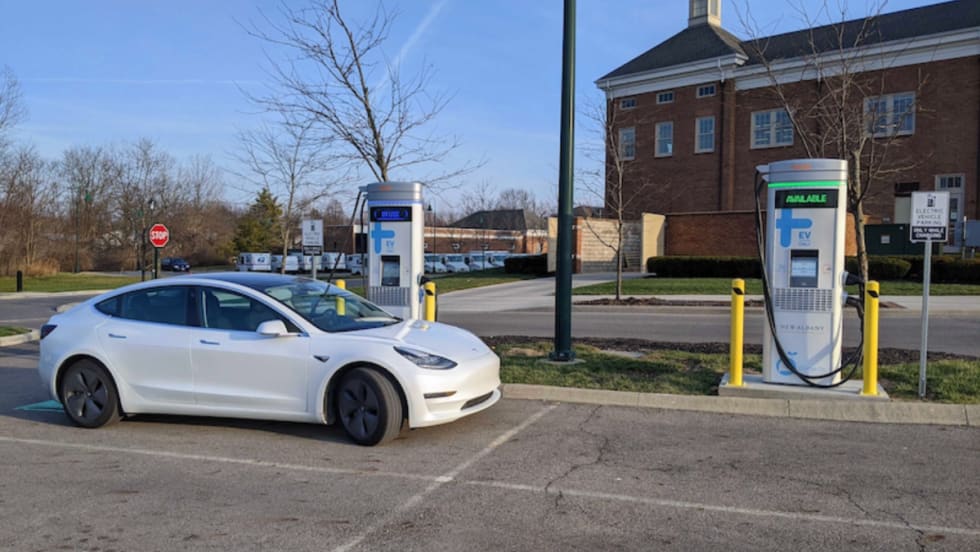
The ideal solution for alternative fuels is a mixture that invests in domestic energy resources, increases electric vehicles on the road, and encourages use of alternative fuels. Photo courtesy of Shuttershock
Most fleet managers would agree running greener, more fuel-efficient operations is desirable. They may cite costs, availability, or even lack of proof of environmental detriment as reasons not to improve in this area, but fundamentally, they would agree sustainable fleet operations are a good thing. It seems there has been little new in the “alternative fuels are good but have a negative ROI” debate for years. Recently, however, three different articles and speeches have proposed thinking about things in a different way.
Looking at Big-Picture Ideas
The first is a speech given by General (retired) Wesley Clark at the Alternative Clean Transportation (ACT) conference last June in Long Beach, Calif. Somewhat jokingly, he noted “…the peculiar thing about the liquid alternative fuels market is that everyone seems to hate everyone else.” Manufacturers and suppliers of the various clean vehicles and energy sources are all convinced their product is the only solution, and they try to convince fleet managers and other decision-makers accordingly. With so many different “solutions” and technologies, decision-makers are bombarded with contradictory information. There is no logical champion for working together; nor is there a natural leader that can emerge and bring cooperation to this competitive environment. Still, Clark argued “none of us can do it by ourselves, and if we don’t do it, we can’t get this economy going again.”
The solution, according to Clark, is not a single fuel source but an ideal mix that invests in domestic energy resources like hydrocarbons, biofuels, sunlight, wind, and coastal wave action, and increases the electric vehicles on the road while encouraging the use of compressed natural gas (CNG), liquefied natural gas (LNG), and ethanol. To overcome natural resistance to new technologies, we should invest in educating the public and the industry, whether that is via informative kiosks in shopping centers or media announcements.
To further that end, industry fleet conferences such as NAFA’s Institute & Expo (I&E) provide such education to fleet professionals annually. NAFA’s I&E recently partnered with CALSTART to provide a choice selection of training sessions at the 2013 event held in Atlantic City, N.J., this past April. Comprised of four courses, this conference track addressed the wide variety of the latest products available and how to make the best choice of fuel or technology that fits one’s operation, geography, and vehicle mix, as well as the myths and misperceptions that exist in the field.
General Clark, NAFA, and CALSTART aren’t the only ones who think finding the fuel of the future is only possible if all the players pull in the same direction. A Swedish venture known as f3 (fossil free fuels) represents a partnership with 18 universities, research institutions, and industry groups to create a knowledge center focusing on energy-raw materials and fuel production. The fundamental premise behind the government-funded venture is that research and investment into alternative fuels is so expensive, participants can benefit greatly from sharing ideas. One important aim is to be able to contribute scientific results and conclusions that will form a basis for political decision-making. “This will be a major help in choosing the right track for future fuels, and it is our hope that f3 will also serve as a national basis for the EU’s biofuel platform,” concluded Anders Röj of Volvo Technology, one of the industry partners.
A Simple, Do-able Solution
These first two areas of discussion are “big ideas,” or high-level projects to be undertaken by government and industry leaders. For the present, we can focus on fuel efficiency in order to reduce fuel spend. An article in Fleet News cited a simple low-level solution to address fuel efficiency. A study of fleet drivers in the United Kingdom reports 70% of drivers would reduce their fuel use if they were financially incentivized to do so. Drivers themselves were surveyed and most reported a 5-10% savings was possible simply by changing certain driving behaviors.
While education and training have proven to be effective in reducing fuel spend, a simple incentive program for achieving certain fuel usage targets can be even more so. Once drivers know the behaviors that result in fuel savings, incentives to employ these behaviors further multiply the savings possible. This is a practical but creative way to look at getting driver buy-in and reducing fuel use.
Improving the sustainability of fleet operations remains an admirable goal. These initiatives/articles would suggest the “solution” will be multi-faceted and will only be discovered through collaboration between governments, universities, and the diverse alternative-fuel producers and industry representatives. And, while efforts and initiatives try to find “solutions” at a higher level, there are many smaller measures fleet managers can introduce to make an impact.
About the Author
Lt. Col. (retired) Katherine Vigneau, CAFM, spent almost 27 years in the Canadian Army working in transportation and logistics. She retired in 2010 to start KMVS Fleet+ Consulting, specializing in fleet management education and training. Vigneau is a former NAFA Trustee and currently serves as NAFA’s Professional Development Strategist.