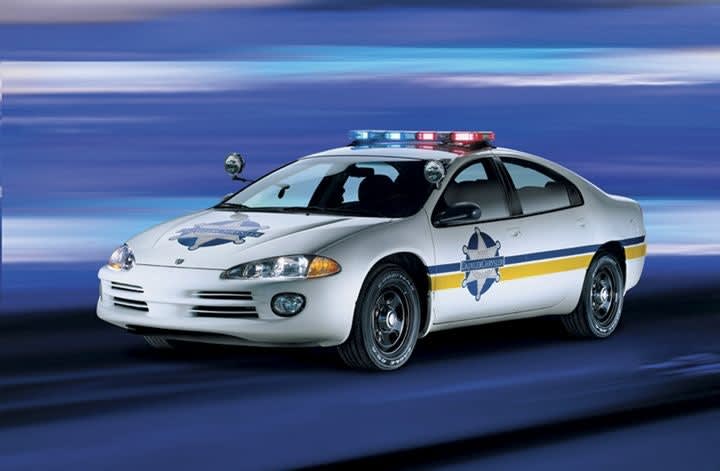
Police vehicles are some of the most upfitted vehicles within public sector fleets, and officers can’t go without the equipment that’s essential to helping them do their jobs. When it comes to upfitting police vehicles for duty, is it better to get the job done in house or outsource it?
Sgt. Jason Brake, fleet superintendent for the city and county of Denver; Jennifer Brown, fleet services supervisor for Coconino County, Arizona; and Nate Herskovits, president of Elite Vehicle Solutions sought to answer this question in an educational session at the 2023 Police Fleet Conference at GFX.
Considerations to Make Up Front
There are some things agencies should consider when determining whether to outsource upfitting or do the work in house. Those include:
What job the vehicle is needed for (i.e. patrol vs. administrative).
How many vehicles you are upfitting.
The make and model of the vehicle.
The cost of labor for the job.
These three considerations can have a big impact on whether to do the work yourself. However, you don’t have to choose one method over the other.
A Little Bit of Both in Denver
In Denver, administrative builds and other light builds — in other words, non-patrol builds — are generally done in house. That’s because these vehicles don’t tend to need as much equipment.
This is where that first bullet point comes in. When you are only installing a two-way radio, a laptop and laptop mount, basic lights and sirens, and a rifle rack, the job is a little easier than it would be for the equipment listed plus everything else that goes into a patrol vehicle.
Patrol vehicles for Denver are outsourced — in part — because of the number of new vehicles the department gets every year.
On a typical budget cycle, Denver gets between 80 and 120 units. When those all come in around the same time, it can be hard to upfit all of them at once. And typically, the new vehicles need to be turned around fairly quickly to replace aging units. It also doesn’t help when there is not money in the budget to hire technicians solely for upfitting work.
“We found that doing it in house just tied up my fleet techs. I lose weeks of time. I have about 122 cars waiting for service right now sitting outside, so our parking lot is truly a parking lot. I have 55 cars waiting for bodywork alone. So being able to send them somewhere else saves you that time and frees up those fleet techs to handle those daily calls for service that you need,” Brake said.
Hurdles with Alt Fuel Vehicles
Upfitting non-internal combustion engine vehicles presents a different set of challenges. Electric vehicles, for example, are built differently.
Though more technicians are becoming certified in electric vehicle maintenance, it’s not as common for some fleet departments to have these EV-certified technicians.
Additionally, some automakers aren’t as open in sharing what is inside their EVs, making it not only challenging but also dangerous to disassemble them blindly. And when fleet departments do opt to test the waters — not literally because these are EVs we’re talking about — that’s time-consuming.
Leaning on OEMs for Guidance
Many of the larger police equipment suppliers do offer installation training for technicians, which is something Brake says is worth taking advantage of, even if you are outsourcing most of your work.
“It's nice to get that training, understanding the full system to be able to do it yourself,” Brake said.
Not only do suppliers offer this training, but many of the OEMs do as well. Brown recommends working directly with the automaker to make sure you not only find the right police vehicle for your agency’s needs, but also to ensure you understand the inner workings of the vehicle.
Trusting The Experts
Many of the hurdles keeping fleet departments from being able to upfit in house — like a lack of EV-certified technicians, a solid knowledge of common police vehicle makes and models, as well as an understanding of the various police equipment types — are avoided when departments outsource the process.
It also simplifies the process for basic equipment repairs.
“It's usually super clean, easy to understand, and easy for your tech to fix when it comes back because they'll understand the whole process. When we did upfitting in house, especially back in the day in the 90s with Ford Crown Vics, some of those wiring harnesses and things that we created in house were just a nightmare,” Brake explained.
Upfitters also work with the components in these vehicles daily, so they are more familiar with them and can typically be trusted to do the job properly without damaging a vehicle or putting themselves in danger.
Including Outsourced Upfitters in the Planning Process
When upfitting a law enforcement vehicle, keeping them safe is paramount. Upfitters — whether in-house or not — must have a good understanding of the location of the air bags in a vehicle. Equipment can’t be installed in the air bag deployment zone; this is something that can be a challenge.
One attendee noted this, saying that the planning process alone takes a lot of time because they have to map out where the equipment to be installed, ensuring it is not in the air bag deployment zone.
Brake’s team sits down with upfitters to find out where every wire and piece of equipment will be located.
“Before they actually touch screwdriver to metal, we know exactly what the car is going to look like when we get it back,” Brake said. “And because they've been doing it for so long, we don't have a doubt when we have a light go out, we know how to troubleshoot it quicker, because the consistency in their build is unsurpassed.”
When an OEM makes major updates to its model, Brake’s team goes right back to the drawing board, walking through the locations of the wiring.
Leveraging Relationships with Upfitters and Equipment Manufacturers
Herskovits’ company, Elite Vehicle Solutions, upfits vehicles for several industries, including law enforcement. While not every fleet outsources the job for every vehicle, there is still an advantage to having a relationship with an upfitter.
“We have some departments that we supply with components that do their own upfitting in house. And the benefit of working with an upfitter or even just to procure parts is most upfitters have a revolving amount of inventory coming through because they're dealing with upfitting on a consistent basis,” Herskovits said.
Maintaining a solid relationship with equipment manufacturers can also reap benefits. Brake reaches out to one of his vendors from time to time with new equipment ideas for the vehicles in his fleet.
The vendor is able to brainstorm these ideas, so they are ready to bring them to fruition when the next batch of new vehicles comes in.
“They've come in and sat down with us and gone over some design changes and lighting changes,” Brake said. That’s the kind of benefit we have working with our upfitter and working with the manufacturer.”
Equipment manufacturers can also provide guidance on new equipment as it comes out. One of Brown’s equipment salespeople was able to bring her onboard to adopt new lighting technology to enhance officer safety for her agency.
Advice for In-House Upfitting
After weighing the pros and cons of in-house upfitting, many fleet departments still determine that doing the work themselves makes the most sense. Brown’s advice is to begin thinking about the upfitting process before you even purchase the vehicle.
“Understand what those vehicles can do for upfitting. There are different packages [for the vehicles]. You want to make sure that you can actually get the parts for the vehicle. What's really important is making sure that the parts are available,” Brown said.
This also applies to seized vehicles, which agencies sometimes upfit for police work. While it’s fun to see a Lamborghini made into a police car, the likelihood of there being easily accessible parts for the upfitting process is slim.
When you are doing the upfitting work in house, it’s even more crucial to leverage the training opportunities from equipment manufacturers.
“Work with the manufacturers, making sure that there are some types of training out there that they can go to,” Brown said. “It's really important for your technicians that you train them, and that you also understand your technicians and you understand their capabilities, especially when it comes to doing all the electrical work.”
Better training can lead to better quality work. In one case, a Coconino County deputy was unable to start their vehicle. After taking the entire thing apart, a technician found a sliver of a wire that was cut on the passenger side that essentially made the vehicle inoperable. This was a wire that was cut during the upfitting process.
“Check the vehicles and go back and do a really thorough outlook on the vehicle. Make sure your technicians have those skills, especially to be able to work on the upfitting side of it,” Brown added.
Brake’s team learned the hard way that it can sometimes be better to have a team of technicians who can adapt easily to work on multiple vehicle makes and models as opposed to training them to be master technicians for one vehicle type.
“What we found over the years is they need to be more generalists, not specialists. They need to know how to work on just about everything. That's why we really push them to go to additional schools. We send them to welding school, and all kinds of things like EV training so that we don't have any accidents. Truly it's train, train, train,” Brake stressed.
Don’t Forget About the Officers
No matter which route you choose, make sure you keep your law enforcement agency involved in the conversation.
“Make sure you're meeting their expectations. Because sometimes what I think is important and what I think is necessary is not necessarily important for the command staff,” Brown explained. “Make sure that you understand their expectations as far as going in to build a vehicle because sometimes you'll get the vehicle built and they're like, ‘Well, I thought this button would do this.’ And so that's really important because it's going to be really hard to go back and make those modifications to change it back to what the command staff wanted.”
The Benefits of Networking in Decision-Making
Events like PFC provide the opportunity for fleet professionals to learn what others in the industry are doing.
“Attending events like this helps you to be able to network and learn what other agencies have and what works best for them,” Brown said.
Police Fleet Conference returns to GFX in 2024, in Louisville, Kentucky.
Interested in attending? Register by April 5 to snag the Early Bird Rate and save $200 on the full conference fleet pass, which gives you access to educational sessions like this, as well as ample networking opportunities to learn from your peers.