Red Government Fleet with star logo
MenuMENU
SearchSEARCH

How Effective Are Your Trucks’ Backup Cameras?

Fleets are already installing backup cameras on work trucks to improve safety. But with no guidelines to follow, do they actually provide the optimal field of view? One Oregon utility set out to fix this problem.

Thi Dao
Thi DaoFormer Executive Editor
Read Thi's Posts
October 3, 2017
How Effective Are Your Trucks’ Backup Cameras?

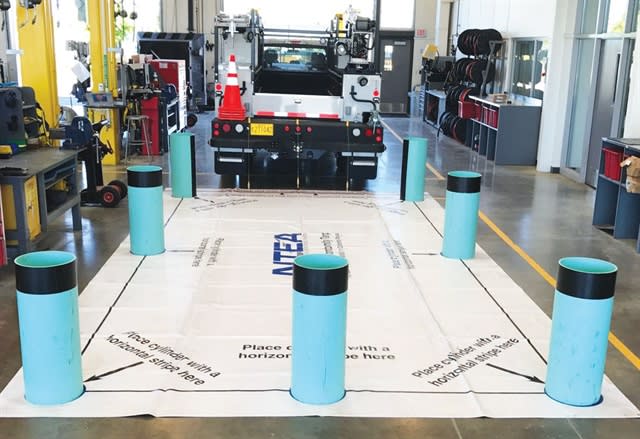
The Eugene Water & Electric Board tested the visibility of two dozen of its work trucks with backup cameras. Photo courtesy of EWEB

4 min to read


The Eugene Water & Electric Board tested the visibility of two dozen of its work trucks with backup cameras. Photo courtesy of EWEB

Backup cameras will be mandatory in new light-duty vehicles as of May 2018, a law that the National Highway Traffic Safety Administration (NHTSA) hopes will reduce injury and death among children in backover accidents.

Fleets nationwide have been installing them in their mid to heavier vehicles to improve safety, but cameras are placed and adjusted based on the discretion of the installer, with no conformity or guidelines, said Gary Lentsch, CAFM, fleet manager for the Eugene Water & Electric Board (EWEB) in Oregon. That means they can be found toward the side of a vehicle, over the license plate, over the hitch plate, or near the roof.

After learning about the topic at a trade show, Lentsch wanted to know if his trucks’ cameras were effective.

“We’ve been lucky in that we ­haven’t had somebody get hurt, but we do have backing accidents,” he said. “Our thoughts were that if the fleet is putting cameras on anyway, we might as well make sure the cameras conform to an established standard and that the driver has optimum visibility.”

He soon found out the task was more challenging than he had anticipated.
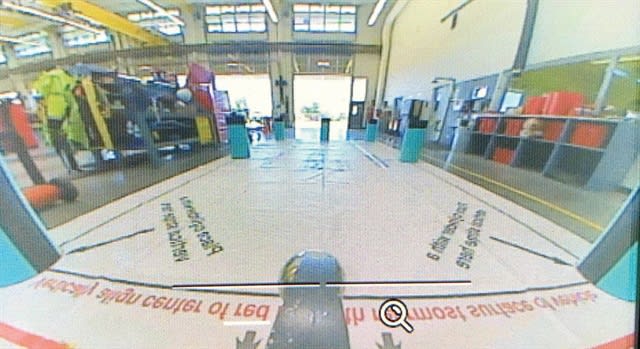
This camera view shows conformity with the standards — the five back cylinders are fully visible, and the front two are partially visible. Photo courtesy of EWEB

Setting Up Testing

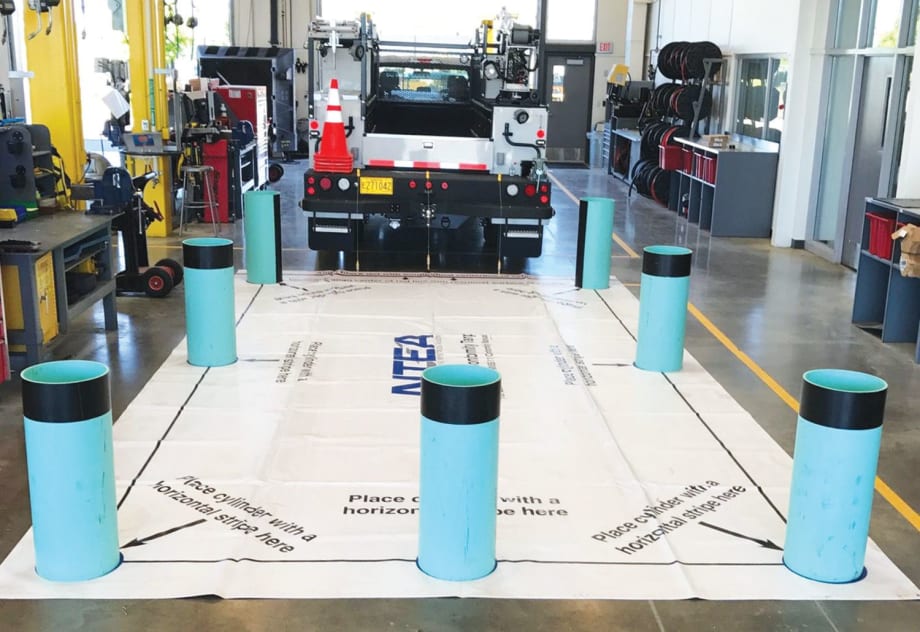
Following NHTSA’s final rule on Federal Motor Vehicle Safety Standard for Rear Visibility (FMVSS 111) and a kit from NTEA - The Association for the Work Truck Industry, Lentsch and fleet staff began field of view tests on its vehicles.

Staff prepared a layout grid and used seven cylinders placed behind the vehicle as visual targets to test and adjust its cameras. The goal is to be able to completely see all the five mid and rear cylinders and at least 6 by 6 inches of the two front cylinders through the monitor. In many of the initial tests, the cameras failed to see the front cylinders.

Fleet staff quickly identified that these were the vehicles’ rear blind spots, and that’s where most drivers’ rear backing incidents were occurring. Staff determined the vehicles needed at least a 170-­degree-view camera. The vast majority of cameras available online did not fulfill this requirement — they provided around 130 to 150 degrees.

Lentsch hasn’t been able to identify a camera that works for all his trucks, but technicians have adjusted or modified the existing cameras in a couple dozen vehicles to improve visibility. In the meantime, EWEB is looking for camera manufacturers to provide a solution before it replaces its remaining cameras.

The best camera the fleet has tested and installed so far actually came from the automaker, when EWEB ordered a Ford F-550 with the rearview camera option, which was shipped loose.

“We had to put that camera way back on the vehicle to be able to clear the bumpers and everything else back on the vehicle,” Lentsch said.
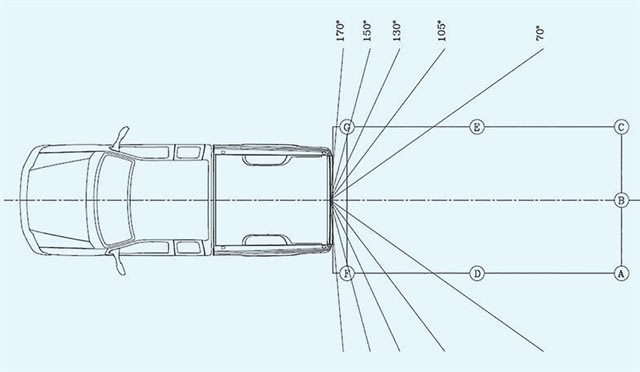
The Eugene Water & Electric Board found that it needed a wide-view camera, at least 170 degrees, to capture all the marked cylinders in its grid. Drawing courtesy of EWEB

A Preventive Measure

When Lentsch explains this process and reasoning to other fleet managers, they almost wish they didn’t know — it’s a costly and time-consuming project. Since the regulations don’t apply to vehicles above 10,000 lbs. GVWR, he knows it’s a preemptive measure more than anything else and that it might be more than some fleet managers are ready to tackle.

“But you might be saving some little kid’s life,” Lentsch said.

8 Steps for Checking Your Cameras

  1. Establish some champions in the shop to take the lead on understanding the project — they’ll be the ones helping you establish the program.

  2. Set up a conformity test on vehicles with cameras installed. A kit from the NTEA would be helpful.

  3. Adjust the camera position until the entire mid and rear cylinders, and at least 6 by 6 inches of the front cylinders, can be seen from the camera monitor.

  4. If you’re unable to get a reasonable field of view, research camera availability, making sure it fits with the current in-vehicle monitor.

  5. Repeat the conformity test to ensure the new cameras offer a sufficient view.

  6. Protect the camera. Consider putting a guard over it if it can be easily knocked out of adjustment.

  7. Take a picture of the camera view and file it to have proof that the camera was properly adjusted when the vehicle left the shop.

  8. Consider cost. A camera and monitor kit can cost $200 to $300, plus cables. Add in six to eight hours of installation time, including adjustments, and multiply that by the hourly shop rate. Costs can easily reach $1,000 per vehicle.

Subscribe to Our Newsletter

More Safety

SponsoredJanuary 19, 2026

3 New Ways Fleet Software Pays: ROI opportunities for modern fleet managers

Public fleets face constant pressure to do more with limited budgets. This eBook outlines how modern fleet software helps agencies extend asset life, reduce unplanned downtime, and improve safety by automating maintenance, using smarter video insights, and unifying fleet data. A practical look at how technology can drive measurable ROI for taxpayers.

Read More →
SponsoredJanuary 14, 2026

Behind the Wheel: Distracted Driving in the US Public Sector

Distracted driving is a persistent challenge for public sector fleets, impacting community safety, operational costs, and driver well-being. Samsara’s latest State of Connected Operations report found that 76% of public sector drivers have experienced a “close call” due to distraction—underscoring the urgent need for action.

Read More →
Safetyby Jeanny RoaDecember 22, 2025

Holiday Travel Surge: What Government Fleet Managers Need to Know About Increased Road Risks

As year-end travel reaches record levels, fleet managers must anticipate increased road congestion and safety challenges for government vehicles and drivers.

Read More →
Ad Loading...
SafetyDecember 11, 2025

How Government Fleets Can Reduce Distracted Driving: Key Takeaways

Crashes, near misses, and costly collisions still occur every day. How agencies can better protect their drivers, roadside workers, and communities.

Read More →
SponsoredDecember 5, 2025

The Road to Smarter Electric Van Transitions: A practical roadmap for integrating electric vans into your fleet

Electric vans are becoming a strategic tool, not just a sustainability move. Get a roadmap that breaks down costs, charging planning, upfit compatibility, and what fleets should evaluate before making the switch.

Read More →
Safetyby News/Media ReleaseOctober 29, 2025

New CNG Vehicle Incident Response Resource Released

The downloadable safety guide contains detailed “Vehicle Crash and/or Leak Response” instructions in addition to “Vehicle Thermal Response” instructions.

Read More →
Ad Loading...
Close-up of a person reviewing charts and a document featuring the Samsara logo, representing research findings on disaster preparedness and operational resilience.
Safetyby News/Media ReleaseOctober 21, 2025

New Samsara Data Reveals Dangerous Gap in Disaster Readiness

A new Samsara report highlights widespread gaps in disaster preparedness among public and private organizations, with most leaders lacking confidence in their ability to respond to major crises.

Read More →
Close-up of a vehicle speedometer representing NYC DCAS efforts to implement Intelligent Speed Assistance technology across city fleet vehicles.
Safetyby News/Media ReleaseOctober 21, 2025

NYC to Make Intelligent Speed Assistance Standard Across More Than 7,000 Fleet Vehicles

New York City is expanding the use of Intelligent Speed Assistance technology across all non-emergency fleet vehicles, marking the world’s largest municipal ISA program, according to NYCDCAS.

Read More →
Safetyby Jeanny RoaOctober 15, 2025

Speed Smarter, See Better: Fleet Innovations from Somerset

Keith Kerman shares how Intelligent Speed Assist and Executive Order 39 aim to make municipalities safer for all.

Read More →
Ad Loading...
SafetyOctober 14, 2025

Inside Alexandria’s Tons of Trucks: A Model for Citizen Engagement in Fleet Operations

A look at how direct public engagement can help fleet departments build transparency, understanding, and trust with the communities they serve.

Read More →