Whether you’re looking to curb emissions within your public sector fleet on your own or are under orders to do so, choosing the right alternative fuel can be overwhelming. There are some things you should take into consideration before choosing your fuel type.
Starting with the Basics: Alt-Fuels 101
It’s important to have a basic understanding of the different options available to you for fuel. Here’s a breakdown of alt-fuels.
Propane autogas, also known as liquefied petroleum gas (LPG), is stored under pressure inside a tank as a colorless, odorless liquid, according to the U.S. Department of Energy’s Alternative Fuels Data Center. As pressure is released, liquid propane vaporizes and turns into gas that is used in combustion. Both gasoline- and diesel-powered vehicles can be converted to run on propane using an aftermarket conversion kit. Propane can power vehicles across all classes.
Renewable Natural Gas (RNG) is a pipeline-quality fuel produced by purifying biogas, which is generated through the anaerobic digestion of organic materials — such as waste from landfills and livestock. It can also be generated through thermochemical processes, such as gasification. RNG can be used in the form of compressed natural gas or liquefied natural gas. A conversion kit is needed to power a gasoline-powered vehicle with RNG, and it can power vehicles of all sizes.
Compressed Natural Gas (CNG) is produced by compressing natural gas to less than 1% of its volume at standard atmospheric pressure. It is used across light-, medium-, and heavy-duty vehicles. A conversion kit is required to use CNG in gasoline or diesel vehicles. Due to a lack of easily accessible CNG stations, it is not as widely used by fleets.
Renewable Diesel is made from fats and oils like soybean oil or canola oil and is processed to be chemically the same as petroleum diesel. Renewable diesel is an easy switch to make for fleets, because no conversion kit is required.
Biodiesel is manufactured from vegetable oils, animal fats, or recycled restaurant grease. Common blends include B2, B5, and B20. Biodiesel is sometimes used interchangeably with renewable diesel, but the two are produced differently. Like renewable diesel, no conversion kit is required; fleets can simply make the switch from diesel to biodiesel overnight.
Ethanol is a renewable fuel made from corn and other plant materials. More than 98% of U.S. gasoline contains ethanol to oxygenate the fuel, according to the Alternative Fuels Data Center. E85, or flex fuel, can be used in flexible fuel vehicles, and is designed to operate on any blend of gasoline and ethanol up to 83%. It is a widely available fuel.
Hydrogen can be produced from a diverse range of domestic resources. While it is not widely used to power vehicles, the industry is increasing hydrogen’s production to be used in fuel cell electric vehicles (FCEVs). Light-duty FCEVs and some types of equipment are currently available for fleets to purchase. According to the Alternative Fuels Data Center, a fuel cell coupled with an electric motor is two to three times more efficient than an internal combustion engine running on gasoline.
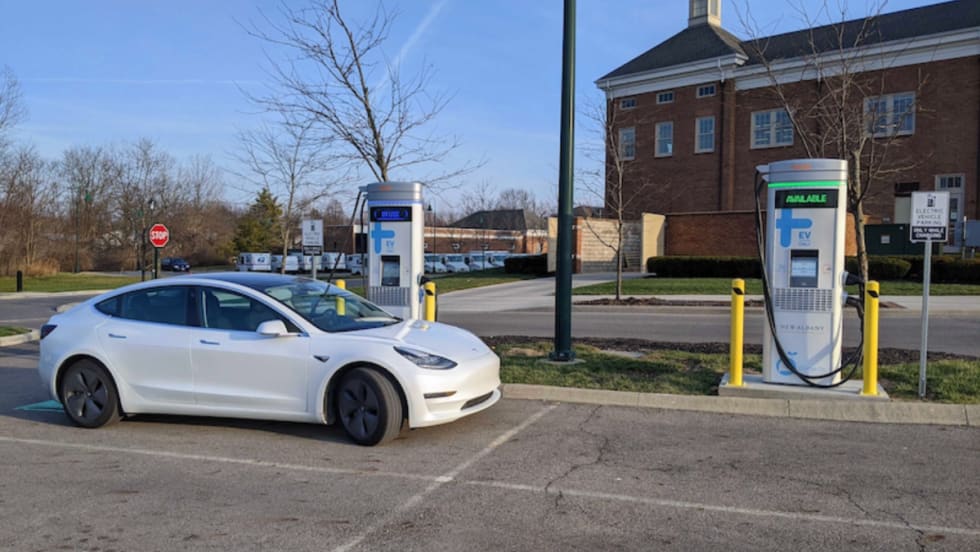
Electricity can be produced from a variety of energy sources, including natural gas, coal, nuclear energy, wind energy, solar energy, and hydropower. The electricity can be stored in batteries or used to produce hydrogen. Electric vehicles (EVs) and plug-in hybrid electric vehicles (PHEVs) are capable of drawing electricity from off-board electrical power sources and storing the energy in batteries. Gasoline-powered vehicles can be converted to EVs by removing the internal combustion engine and replacing it with an electric motor, battery, high-voltage cables, and instrumentation. The market for EVs continues to expand, with offerings available across the light-, medium-, and heavy-duty vehicle markets.
While hybrid vehicles are not technically alt-fuel vehicles, they are a popular choice for fleet managers looking to curb emissions on their fleets. They are powered by an internal combustion engine and one or more electric motors. Hybrid vehicles save Forest Preserve District of DuPage County in Illinois 50% on fuel costs, because they do not burn fuel when fleet drivers are idling during the workday.
A Look at DuPage County’s Alt-Fuel Fleet
97% of the fleet for the Forest Preserve District of DuPage County runs on alt-fuels.
The fleet for the Forest Preserve District of DuPage County helps manage nearly 26,000 acres of land with 166 miles of trails and 60 forest preserves. Michael Webster, CAFM, BCFP, is the Assistant Director of the Public Safety & Services Division for the forest preserve district.
He manages the fleet, which is 97% fueled by alt-fuels. The remaining 3% previously ran on CNG, but because of a lack of easily accessible parts for CNG systems, they now run on gasoline.
Webster’s preference when purchasing a vehicle is to power it by an alt-fuel.
“The forest preserve is a conservation agency, so it aligns with our vision and goals for the district,” Webster stressed.
According to data run by the Illinois Alliance for Clean Transportation, the district's fleet reduced 47,946 gallons of petroleum and 262.3 tons of greenhouse gas emissions in 2023.
That's equivalent to 987 barrels of oil and the carbon sequestered by 4,337 tree seedlings grown for 10 years.
In 2002, the forest preserve district board of commissioners voted to approve an alternative fuel policy, which includes a goal to run 100% of on-road vehicles on an alt-fuel, and convert as much off-road equipment as possible.
The agency began with biodiesel, since it is easy to convert to. Then it began using CNG.
As it has moved away from that, the agency has begun to use propane power for many of its light- and medium-duty vehicles, but some of its heavier-duty vehicles like dump trucks also run entirely on propane.
The district also uses E85 to power a number of its light-duty vehicles.
The district is also in the beginning stages of adding EVs to the fleet.
One of the district’s sites is the only one in Illinois to offer four unique alternative fuels, including CNG, propane, E85, and biodiesel. The headquarters building has four charging stations for its EVs.
The district’s 29,000 sq. ft. fleet facility is powered entirely by solar panels.
The desire to be sustainable runs beyond the vehicles; the district’s 29,000 sq. ft. fleet facility is powered entirely by solar panels.
Considerations to Take When Choosing an Alt-Fuel

Because this Ford E-Transit — used as a courier van — travels the entire county, the fleet wanted to promote that it runs on clean fuel.
The first thing to consider when finding the right alt-fuel for your fleet is ease of transition and infrastructure costs, Webster suggested.
“The easiest and quickest thing we always promote to get people started is biodiesel B20 if that’s available in your area. It’s the easiest because you can mix it with the diesel you’ve got leftover in your tank. There’s no changing out of equipment. It’s really straightforward and so simple and cheap to do,” he said.
Another alt-fuel Webster recommends is propane, because the infrastructure costs are generally manageable and fleet managers can get contracts through propane companies to provide and manage the tanks.
In Webster’s experience, the cost of installing CNG infrastructure was extremely high and the low demand made the fuel itself expensive.
After moving past the up-front costs, fleet managers must consider maintenance costs. After you obtain the alt-fuel, what will it cost to maintain that piece of equipment?
For the district, the cost to maintain CNG vehicles and the systems they run on were simply too high.
When thinking about cost, you should also factor in the vehicle lifecycle.
“It might cost you an extra, let’s say, $10,000 to get a certain type of alternative fuel engine in a vehicle. Or an electric vehicle is going to cost you more, but that cost over the life of the vehicle is going to be less than its gasoline equivalent, and then you've actually saved money over the cost,” Webster said. “Some people are just looking at today's costs, but fleet managers are accustomed to using lifecycle costing. And that's the way you have to sell it to the politicians and commissioners in your organization is to let them know what it's going to cost.”
Don’t Discount the Cost of Safety
When crunching the numbers, be sure to factor in technician training funds and safety equipment costs. All technicians working for the district are certified to work on all of the alternative fuels the fleet uses.
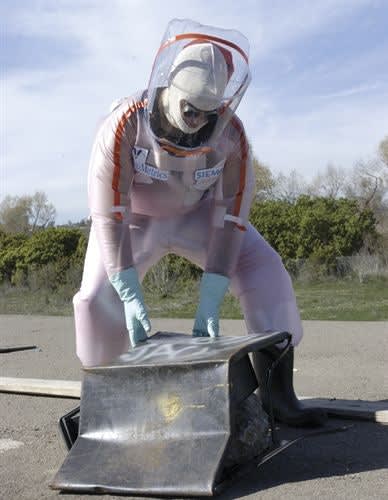
“The mechanics have to be properly prepared with protective equipment when they're working on the systems. They need to know how to shut off that power so that they don't get electrocuted. They need to be properly trained to be safe,” Webster said.
If you plan to use CNG, ensure that your technicians are certified to work with CNG systems because they have a 3,600 psi.
If you’re opting for propane, technicians need to be trained to work on the fuel system and know how to properly shut it off and drain the tanks properly in some cases.
Being proactive is the smartest — and safest — approach to take. The worst thing you can do, said AFV Educate Director of Education Michael Smyth, is be reactive. AFV Educate is a nonprofit that develops and presents training on new and emerging vehicle technologies.
“Be proactive and do your research before you go in. Determine what the options are. Determine what fuels are out there for you. You have to be careful about what you read online, because there's just as much misinformation out there as there is correct information. We fear things that we don't fully understand,” Smyth said.
One of the best resources to help in your transition to alt-fuels is your local Clean Cities Coalition. AFV Educate launched a program to support the Clean Cities program.
Your local coalition will have information on safety training, grant and rebate opportunities, and can connect you with outside agencies to help in your transition to alt-fuels.
There are also other resources available, such as the American Lung Association (ALA). The district recently received funds from the ALA to refurbish its oldest piece of equipment — a 1976 John Deere grader, which has been running on biodiesel for over 20 years.

The American Lung Association covered the cost of the refurbishment of this 1976 John Deere Motor Grader, powered by biodiesel.
“If you have some peers using alt-fuels, find out what they're doing. You're probably not the first one to try it,” Smyth said. “Getting the right advice early on can literally save you millions of dollars and keep your people safe — both your drivers and your repair facility. It's not difficult, it's just a matter of just acquiring that information and applying your needs to those parameters. And the solution is pretty easy to come by.”