



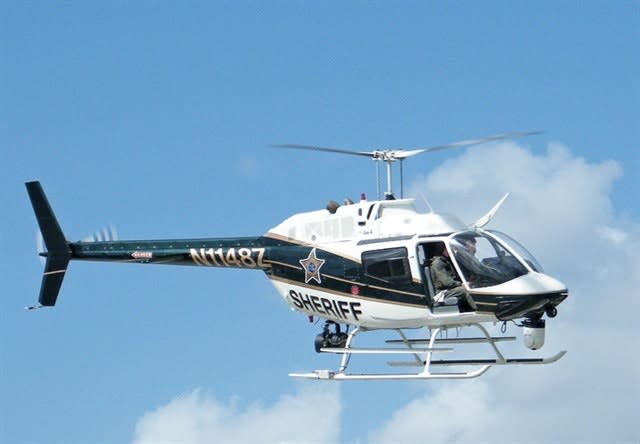
National Renewable Energy Laboratory (NREL) Federal Fleet Project Leader Cabell Hodge has a lot to think about these days. With the Biden administration announcing a push to electrify the entire federal fleet, NREL's work supporting energy-savvy fleet management is more critical and timely than ever. The president's ambitious new goal requires a considered plan: Which fleets and vehicles should go electric first — and when, and how — among the more-than-614,000-vehicle domestic fleet of federal cars, vans, and trucks, including 225,000 Postal Service vehicles, across the United States?
Revving Up for a Massive Electrification Push: Who Goes Electric First?
NREL's Federal Fleet Project helps agencies to plan their vehicle acquisitions with data-driven decision-making. Prioritizing vehicles for electrification entails categorizing vehicles by application, comparing how the vehicle is used in the real world, and identifying which vehicles would optimally go electric first in light of actual use patterns. This is no simple task, especially at a massive scale. For example, the decision to prioritize electric vehicles (EVs) within specific federal fleets depends in large part on their driving range.
"There's a lot of deviation in the federal fleet between how many miles are driven on an average day and how many miles can be driven in a single day," Hodge said.
Federal fleet vehicle usage can also vary widely from month to month. Worksite-vehicle or patrol-vehicle usage may be more predictable; for example, a bus fleet will have a regular route and schedule. Other federal vehicles are used only seasonally — Park Service trucks are likely not going anywhere at Yellowstone in January — while others are used mostly for long trips, which can be more challenging for all-electric vehicles, although plug-in hybrid EVs can meet mission needs.
To better understand the complex needs of federal fleets, Hodge and teammates Mark Singer and Jesse Bennett think a lot about filling in missing data gaps. Vehicle telematics are useful, but they are not installed in all vehicles, so the fleet team parses a variety of data to identify monthly deviations from the norm in terms of mileage, fueling transactions, and other information that characterizes the actual behavior and needs of each fleet.
Research Insights Suggest the Road May Be Smoother than Anticipated
It is still the early days of a massive push for federal fleet electrification. The General Services Administration schedule offers a limited selection of EVs for federal procurement, including fewer than 10 battery electric or plug-in hybrid vehicles, and no electric pickup trucks. However, models created by NREL's fleet team suggest there could be a number of life cycle cost-effective EVs as early as 2026, making them a more attractive option for federal procurement.
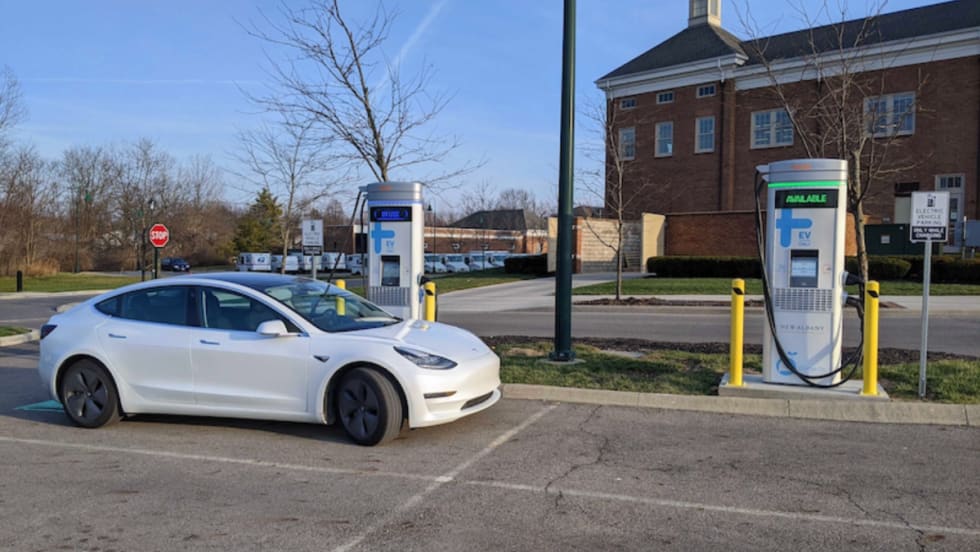
NREL's data reveals another surprise in terms of how many on-site charging ports are necessary to support an electric fleet. Many would assume there should be one charging station installed per EV (or a more complicated daily schedule to swap cars out among the chargers). Instead, according to Hodge, "We found in many federal fleets that a lot of vehicles don't all drive on the same day, or they don't drive very far, so you don't need to charge vehicles back to 100% all of the time." A model in which cars with a remaining charge of 80% or more were not recharged for the next day still worked well. "When you do that, 60 EVs might need only 30 charging stations, which makes the case for EVs a lot more compelling."

The new Electric Vehicle Research Infrastructure evaluation platform within NREL's Energy Systems Integration Facility creates a research space for transportation researchers, alongside commercial building and energy storage experts, to collaboratively investigate strategies to manage the grid impacts of high-power, site-integrated electric vehicle charging.
A Fleet of Fast Resources for Federal Managers and Decision-Makers
NREL and the U.S. Department of Energy Federal Energy Management Program (FEMP) offer several programs and resources dedicated exclusively to supporting fleet electrification planning, including procurement strategies and a list of EV models available through the General Services Administration, reporting requirements, and case studies describing best practices and success stories.
A FEMP EV Champion Training Series offers a four-part live webinar and on-demand training to support planning for successful EV acquisitions and optimized charger installations. FEMP and NREL also offer a series of 10-minute videos for anyone looking for a quick overview of EV technology, financial considerations, and power connections.
Additionally, FEMP's new Federal Workplace Charging Program Guide is a primer on efficient design for federal workplace charging programs, and FEMP's Federal Fleet Requirements Resource Center pulls together federal requirements for petroleum reduction, vehicle acquisition, alternative fuel usage, and reporting for fleet managers to access in a web-based format.
The NREL fleet team has also helped develop an Alternative Fuel Vehicle Acquisition Screening Tool within the U.S. Department of Energy Fleet Sustainability Dashboard (FleetDASH) to assist federal procurement professionals in selecting the right alternative fuel vehicle for their particular fleet and comparing fueling transactions from the prior year to charging station locations on the Alternative Fueling Station Locator.

The FleetDASH Alternative Fuel Vehicle Acquisition Screening Tool allows federal procurement professionals to compare fueling transactions from the prior year to charging station locations.
Broader Market Impacts Beyond the Federal Fleet
Hodge sees broader impacts of both his team's work optimizing federal fleets and the new federal mandate. Both the research and the new call to action may also help shape automaker decision-making as fleet needs are better characterized and greater demand is anticipated.
"Manufacturers often focus on the consumer market, but the fleet market is large too," he said. "If the federal fleet can establish demand in new market segments, that will push manufacturers to expand their EV offerings."
As federal vehicles are driven about 4.5 billion miles each year and use almost 400 million gallons of gasoline, electrifying the federal fleet could not only help accelerate EV adoption, but play a significant role in decarbonizing the transportation sector by way of reducing billions of pounds of greenhouse gas emissions per year.
"It's an exciting time for federal fleet management, and NREL is well positioned to make significant contributions to such a pivotal climate effort," Hodge said. "I'm encouraged that leading by example—from the top down—will go a long way towards empowering fleets and consumers alike to embrace the potential electric vehicles have to offer."
This article was provided by the National Renewable Energy Laboratory, a national laboratory of the U.S. Department of Energy.