
Red Government Fleet with star logo
MenuMENU
SearchSEARCH

Procurement & Fleet: Working Collaboratively Through Cooperative Contracting

Cooperative procurement can help fleets acquire vehicles quicker, for less money, and for situations such as after natural disasters.

by Tammy Rimes
November 16, 2017
Procurement & Fleet: Working Collaboratively Through Cooperative Contracting

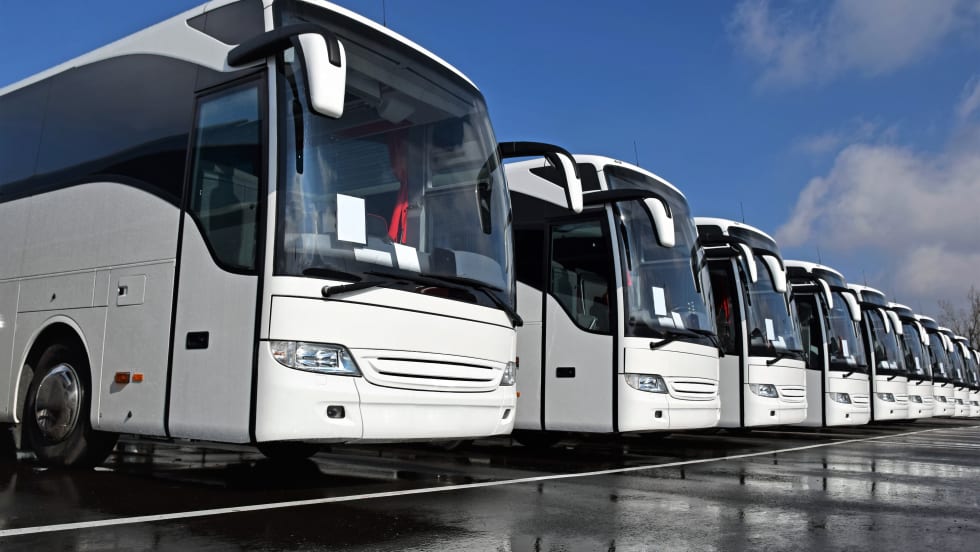
Public agencies can use cooperative contracts to purchase their fleet vehicles. Photo: Getty Images

3 min to read


Public agencies can use cooperative contracts to purchase their fleet vehicles. Photo: Getty Images

The survey results are in: Procurement professionals in the public sector feel overworked, making it difficult to engage with their customer departments — including fleet.

Onvia, a provider of intelligence in the business-to-­government marketplace, received 668 responses to its 2017 Survey of Government Procurement Professionals.

The results of this survey are probably not surprising to fleet managers. The survey shows nearly 40% of procurement staff and managers indicated being “stretched” to the limit or working extra hours to meet deadlines. The ability to conduct adequate research and planning, regulatory compliance and regulations, and staffing limitations rose to the top of the list as areas where procurement teams feel frustrated and unable to conduct the adequate level of effort necessary to do it right. Procurement professionals admit they are not always as engaged as they would like to be with their customers.

At a glance

Cooperative procurement can help fleets by:

  • Avoiding the lengthy and costly bidding process

  • Allowing them to purchase vehicles and equipment faster

  • Helping with standardization efforts.

Because they rely on procurement to obtain the goods and services needed to run their operations, fleet departments also feel the frustration. Many successful agencies are looking to improved ways to conduct business to mitigate the problem of limited resources and lengthy bid processes. The result is a growing phenomenon across the nation — the use of cooperative contracting.

Savings in Pricing & Time

The idea is a simple one — using an already established contract put in place by a designated cooperative organization or government agency that can be used, or “piggybacked” upon, by another government organization. Approved by the American Bar Association and viewed as an alternative contracting method, its benefits can result in savings — in both pricing and time. By leveraging the spend capacity across a larger number of agencies, suppliers can often provide more advantageous pricing or increased benefits. Since the solicitation process is already done, it saves time spent conducting research, issuing bid documents, and performing a lengthy evaluation and award process by the agency.
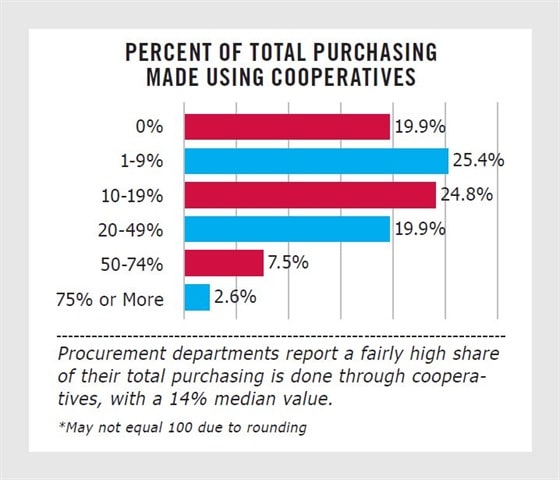
Data: Onvia Survey of Government Procurement Professionals 2017
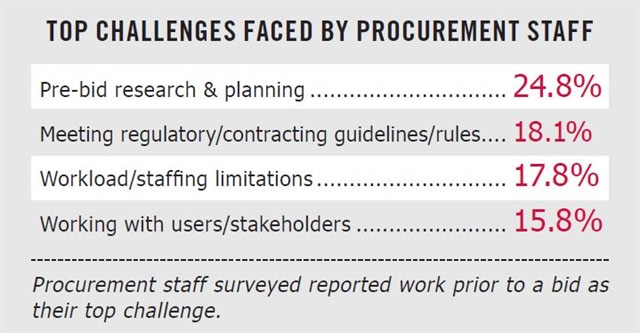
Data: Onvia Survey of Government Procurement Professionals 2017

For fleet, cooperative contracting can offer additional ­specific benefits. These include filling gaps where current contracts do not provide the specific supplier or product, or providing an easily accessible solution during emergencies. For example, during the recent hurricanes that covered the southeast, some fleets had vehicles that were severely damaged or destroyed, particularly due to flooding. As a result, many agencies needed to increase their capacity for surplus auction services. Utilizing cooperative purchasing allows a fleet manager to quickly take advantage of contracts that are already put in place, to swiftly disperse damaged equipment, and to make room for new incoming replacement vehicles. Where one might experience higher costs during an emergency, an already established contract minimizes those “spikes” in pricing.

Ultimately, both fleet and procurement teams have the same goal — to serve the public good as they meet the operational needs of their organization. Working better as a team, and using resources such as cooperative contracting, can assist toward meeting that goal.
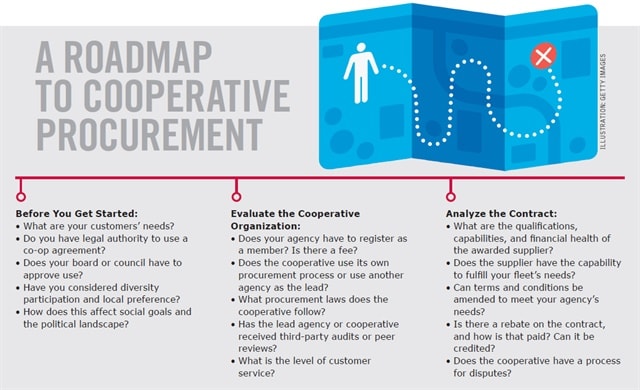
Adapted from NCPP’S Roadmap to a Cooperative Procurement Strategy

Cooperative Contracting to the Rescue — For a Fire Department

Tualatin Valley Fire & Rescue (TVF&R) is a special district that provides fire protection, emergency medical, and rescue services to approximately 490,000 residents living in 11 cities and four counties in Oregon. With almost 400 firefighters and 26 fire stations, the district is the largest fire department in the state. When faced with planning large, diverse fleet purchases to cover a metropolitan area as well as surrounding wildland urban interface, Fire Chief Mike Duyck determined that standardization would benefit fleet operations by ensuring effectiveness and maintenance efficiency. In addition, district leadership wanted the ability to quickly acquire the exact equipment needed within a consistent standard.

The prospect of bidding out each individual purchase over time could potentially undermine TVF&R’s goals. So district leaders chose to use cooperative procurement to select equipment needed over time. Using the NPPGov contract through the local dealer, TVF&R purchased two Pierce Quantum Pumpers through a streamlined process for a total of $1.27 million. Using this same option, TVF&R plans to purchase up to eight more apparatus within the next few years to complete fleet upgrades consistent with the district’s overall strategic plan.

In addition to standardization, using cooperative procurement saves staff time and provides accountability to investors, who are also ultimately taxpayers. TVF&R’s Purchasing Manager Eric Wicks stated, “The traditional procurement process would have taken months and significant staff resources. In this case, the choice of cooperative procurement, with due diligence inspection, saved us weeks on the procurement process and significant staff time.”

About the Author: Tammy Rimes is a procurement consultant and serves as executive director of National Cooperative Procurement Partners. She can be reached at tammy@tammyrimes.com.

Subscribe to Our Newsletter

More Procurement

ProcurementFebruary 11, 2026

Spartan to Deliver Fire Apparatus in 180 Days

Spartan Emergency Response will delivery fire apparatus within 180 days under its new 180 Truck Program that was introduced at the Fire Department Instructors Conference in Indianapolis.

Read More →
SponsoredJanuary 19, 2026

Basic Tracking vs Next Generation Fleet Technology

Fleet software is getting more sophisticated and effective than ever, tying big data models together to transform maintenance, safety, and the value of your existing tech stack. Fleet technology upgrades are undoubtedly an investment, but updated technology can offer a much higher return. Read how upgrading your fleet technology can increase the return on your investment.

Read More →
SponsoredJanuary 19, 2026

3 New Ways Fleet Software Pays: ROI opportunities for modern fleet managers

Public fleets face constant pressure to do more with limited budgets. This eBook outlines how modern fleet software helps agencies extend asset life, reduce unplanned downtime, and improve safety by automating maintenance, using smarter video insights, and unifying fleet data. A practical look at how technology can drive measurable ROI for taxpayers.

Read More →
Ad Loading...
SponsoredDecember 5, 2025

The Road to Smarter Electric Van Transitions: A practical roadmap for integrating electric vans into your fleet

Electric vans are becoming a strategic tool, not just a sustainability move. Get a roadmap that breaks down costs, charging planning, upfit compatibility, and what fleets should evaluate before making the switch.

Read More →
Procurementby Nichole OsinskiApril 3, 2025

Government Vehicle Sales See Continued Growth from Beginning of Year

Government fleet sales rose from both January and February monthly totals, which were both under 20,000.

Read More →
Procurementby Staff WriterApril 3, 2025

Updated: Trump Signs Proclamation Imposing 25% Tariff on Auto Imports

A new proclamation signed by President Trump imposes a 25% tariff on imported passenger vehicles and key auto parts, citing national security concerns.

Read More →
Ad Loading...
Procurementby Staff WriterMarch 14, 2025

Government Vehicles Sales See Another Dip Compared to 2024

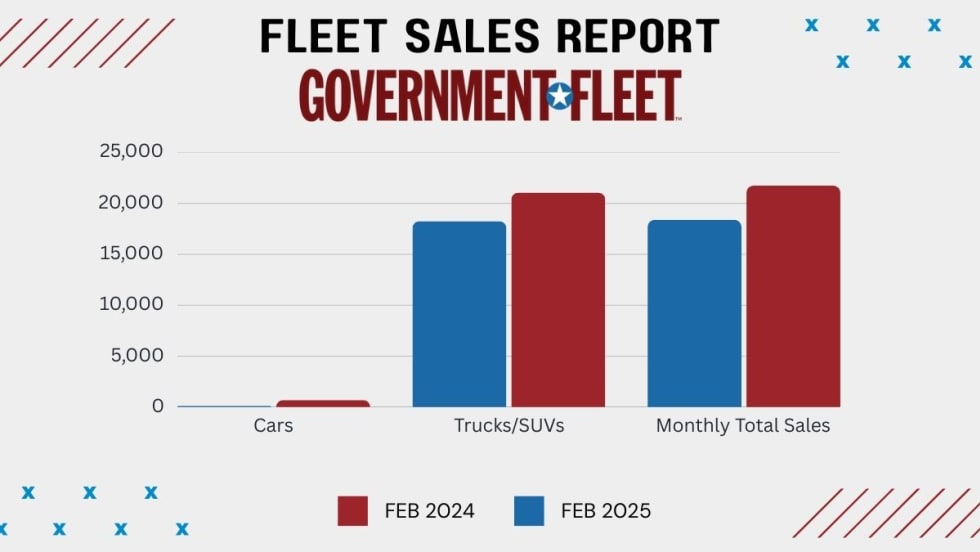
Government fleet sales last month came in at 18,383 vehicles, falling 15.4% from 21,737 in February 2024.

Read More →
Procurementby Staff WriterMarch 4, 2025

Washington Municipality Adds Workhorse Electric Trucks to Fleet

The municipality will deploy two W4 CC electric work trucks for trash and recycling can switch-outs, enhancing the efficiency of its waste management services.

Read More →
Is the law on use of force really changing? What is science saying about bias? What can you do to be safer on the job?[|CREDIT|]Photo: Getty Images
ProcurementDecember 11, 2024

From the Archives: Changes in Fleet Acquisitions

When vehicles become harder to acquire, fleet managers must balance keeping vehicles on the road longer while managing the escalating operating costs of older vehicles.

Read More →
Ad Loading...
Procurementby News/Media ReleaseMarch 20, 2024

Mack Defense Awarded Contract By U.S. Marine Corps To Develop Medium Tactical Truck

The U.S. Marine Corps awarded Mack Defense a 12-month contract for the initial development of a new Medium Tactical Trucks (MTT) fleet.

Read More →