Autonomous vehicles are still largely theoretical for most public sector fleets, but the Miami-Dade Sheriff’s Office is starting to test what they might look like in day-to-day law enforcement operations.
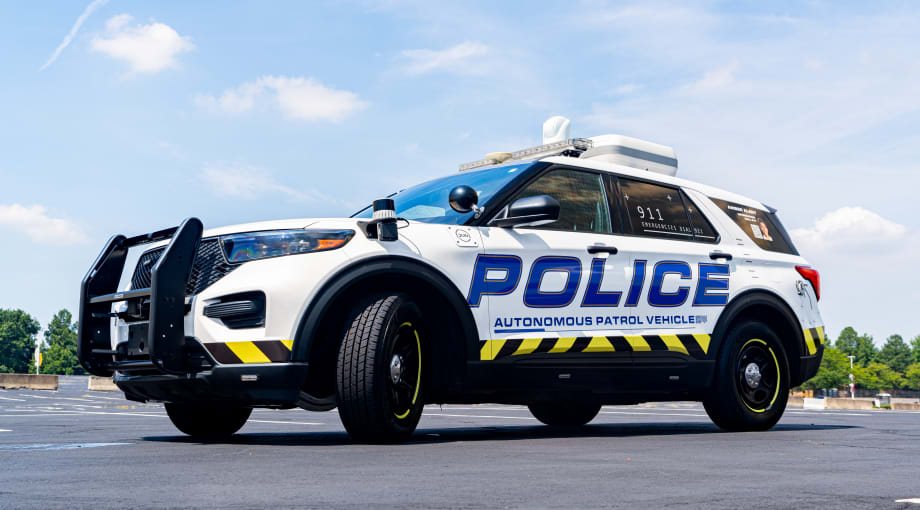
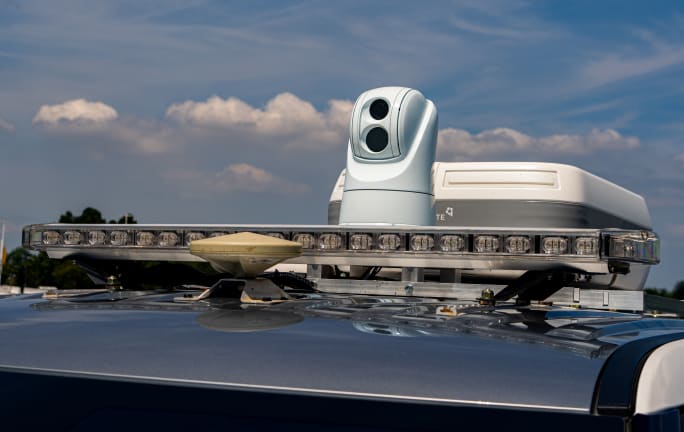
Through a pilot with the Policing Lab, a nonprofit focused on data-driven public safety projects, the agency is introducing a Police Uncrewed Ground Vehicle (PUG) — a marked patrol unit that can operate for most of the day on its own, carrying cameras, a drone, and license plate recognition and feeding that data to a real-time crime center.
Policing Lab Managing Partner Sean Malinowski said the goal is to provide a consistent visible presence in targeted areas at a time when many agencies are struggling to staff patrol.
According to Malinowski, some departments are down 25-30% in personnel, making it harder to maintain a visible presence in the community. The PUG is designed to provide presence in targeted areas, leveraging autonomy and a full sensor suite to feed information to a real-time crime center.
Since the PUG's launch on October 1, the Policing Lab has received several calls asking how the technology might fit other operations' needs.
Photo: Policing Lab
“We are a nonprofit, so we were going to build this for Miami-Dade as an experiment to see if this is viable,” he said. “Because the promise of it is we can get about 8,000 hours of patrol a year.”
Malinowski said the vehicle was developed to provide a marked police presence that he believes can deter crime by 20 to 30% in the areas it is assigned. The PUG's cameras, drone, and license plate recognition systems are all connected to the real-time crime center so analysts and officers can later use that data.
Building a Case for a Robotic “Guardian”
For Malinowski and the Policing Lab team, the operational case centers on time-on-task and the cost calculations they have made.
“If you compare that to even 2,000 officer hours or, what we realistically get, 300 officer hours of patrol, on an hourly basis, it's so much cheaper to do it with the vehicle,” he said.
However, Malinowski emphasized that the PUG is not intended to replace a sworn officer but to extend coverage by providing presence and situational awareness through its sensors. He said the Policing Lab’s early calculations show that operating the PUG could cost about a third of what it would cost to put an officer in a vehicle while delivering roughly the 8,000 patrol hours a year he described earlier, and noted that they are still working out how it would ultimately be priced.
“We know from studies that are out there that if you have that guardianship out in the community, it does reduce the fear of crime and the incidence of crime pretty substantially. So that's the promise of it.’
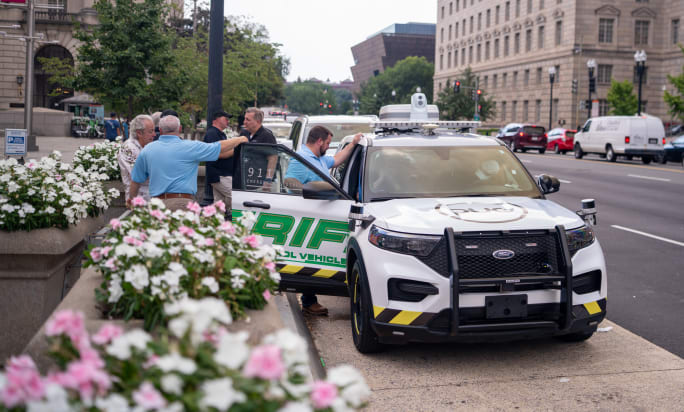
The PUG was initially assigned to community affairs for a six-month period. That gave residents time to see the vehicle in their neighborhoods and ask questions about its capabilities.
Photo: Policing Lab
Acceptance From Officers and the Community
Because the concept is new, the Policing Lab’s early focus has been on acceptance among both officers and residents. Internally, one of the first hurdles was convincing officers that the PUG should be viewed as a partner rather than a replacement.
On the community side, he said the PUG was initially assigned to community affairs for a six-month period. That gave residents time to see the vehicle in their neighborhoods and ask questions about its capabilities. According to Malinowski, feedback has been generally positive, with less “big brother” pushback than he expected. Plus, a “pug” dog image associated with the project helped soften first impressions.
He also credited Sheriff Rosie Cordero-Stutz for taking the lead on what he described as a first-of-its-kind public safety project in the country.
“We may be a little early,” he said. “So that's why I thought it took a lot of courage on the sheriff's part to say, ‘let’s jump in and test this thing.’”
Under the Hood and in the Shop
Malinowski said the PUG’s technology is still in the testing and training phase, but that progress has been good so far. He said the vehicle can operate up to 22 hours per day, leaving approximately 1,000 hours per year for maintenance under their current plan.
Support, as he described it, is organized in two tiers. The agency is responsible for physical maintenance and OEM components. A service contract with the robotics company Perrone Robotics covers the autonomous kit, which he said includes LiDAR, radar, visual cameras, and GPS with proprietary software. The specialized sensor suite layers in tools such as Axon Fleet 3 cameras, a Fotokite tethered drone, with potential for Chemical, biological, radiological, and nuclear defense sensors and ShotSpotter audio.
On the fleet side, Malinowski's team is currently managing maintenance, but the vehicle will eventually transition to the fleet shop for standardization, including department markings, light bars, and radio equipment. The plan is to lease the vehicle to Miami-Dade for a nominal fee, allowing it to become part of the fleet without putting the asset on the county’s books and clearly defining responsibilities such as insurance.

The PUG vehicle can operate up to 22 hours per day, leaving approximately 1,000 hours per year for maintenance under the current plan.
Photo: Policing Lab
As the pilot evolves, Malinowski wants fleet managers directly involved in shaping how the vehicle is supported.
“If I was talking to the fleet managers, I'd say, you know, we're police officers, and we're data people. We don't know all the ins and outs of what the fleet manager needs,” he said. He expects operations leaders to be early advocates for the asset. “I think the operations people will say, Yeah, I want this asset, and what I don't want to have happen is turn that into a hassle for the fleet manager.”
Malinowski said he would like to hear concerns straight from fleet leaders, not just from his internal team. He now hopes to get a group of fleet managers together to discuss any concerns about the vehicle and find solutions to any of those concerns
From his perspective, making it seamless is about removing friction from the process of putting the PUG into service.
“What we're trying to do is take the friction out of things," Malinowski said. "We want to ... make it simple for the police department to deploy, so that they have a resource out there that the fleet manager just handles like any other vehicle in the fleet.”
Crawl, Walk, Run Deployment Plan
To bring the vehicle into service safely, Malinowski described a crawl, walk, run deployment plan. The first phase, he said, focuses on community engagement for six months. That is followed by testing in a closed-circuit area, such as a park, with a safety driver in the vehicle for six months to a year.
The long-term goal, as he laid it out, is to operate the PUG without a driver, using what he characterized as Level 3 and Level 4 autonomous capabilities. Malinowski said he expects early deployments to concentrate on unpatrolled or high-property-crime areas, particularly between 2 and 3 a.m., where a marked vehicle with lights can function as a deterrent.
He also described other potential use cases that have already surfaced. One option, he said, is to have the vehicle manually drive bike officers to a location and then patrol a separate route on its own, while the onboard drone provides air support.
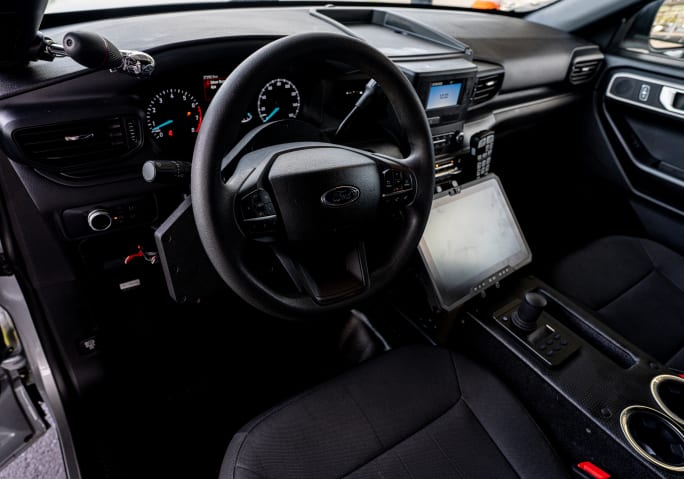
The long-term goal is to operate the PUG without a driver, using what is characterized as Level 3 and Level 4 autonomous capabilities.
Photo: Policing Lab
Fleet Interest Beyond Miami-Dade
Although the pilot is currently anchored in the sheriff’s office and other police agencies, Malinowski said the broader promise may ultimately lie in other environments such as large campuses, industrial zones, and private communities.
Since the launch on October 1, he said the Policing Lab has received more than two dozen calls from potential users, including airports, communities, international groups, and other police agencies, asking how the technology might fit their needs. “Everybody we talked to has a different idea about how they could use it,” he said.
He said some of those ideas have come from outside the U.S.
“When we've talked to individuals in Europe, the idea was, let's just use electric vehicles, the smallest kind of electric vehicle we can find that still looks like a police car, and let's put them out in every district at night. So charge them during the day, and then we have eyes and ears at night. I think we're really going to have to figure out what the best fit is.”
He also pointed to other sectors as a sign of where things might be headed.
“Transit is already headed in that direction,” he said. “I know there are some college campuses, major campuses, that had one goal of going electric. They've achieved that goal, and their next goal is to achieve autonomy on everything from trash collection to public security.”
As for what comes next, the Policing Lab will let the pilot run its course. In the meantime, the team will keep focusing on education around what autonomy can and cannot do.
“The biggest thing is that people outside the industry don’t understand it,” he said. "But once they get past that and get comfortable with autonomy, I think this is the way it’s headed.”