




On February 6, 2020, then-mayor of New York Bill de Blasio signed an executive order aimed at transitioning the New York City fleet to an all-electric, carbon-neutral fleet by the year 2040. Prior to the order, the New York City Department of Sanitation (DSNY) had already made progress toward the 100% electric goal; for years, it has operated many light-duty battery electric vehicles (BEVs). But recently, the DSNY took another big step toward electrification: piloting a BEV refuse truck.
“BEVs will help wean our city off fossil fuels and protect our environment,” said Rocco DiRico, DSNY deputy commissioner. “Working toward that goal, DSNY is the first fleet in the nation to test the first Mack BEV refuse truck.”
How has the truck performed, and what did it take to make it happen? DiRico shares the story.
Starting with the Pilot
Prior to bringing on the Model LR Electric Mack BEV refuse-collection truck in November 2020, DSNY’s Bureau of Motor Equipment worked closely with the Mack team to make sure all operational and performance requirements could be met. The result of their collective effort was a 72,000-lb. BEV refuse truck with the capacity to haul 12.5 tons of garbage — plenty of payload for the 10 tons of refuse collected on average per shift.
The pilot, which started a little over a year ago, consisted of running the unit every day for one 8-hour shift, then charging it overnight. With an end-of-shift state of charge (SOC) of just under 50%, the average charge time is approximately two hours. DSNY operated the unit in different parts of the city to be sure it could handle varying conditions. It stood up to the test.
As a result of the successful pilot, DSNY decided to widen the spectrum of testing by placing one BEV in each of its seven zones of operation, which cover the city’s five boroughs. The seven zones represent various topography, duty cycles, and workloads.
“When we got the truck, we used it in as many variations as we could,” DiRico said. “But when we add more units, we will be able to test the entire city’s terrain.” In lieu of a registered contract, DSNY negotiated the cost to purchase the seven new LR Electric units directly from Mack Trucks.
“Pioneering the first-of-its-kind, 72,000-lb. truck is very exciting,” DiRico said. “We look forward to rolling out to a much larger number in the near term.”
Analyzing Performance
Electrifying a refuse truck was the first step. But how did the truck perform? Extremely well, DiRico reported. “It has been able to haul the rated payload with no degradation in vehicle performance and has been very reliable with good uptime,” he said.
A common concern about all-electric vehicles is range. DiRico said that hasn’t been an issue and in fact, the Mack BEV has a nearly 50% battery reserve after completing all daily collection routes and tasks. “The truck does its job 100%,” DiRico said. “We’ve driven it into the ground, and it’s never gone down. The truck is flawless. And with no tailpipe emissions, it presents an environment benefit to the neighborhoods we serve.”
Beyond reducing greenhouse gas emissions, DiRico said leveraging BEV refuse trucks will also put a dent in noise pollution, as the trucks are significantly quieter than their diesel counterparts. “There’s no comparison; it’s like a Tesla,” DiRico explained. “Anybody who tries it for the first time says it’s unbelievable how quiet it is. The Mack BEV refuse truck has been well received by the union operators, and the primary story we hear from them is how happy they are with how quiet it is.”
The truck is so quiet, in fact, the department had to add white noise so citizens are aware it’s nearby. The near-zero noise level both improves the public’s perception of the department and improves communication between the dual operators.
DiRico said other benefits include improved torque and reduced brake wear.

The Hill to Climb: Infrastructure
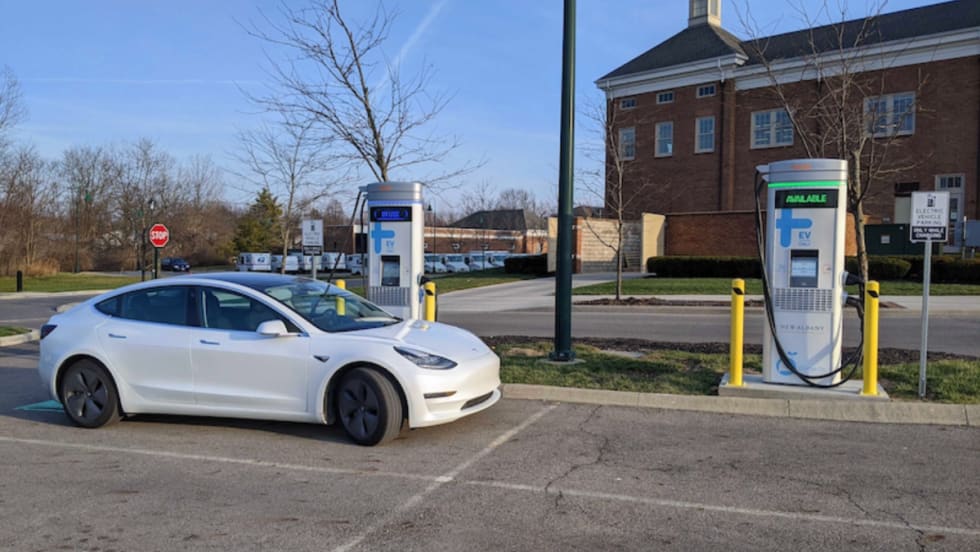
In addition to range, a common concern about adopting EVs is the charging infrastructure. To meet the charging needs of the pilot truck, DSNY installed its first DC fast chargers and now owns and operates a total of 13. However, a fast charger requires a lot of power — 480 volts, three-phase, at 100 amps.
So while charging the pilot truck hasn’t been a problem, the challenge of getting the power to charge an entire fleet of them is what keeps DiRico up at night.
“Our biggest challenge will be making sure all our facilities have adequate power to support a large deployment of EV chargers in a timely manner,” he said. “We have 80 garages, and a dozen or so have the ability to charge heavy trucks right now. The infrastructure needs to be upgraded, and that could cause us delays and sweat time. Therein lies the obstacle we face.”
DiRico said utility companies share a part in this challenge. If a single garage has 30-40 trucks, it will require 4,000 amps just for charging. “I do worry about the charging infrastructure because I can’t control every aspect from my seat. We’ll need to work with the utilities and the government for funding,” DiRico said. “We have some big hills to climb, but there’s no reason we can’t do it.”
Beyond electricity, DiRico said garages will need to have generators with the same power output as the building in case of a brownout or blackout. “We will have to look at local building code requirements, as they may be different when lithium-powered vehicles are present since they pose a different fire threat. For these reasons, the size of the generator needed, training for mechanics to work with high-voltage batteries, fire suppression, and sprinklers will be considerations needed for every garage,” DiRico said. “These are things people aren’t always aware of up front, but they all have to be looked at from day one as you pursue electric trucks.”
What’s Next?
The goal for the DSNY is to replace its entire fleet of 4,800 heavy-duty trucks with BEVs by 2040, per the 2020 executive order. But the most immediate phase of the plan includes adding seven more BEV refuse trucks this year and beginning to develop specs for future bid requests.
The phase that follows includes acquiring 45-50 more trucks and adding the necessary infrastructure. “From that point forward, we’ll need to get ahead of the facility upgrade,” DiRico said. “After testing 45-50 units, we’ll be adding hundreds more and will also need hundreds of chargers and thousands of amps. The obstacle won’t be the truck; it will be the infrastructure.”