Red Government Fleet with star logo
MenuMENU
SearchSEARCH

Which Vehicles Should I Replace with EVs?

Here’s how you can use data to determine which vehicles to transition to electric vehicles.

by Ryan Daley
March 4, 2019
Which Vehicles Should I Replace with EVs?


3 min to read


Many public-sector fleet organizations are tasked with the incorporation of electric vehicles (EVs). The process to identify which vehicles are best suited for that transition can be much more complicated than meets the eye. The goals associated with EV adoption also tend to vary and include sustainability, cost savings, and national security.

Underlying this is selection of the right technology that doesn’t compromise the operational needs of drivers. All too often, the initial vehicles chosen for the transition represent the lowest-risk duty cycles. In these scenarios, the vehicles end up underutilized and therefore not achieving the promised benefits. Since EVs’ primary benefits come from lower operating and fuel costs, transitioning as many miles to electric is the best way to achieve multiple, overarching goals.

The following guidelines can help fleets identify which vehicles may be good candidates for EV adoption:

  • Light-duty sedans still dominate EV offerings. An initial focus should be on sedans, small SUVs, and minivans nearing replacements.

  • Medium- and heavy-duty EV offerings continue to expand, but should be scrutinized for operations and economics, as well as for supply chain reliability (especially parts and service).

  • Vehicle miles traveled (VMT) and total cost of ownership (TCO)are common metrics by which to gauge suitability for EVs. The right combination of VMT and operational fit can realize an overall TCO savings relative to conventional vehicles.

    • Low-mileage vehicles (e.g., less than 5,000 miles per year) look like low-hanging fruit but will have trouble realizing an economic ROI.

    • Vehicles traveling 5,000-15,000 miles per year tend to be good candidates to at least achieve cost parity.

    • Vehicles traveling more than 15,000 miles per year may be very good candidates so long as the operational needs are not compromised.

  • Vehicle utilization and operational consistency can also be helpful in feeling confident that EVs are going into successful applications. Those vehicles fall into higher mileage applications but with consistent total daily mileage tend to be good candidates; those with sporadic or infrequent days of long-distance and overnight travel present challenges.

  • Frequency of overnight parking locations — vehicles that return to and remain at the same location with enough time to recharge their battery are preferable.

  • The installation of charging infrastructure to fuel your EVs is often the wild card in terms of cost and integration with a building's electrical infrastructure. A good first step can be to identify buildings where installation costs will not be exorbitant by having them inspected by a certified electrician.

  • Fleet operations can choose between battery-electric vehicles (BEVs), which run exclusively on electricity, and plug-in hybrid electric vehicles (PHEVs), which have a limited electric range and an internal combustion engine to supplement the battery. We recommend exhausting all opportunities to add BEVs before turning to PHEVs. While the latter feels like a safer option to eliminate range anxiety, ensuring that they are plugged in often enough to achieve the benefits of having the electric engine is a common problem for fleet managers.

The best way to gain insights across these decision points is through the use of telematics to establish data-driven decisions in EV adoption and infrastructure rollout.

About the Author: Ryan Daley is the CEO and co-founder of Sawatch Labs, a data-focused platform to help speed the adoption of electric vehicles.

Subscribe to Our Newsletter

More Green Fleet

SponsoredFebruary 6, 2026

Hybrids: Electrification Without the Challenges

Hybrids bridge the gap between ICE vehicles and EVs, making them a smart choice for fleets that want to reduce emissions but aren’t ready to fully electrify. Hybrids, which are powered by internal combustion engines and electric motors, capture the benefits of electric power without the barriers many organizations find challenging.

Read More →
Green Fleetby Bob StantonJanuary 21, 2026

Flavor of the Decade: What if BEVs Aren’t the Answer?

A look at the present state of play in the EV market, plus a 2027 heavy truck emissions update.

Read More →
Ad Loading...
SponsoredJanuary 19, 2026

3 New Ways Fleet Software Pays: ROI opportunities for modern fleet managers

Public fleets face constant pressure to do more with limited budgets. This eBook outlines how modern fleet software helps agencies extend asset life, reduce unplanned downtime, and improve safety by automating maintenance, using smarter video insights, and unifying fleet data. A practical look at how technology can drive measurable ROI for taxpayers.

Read More →
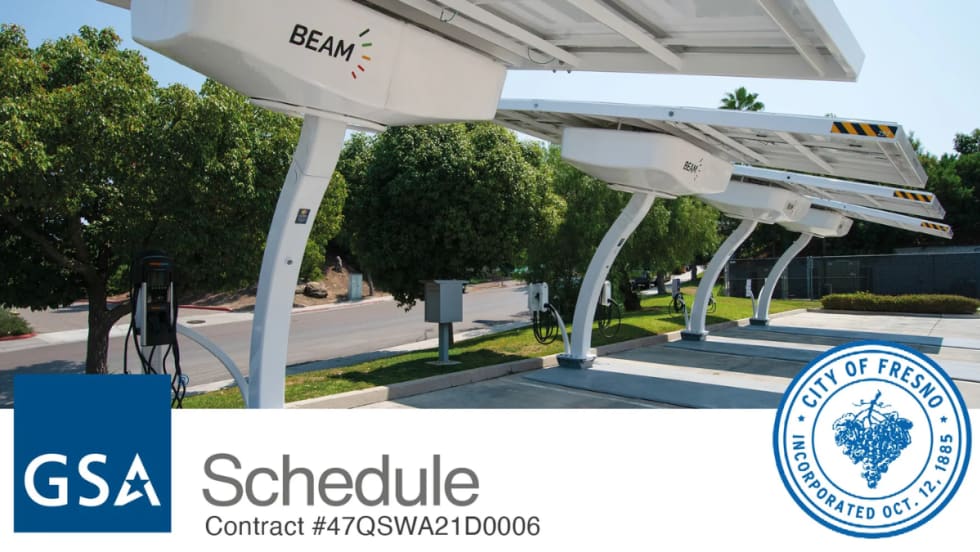
Off-grid Beam Global EV ARC charging systems installed at the City of Fresno Municipal Service Center Yard, featuring solar canopies and EV chargers used by the city’s electric vehicle fleet.
Green Fleetby News/Media ReleaseJanuary 12, 2026

City of Fresno Deploys Beam Global EV ARC Off-Grid EV Charging Systems to Support Municipal Fleet Electrification

The City of Fresno deployed off-grid EV charging systems to support municipal fleet electrification without relying on utility grid connections.

Read More →
Green Fleetby Staff WriterDecember 8, 2025

City of Quincy Partners with Cero Global to Launch Pilot to Reduce Emissions, Fuel Costs

The pilot will use Cero Global’s technology on city-owned vehicles to evaluate its impact on emissions and fuel consumption, as well as potential savings in municipal operating costs.

Read More →
Ad Loading...
SponsoredDecember 5, 2025

The Road to Smarter Electric Van Transitions: A practical roadmap for integrating electric vans into your fleet

Electric vans are becoming a strategic tool, not just a sustainability move. Get a roadmap that breaks down costs, charging planning, upfit compatibility, and what fleets should evaluate before making the switch.

Read More →
Small blue car with a green leaf and an electric plug.
Green Fleetby Staff WriterDecember 1, 2025

New Mexico Signs Agreement Advancing Electrification and Grid Resilience Efforts

The City of Socorro signs a new agreement to accelerate electrification and infrastructure development.

Read More →
UGI Energy Services logo over an image of a CNG trash compactor truck, representing Philadelphia’s move to fuel refuse vehicles with renewable natural gas.
Green Fleetby News/Media ReleaseDecember 1, 2025

UGI Energy Services and The City of Philadelphia Announce Biofuel Agreement

Philadelphia is shifting its trash collection fleet toward cleaner operations with a new partnership that will power 35 CNG compactors using renewable natural gas sourced from regional landfills.

Read More →
Ad Loading...
An electric vehicle charges at a public EV charging station outside a municipal building.
Green Fleetby News/Media ReleaseNovember 17, 2025

Sourcewell Awards ChargePoint New EV Charging Contract

ChargePoint secures a new Sourcewell contract to expand access to EV charging for public agencies across the U.S. and Canada.

Read More →