Photo by Thi Dao
Sustainability initiatives touted by elected leaders, especially mayors during big-city election cycles, have brought electrified vehicles to the front burner for public fleet managers, despite persistently low fuel prices.
Adding greener vehicles to municipal fleets carries a weighty environmental message to voters, and it's a responsible step toward lessening air pollution and reliance on petroleum-based fuels. Adding a fleet of battery-electric vehicles or plug-in hybrids to your motor pool is one thing. Helping administrators reach a weekly meeting across town makes good sense.
But giving an electrified sedan to a police officer seems like a trickier proposition. Big-city officers push vehicles to the limit during duty cycles with high-speed driving, aggressive cornering, and excessive idling during investigations. When you talk to them, they often prefer gasoline-powered sedans tuned for dynamic driving and power when they mash the accelerator.
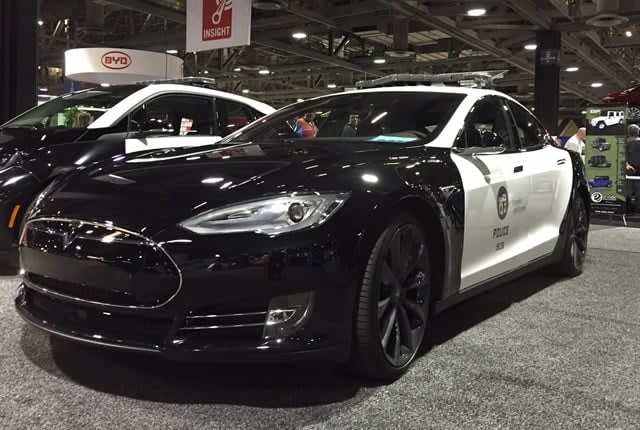
In June, the City of Los Angeles purchased 100 BMW i3 hatchbacks for civilian employees for meetings or site visits and sworn officers on routine assignments. Earlier in the year, the LAPD began testing two Tesla Model S sedans and in October, the agency's fleet manager said the agency would test a Model S as a patrol car.
The agency views the Model S as a viable option because if offers higher performance and a longer range than any other EVs on the market. However, the vehicle costs more than three times that of a traditional patrol vehicle at more than $83,000.
At first blush, spending nearly $100,000 for a patrol vehicle seems financially reckless, but some fleet managers say the total cost of ownership calculation favors the Tesla.
David Worthington, the County of Sonoma's fleet manager, has analyzed the total cost of ownership (TCO) of a Model S versus a traditional sedan. He found that the reduced maintenance and fuel costs of the Tesla would keep it in service for twice as long (180,000 miles versus 90,000 miles). He would go through two traditional police vehicles in the time he had the Tesla in service.
"We internally equip and set up patrol vehicles for our sheriff's office and six other cities and agencies and have been doing so for more than 20 years," Worthington said. "Our technical team is very skilled and adept at overcoming all of the challenges that a new vehicle presents to be used in a variety of assignments and duty cycles. The assistance we need from vehicle manufacturers is mainly around supplemental restraint systems, air bag deployment zones, and electrical wiring diagrams. We have been seeking a contact within Telsa that can provide us with an engineer that can answer our questions and provide us with basic information to ensure that the driver, occupants and our team members that are setting up the vehicles are safe."
Other municipal and county fleets on the West Coast are also looking at EVs for patrol use. Doug Bond, the transportation services manager with the County of Alameda, has had conversations with Tesla about using a Model S for patrol.
"We would be very interested," Bond said. "The challenge is the ability of the vehicle to store enough power to make it through a duty cycle. The other issue is the ability to continue past the standard duty cycle to address an emergency situation."
How the vehicle would perform during a high-speed pursuit is a question that still must be answered. But a Model S seems to meet some of Bond's criteria.
"I do feel that a Tesla model would address these concerns," Bond said. "In our conversations with Tesla, they are willing to sell us cars, but we would be interested in engaging in conversations about branding a Tesla as a patrol car."
As public fleet managers consider more efficient ways to manage their vehicles, EVs must be considered, and even used, for patrol and other assignments that may seem counterintuitive. Just like any other fleet vehicle purchase, it will require calculation of costs, input from affected stakeholders, and buy-in from vendors.