




Red Government Fleet with star logo
MenuMENU
SearchSEARCH

Does Police Vehicle Testing Still Matter?

Each fall, the Michigan State Police and Los Angeles County Sheriff's Department evaluate the current crop of police vehicles with a battery of road tests and provide a mountain of data about their performance, braking, and vehicle dynamics.

Paul Clinton
Paul ClintonSenior Web Editor
Read Paul's Posts
January 20, 2017
3 min to read


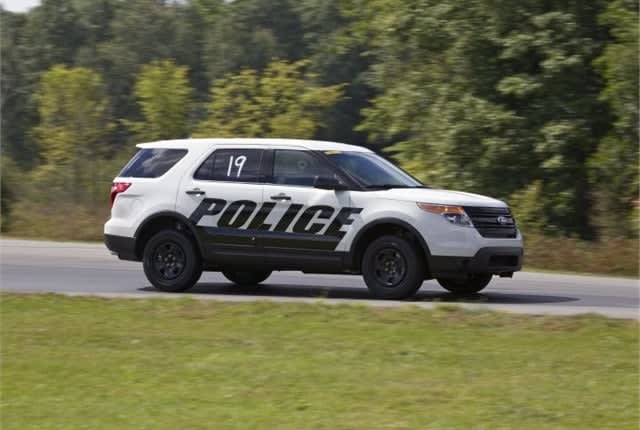
Photo of Michigan State Police vehicle testing courtesy of MSP.

It's nice to have options.

Ford's Crown Victoria Police Interceptor once dominated the American patrol vehicle landscape as a dependable rear-wheel-drive workhorse that could absorb the blows of a daily duty cycle. Today, law enforcement agencies can choose from an array of patrol vehicles, including six sedans, four SUVs, and six motorcycles. The market is now more varied than any earlier decade.

Public fleet managers must decide which vehicle to put in the hands of officers, and must weigh a multitude of factors to help the agency accomplish its mission. The evaluation usually begins at a familiar starting point.

Each fall, two law enforcement agencies put the vehicles through a battery of road tests and provide a mountain of data about their performance, braking, and vehicle dynamics. Law enforcement purchasers then use the reports from the Michigan State Police and Los Angeles County Sheriff's Department as part of their procurement process.

The Michigan State Police has released its testing data of the 2017 model-year vehicles, while the L.A. Sheriff's most recent data posted to its website offers the 2015 model-year vehicle testing report.

Many of the current vehicles available for police work have been offered for nearly a decade or more.

Ford introduced its Police Interceptor sedan and Police Interceptor Utility as 2012 model-year vehicles. Dodge has been offering its V-6 Charger with a police package since the 2006 model year, and later added a V-8 Charger Pursuit. General Motors offered a pair of sedans, including its Holden-based Caprice PPV from 2011 to 2017, and its front-wheel Impala 9C1 in various versions from the 2000 to 2016 model years. GM first offered its Tahoe with Z56 police package for the 1997 model year; a pursuit-rated model arrived for 2015.

Recent model years have brought enhancements rather than overhauls to these established vehicle platforms, which raises the question about whether current vehicle testing results have the same impact they once did.

Fleet managers with agencies who have already chosen a suitable replacement for the Ford Crown Vic don't lean as heavily on the results, but that doesn't mean the testing should be ignored.

The testing is important because it creates a competitive environment that forces vehicle manufacturers to stay current with their police models by updating the vehicles. The testing also provides the most updated data for agencies that want to shift from one vehicle to another. Large police fleets often run a mixed fleet of sedans and SUVs, and are constantly adjusting their vehicle mix.

The testing programs can also provide an important laboratory for new and potential vehicle manufacturers, especially motorcycle sellers, who want to test out a law enforcement version of a retail vehicle to gauge interest. Over the years, Moto Guzzi, Victory Motorcycles, and BRP (Can-AM Spyder) have brought new options they eventually offered in the market. Tesla Motors is considering providing a police variant of its battery-electric Model S sedan for testing.

In light of all this, we salute the Michigan and California law enforcement agencies for continuing their annual testing. It's a valuable evaluation tool for a public fleet manager and it requires a tremendous amount of effort and staff resources to staff and execute. We hope it continues for many years.

Subscribe to Our Newsletter

More Blog Posts

Managing a Police Fleetby Roselynne ReyesNovember 27, 2019

The Future of Police Fleets? Dubai Police Teases Cybertruck for Patrol

The Dubai Police Department posted a mockup of Tesla's new Cybertruck fitted with patrol-ready vehicle graphics.

Read More →

How Chevrolet's Tahoe PPV Differs From its Retail Relative

For the Chevrolet Tahoe PPV, tires are added to the vehicles that are capable of handling speeds of up to 134 mph and the brakes are adjusted to handle frequent stopping at high speeds.

Read More →
Managing a Police Fleetby Paul ClintonNovember 1, 2017

Police Vehicles Pushed to the Limit in California

The Los Angeles County Sheriff's Department conducted its annual evaluation of 2018-model-year police vehicles from Oct. 10 to 13. Agency deputies got behind the wheel of 13 four-wheel vehicles and five motorcycles for the testing.

Read More →
Ad Loading...
Managing a Police Fleetby Paul ClintonOctober 5, 2017

2018 Police Motorcycles Tested in Michigan

Harley-Davidson adds performance-oriented stage kits to its pair of bikes, while Yamaha offers a police version of its FJR1300 sport touring model.

Read More →
Managing a Police Fleetby Staff WriterOctober 3, 2017

2018 Police Vehicles Tested in Michigan

Michigan State Police test Ford's F-150 and hybrid sedan responders, as well as a Dodge Durango, during a 2018-model-year testing round that broadened the options for pursuit vehicles.

Read More →
Managing a Police Fleetby Paul ClintonSeptember 1, 2017

The Efficiency of the CHP's Vehicle Assembly Line

The California Highway Patrol uses an assembly line similar to one found in an automaker's factory to add auxiliary equipment to about 1,000 vehicles per year.

Read More →
Ad Loading...
Managing a Police Fleetby Paul ClintonAugust 17, 2017

How FCA Views the Police Market

Law enforcement agencies continue to purchase Fiat Chrysler's Dodge Charger Pursuit, which appeals to law enforcement officers, who say the vehicle in a violator's rear-view conveys business.

Read More →

Upgrading the F-150 for Off-Road Patrol

Ford took the wraps off its 2018 F-150 Police Responder earlier this month and showed police agencies its latest tool for law enforcement work on more rugged terrain. Early feedback indicates that the truck will find a place with more rural agencies.

Read More →
Managing a Police Fleetby Patrick Oliver and Samuel KirchhoffJune 28, 2017

Managing High-Speed Pursuits

Pursuits can be deadly for everyone involved, but they can't be prohibited in all cases. So agencies need to have policies and procedures in place to reduce the danger.

Read More →
Ad Loading...

How to Deal With the Privileges of Rank

In law enforcement, police chiefs, sheriffs, and other top brass have been known to request higher trim grades and other vehicle upgrades, which can present challenges to the public fleet manager who must repurpose the vehicle after the chief switches into a new vehicle.

Read More →