BELLEVUE, WA – The City of Bellevue, Wash. plans to convert one-third of its fleet of 345 light-duty vehicles (out of a total fleet of 1,119 vehicles) to hybrids by the end of 2011.
Government Fleet spoke with Pete Bednar, the manager of Fleet Operations for the City of Bellevue and Sheida Sahandy, Assistant to the City Manager, about Bellevue’s current activities and plans. When asked whether the City has specific goals, Sahandy said they don’t have a set percentage.
“We have been replacing our passenger motor pool with hybrids,” Sahandy said. “Our goal by 2011 is to have 127 hybrids, 36 percent of the 345 light-duty vehicles in the fleet (excluding police cruisers).” She said that the City plans to replace 78 vehicles with hybrids in 2011 to get to this total.
“We’re on board conceptually, and the technology has caught up, so we’re in the transition from getting here to there,” she said.
In 2010, Sahandy said the City added 33 hybrids to the fleet, which saves 11,000 gallons of fuel per year and around $30,000. The hybrids reduced CO2 pollution by 90 metric tons.
Although the city’s goal is to replace depreciated assets with hybrids whenever possible, Bednar said it’s not always possible, given the City’s customers’ needs.
“We are continually looking for vehicles that would be suited for a hybrid application,” said Bednar. “Unfortunately, some of our business needs cannot be met with hybrid applications. One of the biggest issues is the need to be able to tow effectively. As a practice, all vehicles are considered for hybrid replacement, but then we look at the business needs of the customer and determine if that need can still be met.”
To fund vehicle purchases, Bednar said that the Sahandy has found grants to pay for the difference between the replacement budget for a like-for-like vehicle and a hybrid. Bednar said the City had the help of groups such as the Clean Cities Coalition in addressing roadblocks to getting more hybrids in the fleet.
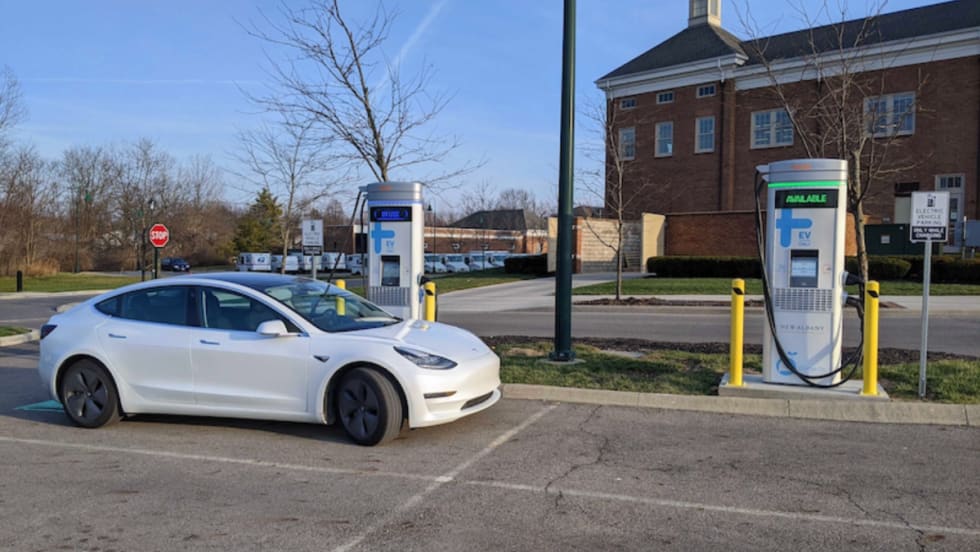
In addition, the City recently passed legislation changing land-use rules, state bill HB 1481, which explicitly approves the use of electric vehicle infrastructure in the city. Although the City’s fleet management is interested in electric vehicles, Bednar said he is still waiting on more information about EVs that will be sold in the region before making any decisions.
“Many of the new models, including the electric vehicles, have had so much hype; it is hard to determine truth from fantasy,” Bednar said. “My staff and I are constantly doing research on what is coming out from the major manufacturers and also asking our peers for input. In the case of vehicles like the Nissan Leaf, we have been asking for crash test results and a year later we are still waiting for them.”
Overall, the City has made a serious commitment to using alternative fuels. Bednar said the City has 60 E85/flex-fuel vehicles, four propane autogas-powered vehicles, and one EV (a small utility truck).
“We do have a plan in 2013 to place an E85 tank in our primary fuel site,” Bednar said. "We are making investments in our infrastructure to be able to dispense biodiesel and E15 gasoline. The E85 will serve our police vehicles and many other flex-fuel vehicles in the city’s fleet. We are also installing a new fuel system in 2011 that will be automated to allow accurate reading of mileage to better track utilization and cost per mile.”
Beyond reducing emissions and fuel usage to make the fleet “green,” Bednar said that instability in gasoline and diesel prices is driving interest in alternative fuels.
“I have a great staff that is very interested in growing our green fleet and understands the costs associated with fuel purchases,” Bednar said. “With fuel costs hedging up again, and the political instability in the Middle East, Fleet Operations is positioning our fleet to be able to reduce fuel consumption, reduce greenhouse gasses, and reduce overall fuel costs for the City.”
By Greg Basich