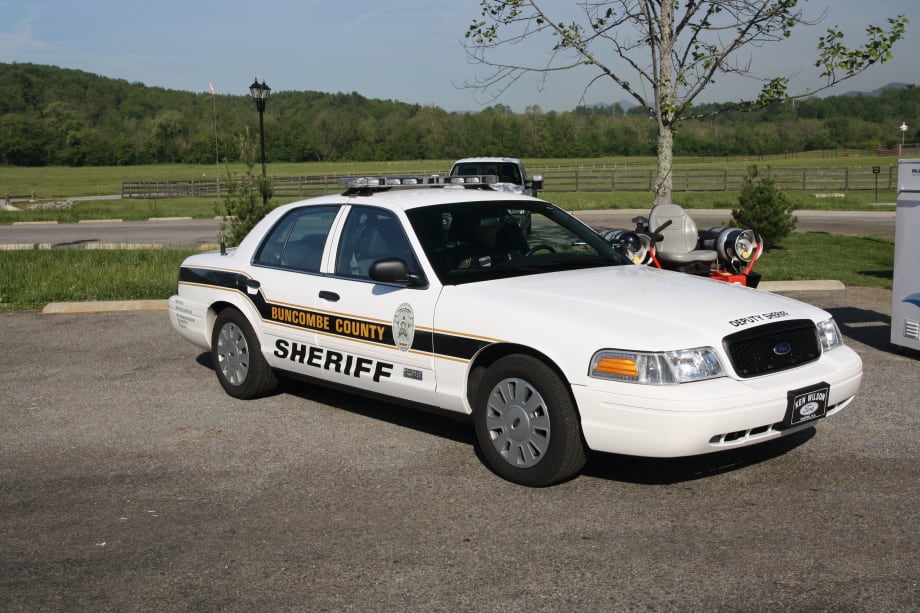
Buncombe County has converted 10 vehicles to run on propane autogas and plans to convert more.
The Buncombe County, N.C., Sheriff’s Office recently converted 10 Ford Crown Victorias to propane autogas under the Southeast Propane Autogas Development Program. The law enforcement fleet expects to displace 20 tons of greenhouse gas emissions each year and save more than $13,000 annually on fuel cost savings running on autogas.
"We were looking at two main things when it came to switching to alternative-fuel vehicles,” said Buncombe County Sheriff Van Duncan. “We wanted to boost our bottom line in terms of fuel cost savings, and also to have cleaner-burning cars on the road. Propane autogas was the practical fuel choice because, not only does it support these goals, there also isn’t a noticeable difference in vehicle performance when converting these Crown Victorias from gasoline to autogas.”
The county received grant funding under the Program, which is administered by Virginia Clean Cities, for 10 vehicle conversions and the installation of a 1,000-gallon autogas fuel tank. It began switching vehicles to autogas in August of 2011 and the conversions were completed by February 2012. The sheriff’s patrol cars travel an average of almost 25,000 miles each year, and the fleet is using than 17,000 gallons of propane autogas annually. Fleets like Buncombe County will save even more on fuel costs in 2013 with the recent extension of the 50-cents-per-gallon federal tax credit for alternative fuel.
According to Sheriff Duncan, the “motor runs a little quieter” in the autogas vehicle. The vehicles were outfitted with bi-fuel Prins VSI autogas system, which allows drivers to switch to gasoline in case the autogas tank runs low out of fuel station range. The fleet can also switch the autogas systems from older vehicles to newer ones with similar engines, an added benefit for law enforcement fleets that put a lot of wear-and-tear on their patrol vehicles.
“The ability to switch back to gasoline is a tremendous option for law enforcement fleets,” said Sheriff Duncan. “It’s just one button on the center of the dash and you’re back to running on gasoline. That provides our deputies with peace of mind—to know that in an emergency situation, you not only have a full tank of propane but also a backup full tank of gas, giving you an effective operating range of about 500-600 miles before you have to refill the car.”
Propane autogas is also 20 percent cleaner than gasoline, and U.S. fleets save more than $1-per-gallon filling with autogas versus gasoline. Since autogas burns cleaner than gasoline, many autogas fleets also report reduced maintenance needs, such as fewer oil changes, and increased engine life.
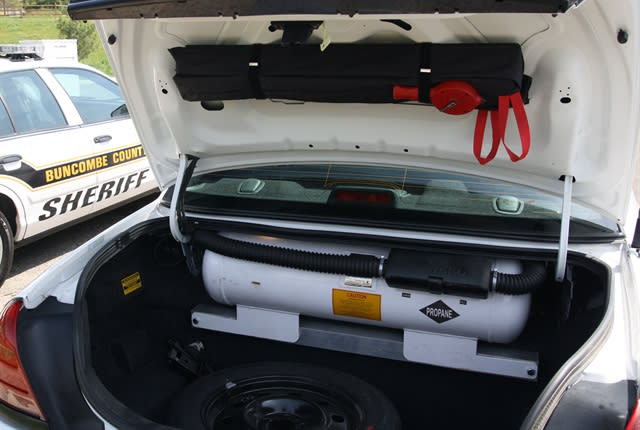
The bi-fuel vehicles allow officers to easily switch from gasoline to propane autogas.
The Program is helping to increase the use of clean propane autogas in the U.S. by converting more than 1,200 vehicles to autogas and implementing 11 autogas fueling stations in the region. Managed and administered by the Virginia Department of Mines, Minerals and Energy and Virginia Clean Cites (VCC) at James Madison University, the Program is comprised of public and private partnerships in 10 southeastern states, as well as Denver and Pittsburgh. The Program is made possible by funding from the American Recovery and Reinvestment Act and the U.S. Department of Energy’s Clean Cities Program.
Alliance AutoGas provides propane autogas vehicle conversions, fuel and ongoing support for Program fleets. Certified conversion center GermanMotorWerks in Asheville, N.C., performed the vehicle conversions for the Buncombe County Sheriff’s Office, while Blossman Gas, propane supplier and Alliance AutoGas founder, installed the autogas fuel station and delivers year-round fuel supply.
The sheriff’s office is looking into obtaining funding for an additional 10 propane autogas vehicle conversions. For his part, Sheriff Duncan is volunteering his vehicle for the next propane autogas conversion. “We’re going to push forward in upgrading our fleet, and I want to do mine next,” he said. “Nothing says you believe in it like taking it on.”