Red Government Fleet with star logo
MenuMENU
SearchSEARCH

California Looks to Ban Diesel-Fueled Trucks

The California Air Resources Board has proposed regulations to end the sale of new diesel-propelled big rigs and other trucks by 2040.

September 26, 2022
California Looks to Ban Diesel-Fueled Trucks

Trucks and businesses across California will be affected by the proposed Advanced Clean Fleets regulation.

Photo: Canva

3 min to read


New changes to California law could affect diesel-fueled fleets shortly.

The proposed Advanced Clean Fleets (ACF) regulation, or “proposed ACF regulation,” would contribute to achieving the state’s criteria pollutant and GHG reduction goals as well as cleaner technology targets needed to protect communities.

Implementing this proposed ACF regulation is expected to save over 5,000 Californian lives between 2024 and 2050. These avoided premature mortalities and other avoided adverse health benefits have an estimated value of more than $57 billion.

Death to Diesel-Fueled

The vehicles affected the most are diesel-fueled. Diesel has grown in popularity because it is cheap and durable. But affordability comes at a cost to the environment and our health.

According to the California Air Resources Board, diesel-fueled trucks are the largest source of nitrogen oxide emissions in California. And as a result, it has been linked to chronic heart disease, asthma, cancer, and more in residents.

Will Barrett, national senior director for clean air advocacy with the American Lung Assn states, “Pound for pound, heavy-duty trucks are putting out far more pollution than anything else on the road.” Because of this, it’s “really directly contributing to the fact that California has the worst air pollution in the country.”

The ACF regulation directly addresses this major issue. It would require state and local government fleets, drayage trucks, high-priority fleets, and federal fleets to phase out over time. And their replacements will be medium- and heavy-duty zero-emission vehicles (ZEVs).

Additionally, it sets a clear end date for new internal combustion-powered medium- and heavy-duty vehicle sales in California. The regulation includes four components: three sets of fleet requirements on state and local government fleets, drayage trucks, high priority, and federal fleets, and a ZEV sales requirement on medium- and heavy-duty truck manufacturers.

The broad change is part of a comprehensive strategy that would, consistent with public health needs, accelerate the widespread adoption of ZEV in the medium- and heavy-duty truck sector and in light-duty package delivery vehicles.

The proposed ACF regulation would require certain fleets to deploy ZEVs starting in 2024 and would establish a clear end date for new medium- and heavy-duty internal combustion engine (ICE) vehicle sales in 2040.

Changes to Infrastructure

California fleets will need to make drastic changes to meet the proposed ACF regulation by 2040. One of the updates will be to infrastructure. By 2040, 400,000 trucks traveling in California would need charging infrastructure.

And not just normal charging stations would work. Right now, the fastest charging stations take three to four hours to charge trucks. High-powered charging stations are needed to reduce charging time.

Chris Shimoda, vice president of the California Trucking Assn., states “There is no infrastructure to support this.” That means big changes are needed, as well as the technology for faster charges.

To help build these infrastructures, incentives are in place by the Clean Energy and Pollution Reduction Act to encourage and “accelerate widespread transportation electrification (TE).” This includes $1.8 billion supporting light-, medium-, and heavy-duty (on-road and off-road) charging infrastructure development, including direct-current fast charging.

Another incentive is the EnergIIZE program. It provides incentives for fueling infrastructure to support battery-electric and fuel cell commercial vehicles.

Overall, the proposed regulation is one for the history books. “The rule truly is monumental. This is the only way we can get diesel out of our community,” said Andrea Vidaurre, a policy analyst at the People’s Collective for Environmental Justice, a nonprofit based in the Inland Empire.


Related: Leading the Charge: 3 Ways to Succeed with Fleet Electrification

More Green Fleet

SponsoredFebruary 6, 2026

Hybrids: Electrification Without the Challenges

Hybrids bridge the gap between ICE vehicles and EVs, making them a smart choice for fleets that want to reduce emissions but aren’t ready to fully electrify. Hybrids, which are powered by internal combustion engines and electric motors, capture the benefits of electric power without the barriers many organizations find challenging.

Read More →
Green Fleetby Bob StantonJanuary 21, 2026

Flavor of the Decade: What if BEVs Aren’t the Answer?

A look at the present state of play in the EV market, plus a 2027 heavy truck emissions update.

Read More →
Ad Loading...
SponsoredJanuary 19, 2026

3 New Ways Fleet Software Pays: ROI opportunities for modern fleet managers

Public fleets face constant pressure to do more with limited budgets. This eBook outlines how modern fleet software helps agencies extend asset life, reduce unplanned downtime, and improve safety by automating maintenance, using smarter video insights, and unifying fleet data. A practical look at how technology can drive measurable ROI for taxpayers.

Read More →
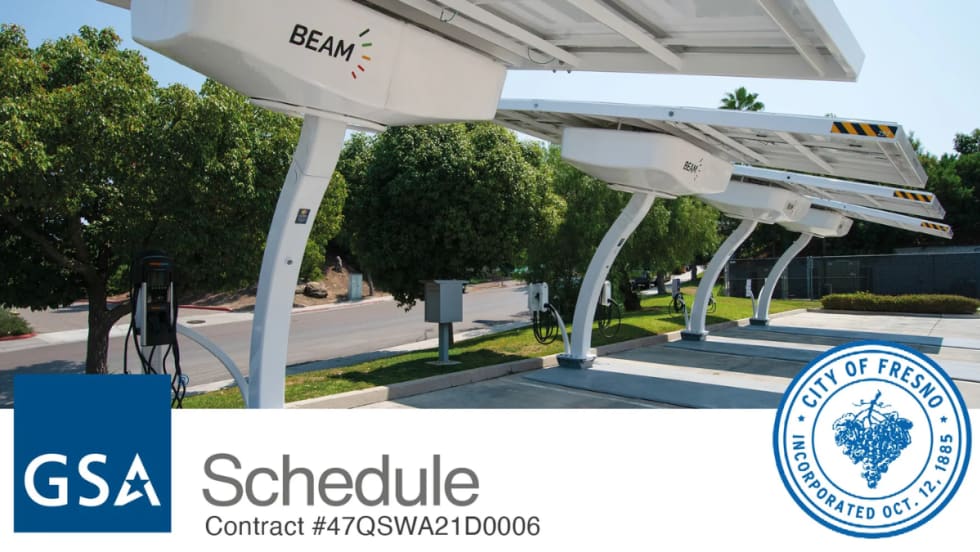
Off-grid Beam Global EV ARC charging systems installed at the City of Fresno Municipal Service Center Yard, featuring solar canopies and EV chargers used by the city’s electric vehicle fleet.
Green Fleetby News/Media ReleaseJanuary 12, 2026

City of Fresno Deploys Beam Global EV ARC Off-Grid EV Charging Systems to Support Municipal Fleet Electrification

The City of Fresno deployed off-grid EV charging systems to support municipal fleet electrification without relying on utility grid connections.

Read More →
Green Fleetby Staff WriterDecember 8, 2025

City of Quincy Partners with Cero Global to Launch Pilot to Reduce Emissions, Fuel Costs

The pilot will use Cero Global’s technology on city-owned vehicles to evaluate its impact on emissions and fuel consumption, as well as potential savings in municipal operating costs.

Read More →
Ad Loading...
SponsoredDecember 5, 2025

The Road to Smarter Electric Van Transitions: A practical roadmap for integrating electric vans into your fleet

Electric vans are becoming a strategic tool, not just a sustainability move. Get a roadmap that breaks down costs, charging planning, upfit compatibility, and what fleets should evaluate before making the switch.

Read More →
Small blue car with a green leaf and an electric plug.
Green Fleetby Staff WriterDecember 1, 2025

New Mexico Signs Agreement Advancing Electrification and Grid Resilience Efforts

The City of Socorro signs a new agreement to accelerate electrification and infrastructure development.

Read More →
UGI Energy Services logo over an image of a CNG trash compactor truck, representing Philadelphia’s move to fuel refuse vehicles with renewable natural gas.
Green Fleetby News/Media ReleaseDecember 1, 2025

UGI Energy Services and The City of Philadelphia Announce Biofuel Agreement

Philadelphia is shifting its trash collection fleet toward cleaner operations with a new partnership that will power 35 CNG compactors using renewable natural gas sourced from regional landfills.

Read More →
Ad Loading...
An electric vehicle charges at a public EV charging station outside a municipal building.
Green Fleetby News/Media ReleaseNovember 17, 2025

Sourcewell Awards ChargePoint New EV Charging Contract

ChargePoint secures a new Sourcewell contract to expand access to EV charging for public agencies across the U.S. and Canada.

Read More →