Red Government Fleet with star logo
MenuMENU
SearchSEARCH

California Sets Goals to Add EVs in Significant Numbers to State Fleet

GOLETA, CA - Government Fleet magazine contacted California’s Department of General Services (DGS) to find out how State entities will go about meeting Gov. Brown's mandate that State entities increase zero-emission vehicles in their fleets.

by Staff
April 18, 2012
California Sets Goals to Add EVs in Significant Numbers to State Fleet

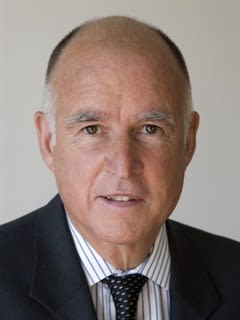
California's Governor Jerry Brown.

3 min to read


California's Governor Jerry Brown.

GOLETA, CA – In late March, California’s Governor Jerry Brown issued an executive order that mandates State entities increase the number of zero-emissions vehicles in each organization’s fleet. The order sets the following goals:

  • 10% of fleet purchases of light-duty vehicles must be zero-emissions vehicles by 2015

  • 25% must be zero-emissions vehicles by 2020


Government Fleet contacted California’s Department of General Services (DGS) to find out how State entities will go about meeting these goals and paying for them, given the current budget environment in the State.

The executive order affects a total of 140 State agencies and departments, including 23 California State University campuses and 52 District Agriculture Associations. Although budgets are tight, Eric Lamoureux, a DGS spokesperson, said there are some sources of funding for State agencies and departments, including a $2,500 CARB rebate to offset the cost of electric vehicle purchases. Although this reduces the up-front cost of electric vehicles somewhat, the State is betting on lower overall lifecycle costs, for example fuel savings, to make the economic case for these vehicles.

“It makes long-term economic sense for the state to begin integrating more electric vehicles into its fleet,” Lamoureux said. “Data from the U.S. Department of Energy shows that the purchase price of electric vehicles is higher, however their operating costs are lower over the life of the vehicle.  Fuel and maintenance costs are less, ultimately resulting in a net savings to the State.”   

In addition, the deadlines are still a few years out, giving State entities time to fund and procure EVs.

“Appreciating the current budget situation, the Governor has established goals that give State agencies three years to reach 10% purchasing of zero-emissions vehicles and another five years to achieve a zero emission purchasing goal of 25% by 2020,” Lamoureux said.

Given that there are other types of alternative-fuel vehicles available, Government Fleet wanted to find out the reasoning behind choosing EVs over other vehicle types. Lamoureux cited substantially reduced emissions and potentially falling costs for EVs as reasons.

“Plug-in electric vehicles lower the State’s dependence on petroleum fuels,” said Lamoureux. “A battery-electric vehicle reduces greenhouse gas emissions by 75 percent compared to a conventional gasoline vehicle. A plug-in hybrid electric vehicle with 20 miles all-electric range reduces greenhouse gas emissions by 60 percent compared to a conventional vehicle. Hydrogen electric vehicles reduce greenhouse gas emissions by a similar amount. Other alternative fueled vehicles reduce emission by a much smaller amount.”

Currently, the choice of electric vehicle for State agencies and departments on the State’s contract is limited to a single model, the Nissan Leaf. Lamoureux said DGS expects other vehicles to become available on the contract in the future.

Governor Brown already implemented an initiative to cut the State’s passenger vehicle fleet in half in 2011, so any EVs added will replace vehicles in the fleet rather than add to it.

“Most California state departments are reducing the size of their fleets due to Governor Browns Fleet Reduction Executive Order (EO B-2-11),” Lamoureux said. “Through the fleet reduction effort, DGS is replacing many older and heavily utilized vehicles with those that are newer and have less mileage. Nevertheless, there will still be the need to replace vehicles following several years of vehicle procurement moratoriums. With a smarter sized, more efficiently operated fleet, State entities should expect cost savings that may provide opportunities for the acquisition of electric vehicles.”   

By Greg Basich

More Green Fleet

SponsoredFebruary 6, 2026

Hybrids: Electrification Without the Challenges

Hybrids bridge the gap between ICE vehicles and EVs, making them a smart choice for fleets that want to reduce emissions but aren’t ready to fully electrify. Hybrids, which are powered by internal combustion engines and electric motors, capture the benefits of electric power without the barriers many organizations find challenging.

Read More →
Green Fleetby Bob StantonJanuary 21, 2026

Flavor of the Decade: What if BEVs Aren’t the Answer?

A look at the present state of play in the EV market, plus a 2027 heavy truck emissions update.

Read More →
Ad Loading...
SponsoredJanuary 19, 2026

3 New Ways Fleet Software Pays: ROI opportunities for modern fleet managers

Public fleets face constant pressure to do more with limited budgets. This eBook outlines how modern fleet software helps agencies extend asset life, reduce unplanned downtime, and improve safety by automating maintenance, using smarter video insights, and unifying fleet data. A practical look at how technology can drive measurable ROI for taxpayers.

Read More →
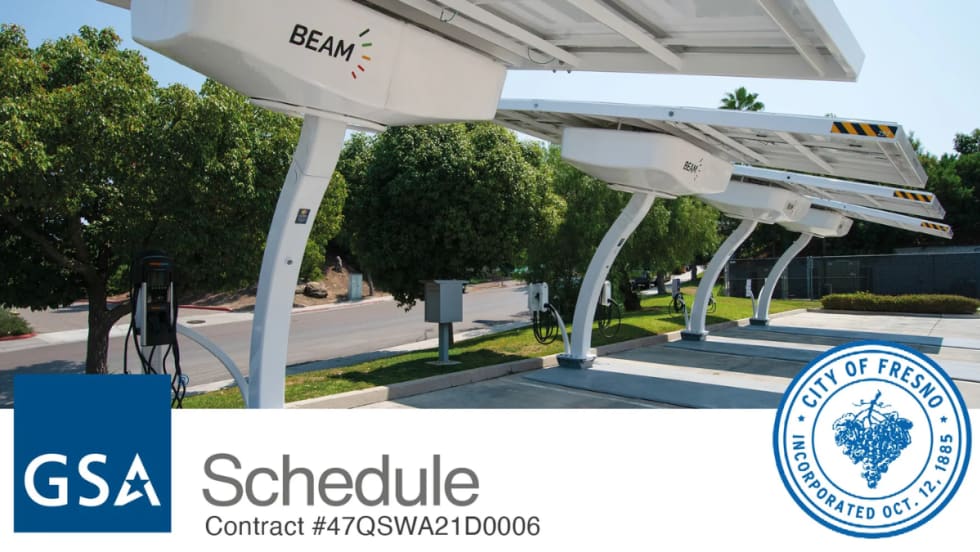
Off-grid Beam Global EV ARC charging systems installed at the City of Fresno Municipal Service Center Yard, featuring solar canopies and EV chargers used by the city’s electric vehicle fleet.
Green Fleetby News/Media ReleaseJanuary 12, 2026

City of Fresno Deploys Beam Global EV ARC Off-Grid EV Charging Systems to Support Municipal Fleet Electrification

The City of Fresno deployed off-grid EV charging systems to support municipal fleet electrification without relying on utility grid connections.

Read More →
Green Fleetby Staff WriterDecember 8, 2025

City of Quincy Partners with Cero Global to Launch Pilot to Reduce Emissions, Fuel Costs

The pilot will use Cero Global’s technology on city-owned vehicles to evaluate its impact on emissions and fuel consumption, as well as potential savings in municipal operating costs.

Read More →
Ad Loading...
SponsoredDecember 5, 2025

The Road to Smarter Electric Van Transitions: A practical roadmap for integrating electric vans into your fleet

Electric vans are becoming a strategic tool, not just a sustainability move. Get a roadmap that breaks down costs, charging planning, upfit compatibility, and what fleets should evaluate before making the switch.

Read More →
Small blue car with a green leaf and an electric plug.
Green Fleetby Staff WriterDecember 1, 2025

New Mexico Signs Agreement Advancing Electrification and Grid Resilience Efforts

The City of Socorro signs a new agreement to accelerate electrification and infrastructure development.

Read More →
UGI Energy Services logo over an image of a CNG trash compactor truck, representing Philadelphia’s move to fuel refuse vehicles with renewable natural gas.
Green Fleetby News/Media ReleaseDecember 1, 2025

UGI Energy Services and The City of Philadelphia Announce Biofuel Agreement

Philadelphia is shifting its trash collection fleet toward cleaner operations with a new partnership that will power 35 CNG compactors using renewable natural gas sourced from regional landfills.

Read More →
Ad Loading...
An electric vehicle charges at a public EV charging station outside a municipal building.
Green Fleetby News/Media ReleaseNovember 17, 2025

Sourcewell Awards ChargePoint New EV Charging Contract

ChargePoint secures a new Sourcewell contract to expand access to EV charging for public agencies across the U.S. and Canada.

Read More →