Red Government Fleet with star logo
MenuMENU
SearchSEARCH

City in Iowa Aims for Mostly EV Fleet by 2045

Dubuque's vehicle purchasing policy was updated to focus on fleet electrification, and will initially apply to light-duty vehicles only.

January 18, 2023
City in Iowa Aims for Mostly EV Fleet by 2045

Dubuque's Community Climate Action, Adaptation, and Resiliency Plan includes a target for the city to reduce total greenhouse gas emissions by 50% in the next seven years.

Photo: City of Dubuque/Canva/Government Fleet

3 min to read


The Dubuque, Iowa, City Council gave its approval to a fleet electrification plan at a recent meeting. It's part of the city's 50% by 2030 Community Climate Action and Resiliency Plan, which was recently updated. It calls for an update to the city vehicle purchasing policy and budget process to increase the adoption of electric vehicles (EVs) and other clean vehicles. It also establishes minimum fuel efficiency requirements for the continued use internal combustion engine (ICE) vehicles.

Prioritizing the use and purchase of low- and no-emission vehicles like EVs, "demonstrates the city's leadership in transitioning to a cleaner fleet and reducing municipal vehicle emissions, setting an example for the larger community to join in decreasing greenhouse gas emissions and costs," the plan says.

About the Plan

The city's non-transit fleet, made up of 233 vehicles, accounts for just over 50% of all emissions produced by the city's fleet. The city's vehicle purchasing policy was updated to focus on fleet electrification, and will initially apply to light-duty vehicles only. The terms will expand to cover medium- and heavy-duty fleet vehicles as more electric models become commercially available and cost competitive. According to documents shared with the city council, electrification will be coupled with other sustainable fleet strategies including idle reduction, route optimization when possible, review of fleet usage, and rightsizing the fleet.

The plan includes a target for the city to reduce total greenhouse gas emissions by 50A% of its 2003 levels by 2030. In 2020, the city council set a target of being the first city in the state of Iowa to achieve carbon neutrality.

Considering Alternatives

Changes to the plan require departments to prioritize EVs, except when there is no electric model to suit the operating needs for the vehicle being replaced, or there is no cost-effective electric alternative. In those cases, departments are required to prioritize purchaseing a clean vehicle pursuant to the following structure:

  1. plug-in hybrid electric vehicle (PHEV),

  2. hybrid-electric vehicle (HEV),

  3. alternative fuel, or another vehicle with demonstrated lowered emissions than the vehicle eligible for replacement.

Cost Comparisons

The plan calls EVs more cost-effective due to declining up-front costs, as well as incentives by dealers, energy providers, and the State of Iowa Department of Transportation Volkswagen Clean Air Act Settlement program.

An EV will be considered cost-effective if its estimated lifecycle cost is within 10% of a comparable conventional vehicle's lifecycle cost.

This threshold provides a buffer for small variances in the lifecycle cost analysis due to assumptions that are subject to fluctuation, like future fuel prices. It also accounts for additional indirect social and environmental benefits, like air pollution reduction and local jobs benefits from EV supply equipment (EVSE) installation. These are things that are not captured in the lifecycle cost analysis.

The plan also points out the total cost of ownership savings due to lower fuel costs and fewer maintenance needs, especially when the EVs are replacing high mileage, low fuel efficiency vehicles.

Based on projected EV model availability and costs, the analysis projects the policy update will result in 9% of total new non-transit purchases to be EVs by 2025, and 58% by 2032. By 2045, the policy shift is expected to result in an estimated 97% of the city’s fleet being electric.

Preferences in Replacement Vehicles

The plan offers guidance to support departments that may struggle with finding appropriate EV replacements due to difficulty in obtaining certain vehicle models. The fleet supervisor will assist departments in determining the best model to purchase based on operational needs or cost-effectiveness.

Below is the hierarchy of replacement vehicle preferences as laid out by the city:

  1. Battery-electric vehicle (BEV)

  2. Plug-in hybrid electric vehicle (PHEV)

  3. Hybrid vehicle (HEV)

  4. Conventional vehicle (gasoline or diesel-powered vehicle)

More Green Fleet

SponsoredFebruary 6, 2026

Hybrids: Electrification Without the Challenges

Hybrids bridge the gap between ICE vehicles and EVs, making them a smart choice for fleets that want to reduce emissions but aren’t ready to fully electrify. Hybrids, which are powered by internal combustion engines and electric motors, capture the benefits of electric power without the barriers many organizations find challenging.

Read More →
Green Fleetby Bob StantonJanuary 21, 2026

Flavor of the Decade: What if BEVs Aren’t the Answer?

A look at the present state of play in the EV market, plus a 2027 heavy truck emissions update.

Read More →
Ad Loading...
SponsoredJanuary 19, 2026

3 New Ways Fleet Software Pays: ROI opportunities for modern fleet managers

Public fleets face constant pressure to do more with limited budgets. This eBook outlines how modern fleet software helps agencies extend asset life, reduce unplanned downtime, and improve safety by automating maintenance, using smarter video insights, and unifying fleet data. A practical look at how technology can drive measurable ROI for taxpayers.

Read More →
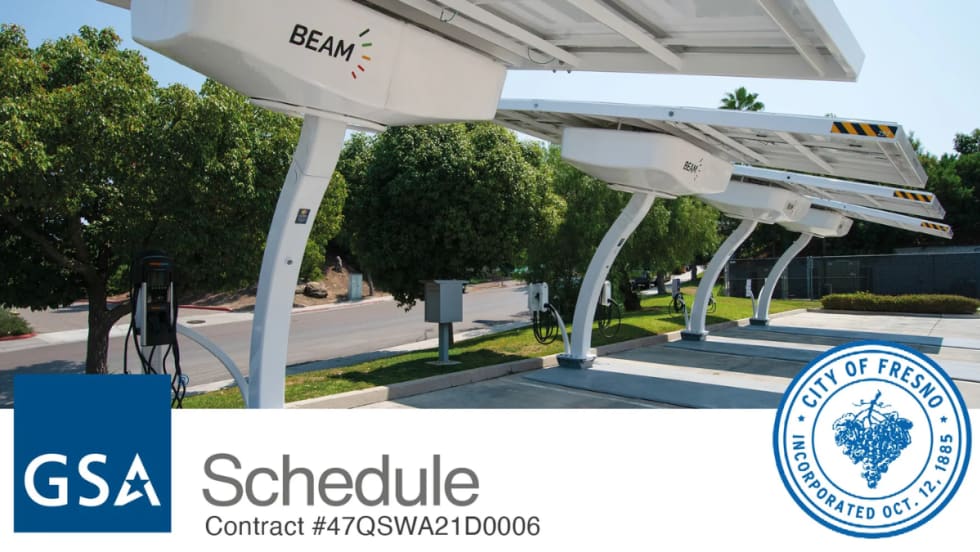
Off-grid Beam Global EV ARC charging systems installed at the City of Fresno Municipal Service Center Yard, featuring solar canopies and EV chargers used by the city’s electric vehicle fleet.
Green Fleetby News/Media ReleaseJanuary 12, 2026

City of Fresno Deploys Beam Global EV ARC Off-Grid EV Charging Systems to Support Municipal Fleet Electrification

The City of Fresno deployed off-grid EV charging systems to support municipal fleet electrification without relying on utility grid connections.

Read More →
Green Fleetby Staff WriterDecember 8, 2025

City of Quincy Partners with Cero Global to Launch Pilot to Reduce Emissions, Fuel Costs

The pilot will use Cero Global’s technology on city-owned vehicles to evaluate its impact on emissions and fuel consumption, as well as potential savings in municipal operating costs.

Read More →
Ad Loading...
SponsoredDecember 5, 2025

The Road to Smarter Electric Van Transitions: A practical roadmap for integrating electric vans into your fleet

Electric vans are becoming a strategic tool, not just a sustainability move. Get a roadmap that breaks down costs, charging planning, upfit compatibility, and what fleets should evaluate before making the switch.

Read More →
Small blue car with a green leaf and an electric plug.
Green Fleetby Staff WriterDecember 1, 2025

New Mexico Signs Agreement Advancing Electrification and Grid Resilience Efforts

The City of Socorro signs a new agreement to accelerate electrification and infrastructure development.

Read More →
UGI Energy Services logo over an image of a CNG trash compactor truck, representing Philadelphia’s move to fuel refuse vehicles with renewable natural gas.
Green Fleetby News/Media ReleaseDecember 1, 2025

UGI Energy Services and The City of Philadelphia Announce Biofuel Agreement

Philadelphia is shifting its trash collection fleet toward cleaner operations with a new partnership that will power 35 CNG compactors using renewable natural gas sourced from regional landfills.

Read More →
Ad Loading...
An electric vehicle charges at a public EV charging station outside a municipal building.
Green Fleetby News/Media ReleaseNovember 17, 2025

Sourcewell Awards ChargePoint New EV Charging Contract

ChargePoint secures a new Sourcewell contract to expand access to EV charging for public agencies across the U.S. and Canada.

Read More →