County of San Diego Meeting Electrification Goals Through ChargePoint
The County of San Diego’s Electric Vehicle Roadmap, approved by the County Board of Supervisors in 2019, aims to electrify more than 500 of the County’s fleet vehicles by 2027.
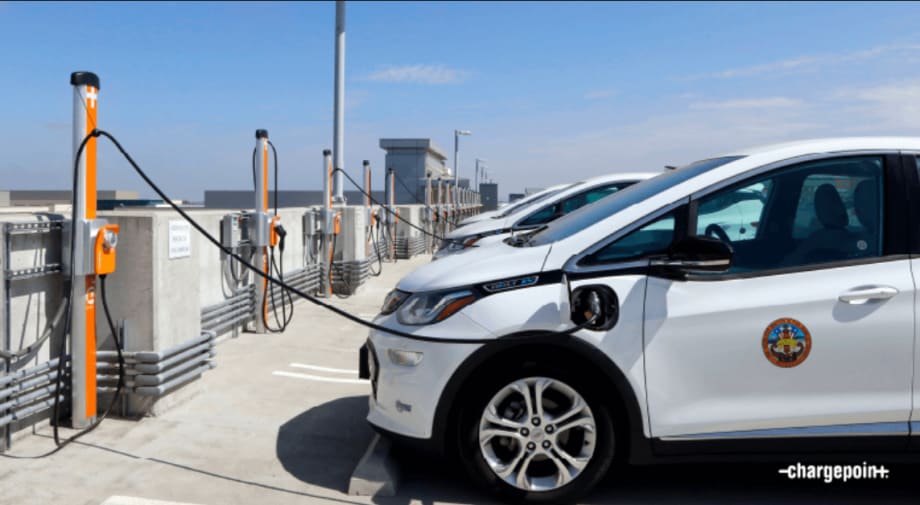
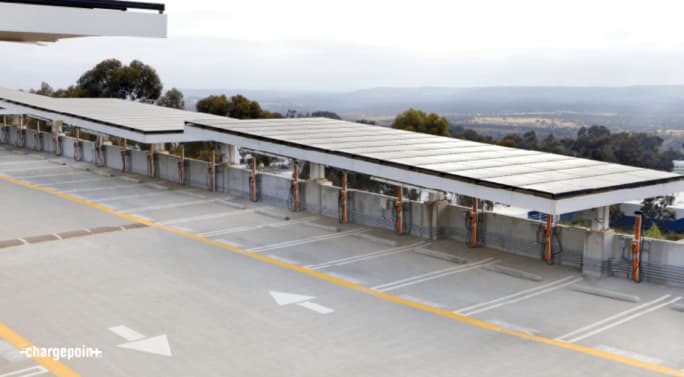
Most recently, the County installed 119 CPF50 chargers on the top deck of the County Operations Center parking structure, bringing the total number of fleet charging ports to more than 200 at that location.
Photo: ChargePoint
8 min to read
In 2013, the County of San Diego had more than 7,000 electric vehicles on the road. Susan Freed, project manager for the Energy and Sustainability Division at the County of San Diego, has been working to get the electrification program off the ground.
In order to meet San Diego County’s greenhouse gas reduction goals as well as to support California’s goal of banning sales of new gas-powered vehicles by 2035, Freed knew the County needed to greatly enhance its existing electric vehicle charging network.
“Back then it was really pretty sparse,” she said. “We initially focused on public access charging, though in some spots County employees could also use the chargers. We then later began to transition our fleet.”
Choosing The Right Charging Solution
In 2015, Freed applied for and received a $500,000 grant from the California Energy Commission specifically to install EV charging infrastructure. After doing a preliminary cost analysis, the San Diego County team determined they could start with 10 sites using that amount of money. They put out a request for proposal for an EV charging solution provider and ultimately chose ChargePoint.
With the help of an urban planning consulting firm, San Diego County focused on sites that offer other attractions for drivers, such as retail districts, shopping centers, large public buildings like hospitals and libraries, parks and other places where people would want to park for charging and then go about other activities. They also focused on arterials and streets with consistent daily traffic where people would easily see the chargers.
They put in 35 ports at 10 sites around the western part of the county. The team has continued to expand the county’s charging program when new capital projects come online.
The California building code requires that new construction buildings include the necessary infrastructure for adding EV charging. Since the County of San Diego typically constructs two or three new buildings every year, they now automatically install EV chargers at these new locations. This building code requirement has enabled the county to expand its public charging to 56 different sites.
The county is focused is on getting enough high-power Level 2 AC chargers at county facilities and along vehicle routes to accommodate larger batteries that can go greater distances.
Photo: ChargePoint
A Focal Point of Transitioning to an Electric Fleet
In 2017, they were able to partner with their local utility company, SDG&E, under its Power Your Drive program. At the time, SDG&E paid for the entire installation including infrastructure and charging equipment; SDG&E owns the equipment and runs the billing service.
“The Power Your Drive program allowed us to get started with fleet electrification at seven sites for a total of 70 charging ports,” Freed said.
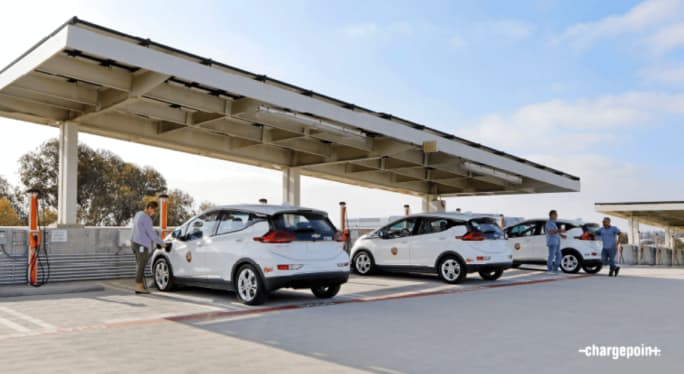
At the same time, the county purchased 14 ChargePoint CPF50 dual-port chargers apart from the utility program and installed them at the County Operations Center to encourage county departments to transition their light-duty fleets to electric.
David Fernandez, chief of fleet services for the Department of General Services in the County of San Diego is ultimately responsible for the 4,300 vehicles within the county fleet — the fueling, the maintenance and also helping all the departments acquire new vehicles.
“Our goal is to see how and when we can best meet state requirements without compromising each department's vehicle needs and capabilities,” he said.
Fernandez is encouraging county departments that use fleet vehicles for administrative purposes to transition to electric right away. The administrative fleets are all light-duty vehicles and primarily used to get from one local site to another, meaning they can easily be charged with the infrastructure the County already has in place. Early adopters have included Public Safety Departments and the Health and Human Services Agency.
In addition, the arrival of the Ford F-150 Lightning has been a game changer for many County entities, the library will even be putting two electric bookmobiles on the road.
San Diego County plans to convert operational vehicles and equipment such as the Sheriff Department’s patrol cars, the County Fire’s apparatus fleet and the Department of Public Works’ medium- and heavy-duty vehicles, including cranes, high-reach trucks and maintenance trucks as these options become viable.
“We’re still waiting for the technology to enable extensive travel across the County in an emergency before we can move in those areas right now,” Fernandez said, adding that he is looking forward seeing the pursuit vehicle options coming out for the Sheriff’s Department, such as the Chevrolet Blazer EV SS, slated for release in 2024.
“It’s critical that the patrol cars don’t compromise their operational capability when converting to electric,” he said. “But when a vehicle comes available that’s rated to meet those needs, I have no doubt that the Sheriff's Department will be all over it.”
Fleet Charging Meets Fleet Needs
Starting out as a master fleet tech in 2009, Jim Gamboa is San Diego County’s electric vehicle coordinator, helping ensure that all vehicle transitions and charging station installations are aligned for the different types of fleet vehicles in use across the county. That includes administrative vehicles, vehicles for Public Works, the Sheriff’s Department, the District Attorney’s office, Parks and Recreation and several other County departments.
According to IHS Markit/POLK data, at the end of 2021, the San Diego County ranked No. 4 in California (as well as across the entire U.S.) with 71,768 registered EV drivers, surpassed only by Santa Clara, Orange, and Los Angeles Counties. According to Guidehouse Insights, that number is expected to increase to 771,000 by 2030.
“A lot of my job is helping demystify the preconceived notions about EVs,” Gamboa said. “Some county employees are skeptical about transitioning to electric,” Gamboa said, “but once they drive one and overcome some of their fears, they get excited.”
Most recently, the county installed 119 CPF50 chargers on the top deck of the County Operations Center parking structure, bringing the total number of fleet charging ports to more than 200 at that location.
“The county is already getting close to meeting its 2025 goal of having 250 vehicles converted," Fernandez said.
The county’s current goal is to provide one port per fleet vehicle because all of the county fleet vehicles go out during the day and each will need to charge overnight. This strategy may evolve, however, as the county transitions to subscription-based charging, which will allow some fleet vehicles to charge using the County’s public chargers as well.
“We’ve really done a lot of strategic thinking in terms of the infrastructure we've laid out and the planning for the next five to seven years so that we can get to a point where the majority of our fleet is electric,” — David Fernandez, chief of fleet services for the Department of General Services in the County of San Diego
According to Freed, the county initially installed ChargePoint CPF50 AC chargers for its fleet depot but has plans to implement the next generation CP6000 fleet chargers in the future because they deliver more power, which is critical for refueling the county’s medium- and heavy-duty vehicles. The county also plans to install a number of DC fast chargers in strategic locations so that fleet vehicles can quickly refuel while out in the remote areas of the county.
Using Robust Tools to Keep Track of Chargers
The County of San Diego has been using the ChargePoint Cloud Dashboard to manage its EV charging solution for the entire county fleet from one place. The sustainability team and other departments use the ChargePoint Cloud Dashboard to run monthly reports on station utilization, number of charging sessions, energy usage, greenhouse gas emissions and more.
“We have really been able to track how usage has grown since 2013,” Gamboa said. “It dropped off during the pandemic, of course, but it’s coming back even stronger now.”
Being able to integrate a charging solution with telematics software is key to tracking the fleet during the transition.
Photo: ChargePoint
The Future of EV Charging in San Diego County
The county is expanding its charging infrastructure to allow all fleets to charge wherever a driver happens to go. The team plans to update the county’s Green Fleet Action Plan by summer 2023 to highlight electrification goals along with other sustainability targets for the fleet.
The county is focused is on getting enough high-power Level 2 AC chargers at county facilities and along vehicle routes to accommodate larger batteries that can go greater distances. They will also install DC fast chargers at strategic locations for quick fueling for their fleet vehicles as well as some for public use.
“The fast chargers are really good for places that are remote around the county,” Gamboa said. “No one wants to be limited by travel range or the length of time needed to charge, so we are installing fast chargers to give our fleet drivers the confidence that they can go out 200 miles and come back in the same day.”
The County Board of Supervisors also approved a Charge + Go solution enabling County fleet vehicles to charge at any of the more than 2,500 ChargePoint chargers in San Diego County in the event they need to top off while in an area without County EV infrastructure.
As for public charging, Freed says charging station utilization throughout San Diego County has doubled in 2022 compared with 2021, partly because, as the pandemic has eased, more people are returning to the office and there is more in-person activity throughout the County. Freed says she also believes simply more people are driving EVs than before the pandemic.
Advice for the Public Sector Regarding EV Charging Infrastructure
For fleets just getting started with setting up EV charging infrastructure, Freed emphasizes understanding the electrical capacity at the sites choosen. She also recommends finding a trusted partner to walk through the requirements and help determine what software, equipment, and services will be needed.
According to Gamboa, when it comes to public sector fleet electrification, it's important to grow the fleet at the same time the fleet is growing charging infrastructure. Being able to integrate a charging solution with telematics software is key to tracking the fleet during the transition.
“The great thing about ChargePoint is that, in San Diego at least, the broader network of chargers is already established,” Gamboa said. “So, as we transition our fleet, we can make use of the network for more remote charging until we are able to get our own charging infrastructure set up at more county-owned locations.”
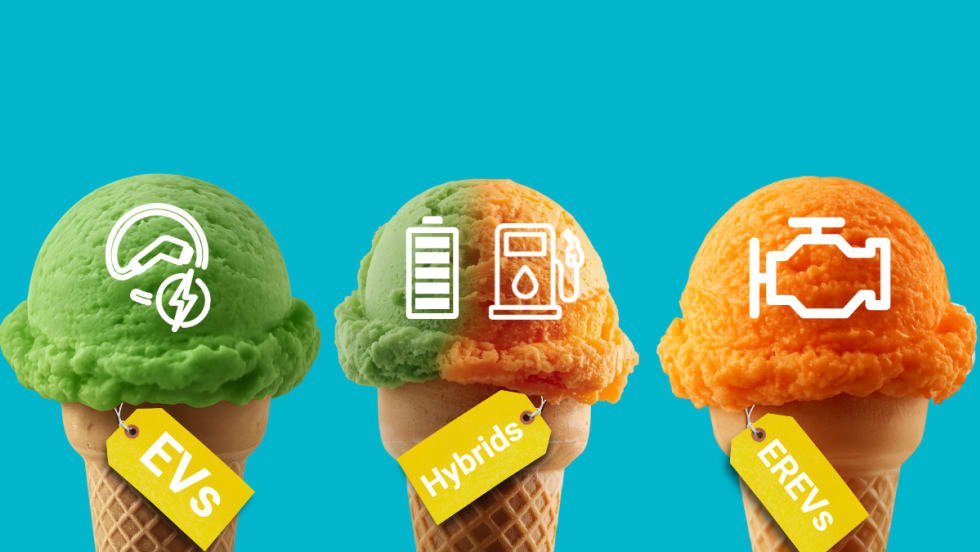
Hybrids bridge the gap between ICE vehicles and EVs, making them a smart choice for fleets that want to reduce emissions but aren’t ready to fully electrify. Hybrids, which are powered by internal combustion engines and electric motors, capture the benefits of electric power without the barriers many organizations find challenging.
Public fleets face constant pressure to do more with limited budgets. This eBook outlines how modern fleet software helps agencies extend asset life, reduce unplanned downtime, and improve safety by automating maintenance, using smarter video insights, and unifying fleet data. A practical look at how technology can drive measurable ROI for taxpayers.
The pilot will use Cero Global’s technology on city-owned vehicles to evaluate its impact on emissions and fuel consumption, as well as potential savings in municipal operating costs.
Electric vans are becoming a strategic tool, not just a sustainability move. Get a roadmap that breaks down costs, charging planning, upfit compatibility, and what fleets should evaluate before making the switch.
Philadelphia is shifting its trash collection fleet toward cleaner operations with a new partnership that will power 35 CNG compactors using renewable natural gas sourced from regional landfills.