



Red Government Fleet with star logo
MenuMENU
SearchSEARCH

Denver’s Driving Change Program Reduces Vehicular CO2 Emissions

DENVER - Driving Change, the world’s first Internet-based vehicular greenhouse gas (GHG) tracking system, announced significant reductions in GHG emissions by the City and County of Denver as a result of online feedback on how driving behaviors impact the environment and fuel costs.

by Staff
February 9, 2009
3 min to read


DENVER - Driving Change, the world’s first Internet-based vehicular greenhouse gas (GHG) tracking system, announced significant reductions in GHG emissions by the City and County of Denver as a result of online feedback on how driving behaviors impact the environment and fuel costs.

In March 2008, Denver launched a pilot test of Driving Change which uses telemetry technology to send vehicle operating information over the Internet to a GHG management system that provides each participating driver with individualized, online emissions and driving dashboards. These dashboards provide drivers with details of their carbon dioxide (CO2) emissions, a breakdown of driving habits that cause excess carbon emissions, including idling and aggressive driving events (hard braking, fast starts), and the cost of excess fuel consumed.

There are 160 City vehicles and 240 citizen vehicles that have participated in the pilot. According to the United States Environmental Protection Agency, motor vehicles are the fastest growing source of CO2. It has been estimated that GHG from vehicles accounts for 30% of the City and County of Denver’s total carbon footprint. The GHG management system was provided by Enviance, Inc., a California based company, and the telemetry was provided by Cartasite, Inc., a Denver-based company.

In addition to having 30 employees participate in Driving Change, Denver-based EnCana Oil & Gas (USA), Inc (NYSE: ECA) underwrote the program.


Findings from the Driving Change Denver pilot program demonstrate that:

  • Measurement improves performance:From May through November, there was a 10% overall driving improvement in participating vehicles in Denver (as measured by CO2/mile). This includes reductions in engine idling, fast accelerations and fast stops.


  • Tracking driving behavior has a great impact on engine idling: From May through November, idling decreased by more than 35% among participating vehicles, which equates to a reduction of 5 minutes of idling (or a little less than 1 pound of CO2) per vehicle, for every hour of operation.

  • Driver education works: As Driving Change participants were educated in the program’s goals and tracked their results, they became more likely to turn their vehicles off. For example, participating

Denver drivers provided with more extensive education reduced engine idling more than 40% through the end of November.

According to Denver Mayor John Hickenlooper, “Once the Driving Change system revealed and quantified the idling issue, we were able to use the system to target the problem and measure our success in reducing this wasteful practice, allowing us to reduce greenhouse gas emissions and save money on fuel at the same time.”

“Driving Change is another example of Mayor Hickenlooper’s efforts to make Denver a truly sustainable city. We are honored to have provided the telemetry technology that made it possible to extend GHG management to the automobile,” said David Armitage, CEO and President of Cartasite, Inc.

“Having provided the first Internet-based GHG management system to the commercial sector in 2005, it is exciting to prove that the GHG management power of the Enviance System can be extended to tackle vehicular GHG,” said Lawrence Goldenhersh, CEO and President of Enviance. “Through his leadership, Mayor Hickenlooper has provided the world with an important insight on how biofeedback and the Internet can be combined to tackle the GHG. And with idle time reduced 35%, the gasoline savings amounts to hundreds of thousands of dollars per year for a fleet of 2000 vehicles confirming that what’s good for the planet is also good for the bottom line.”

More information on the Driving Change pilot program is available at www.drivingchange.org

More Green Fleet

SponsoredFebruary 6, 2026

Hybrids: Electrification Without the Challenges

Hybrids bridge the gap between ICE vehicles and EVs, making them a smart choice for fleets that want to reduce emissions but aren’t ready to fully electrify. Hybrids, which are powered by internal combustion engines and electric motors, capture the benefits of electric power without the barriers many organizations find challenging.

Read More →
Green Fleetby Bob StantonJanuary 21, 2026

Flavor of the Decade: What if BEVs Aren’t the Answer?

A look at the present state of play in the EV market, plus a 2027 heavy truck emissions update.

Read More →
Ad Loading...
SponsoredJanuary 19, 2026

3 New Ways Fleet Software Pays: ROI opportunities for modern fleet managers

Public fleets face constant pressure to do more with limited budgets. This eBook outlines how modern fleet software helps agencies extend asset life, reduce unplanned downtime, and improve safety by automating maintenance, using smarter video insights, and unifying fleet data. A practical look at how technology can drive measurable ROI for taxpayers.

Read More →
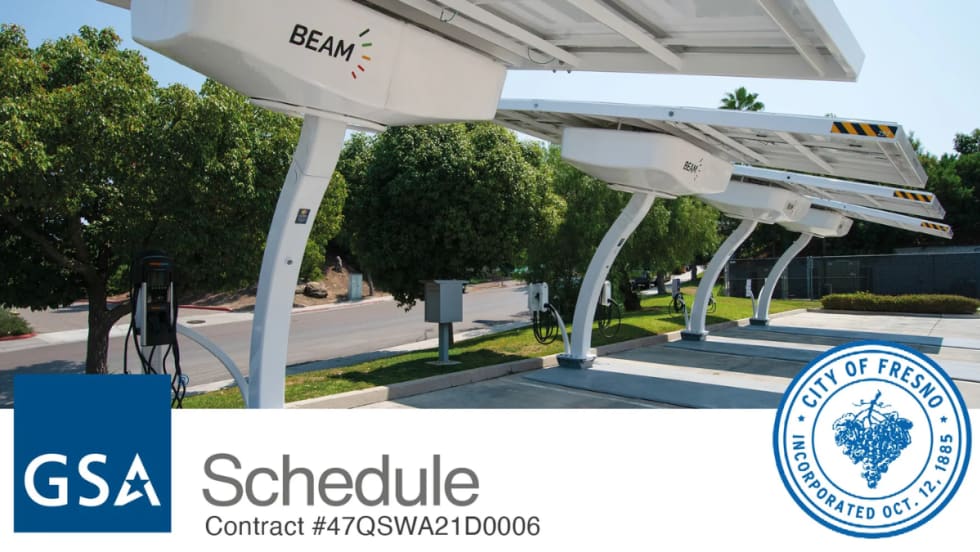
Off-grid Beam Global EV ARC charging systems installed at the City of Fresno Municipal Service Center Yard, featuring solar canopies and EV chargers used by the city’s electric vehicle fleet.
Green Fleetby News/Media ReleaseJanuary 12, 2026

City of Fresno Deploys Beam Global EV ARC Off-Grid EV Charging Systems to Support Municipal Fleet Electrification

The City of Fresno deployed off-grid EV charging systems to support municipal fleet electrification without relying on utility grid connections.

Read More →
Green Fleetby Staff WriterDecember 8, 2025

City of Quincy Partners with Cero Global to Launch Pilot to Reduce Emissions, Fuel Costs

The pilot will use Cero Global’s technology on city-owned vehicles to evaluate its impact on emissions and fuel consumption, as well as potential savings in municipal operating costs.

Read More →
Ad Loading...
SponsoredDecember 5, 2025

The Road to Smarter Electric Van Transitions: A practical roadmap for integrating electric vans into your fleet

Electric vans are becoming a strategic tool, not just a sustainability move. Get a roadmap that breaks down costs, charging planning, upfit compatibility, and what fleets should evaluate before making the switch.

Read More →
Small blue car with a green leaf and an electric plug.
Green Fleetby Staff WriterDecember 1, 2025

New Mexico Signs Agreement Advancing Electrification and Grid Resilience Efforts

The City of Socorro signs a new agreement to accelerate electrification and infrastructure development.

Read More →
UGI Energy Services logo over an image of a CNG trash compactor truck, representing Philadelphia’s move to fuel refuse vehicles with renewable natural gas.
Green Fleetby News/Media ReleaseDecember 1, 2025

UGI Energy Services and The City of Philadelphia Announce Biofuel Agreement

Philadelphia is shifting its trash collection fleet toward cleaner operations with a new partnership that will power 35 CNG compactors using renewable natural gas sourced from regional landfills.

Read More →
Ad Loading...
An electric vehicle charges at a public EV charging station outside a municipal building.
Green Fleetby News/Media ReleaseNovember 17, 2025

Sourcewell Awards ChargePoint New EV Charging Contract

ChargePoint secures a new Sourcewell contract to expand access to EV charging for public agencies across the U.S. and Canada.

Read More →