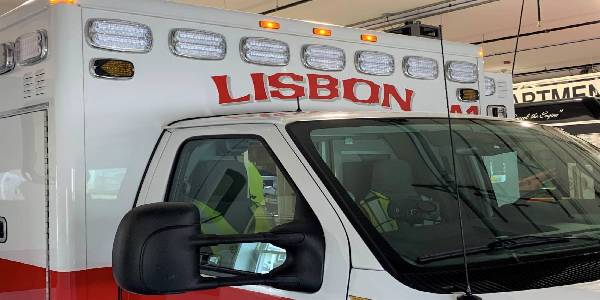
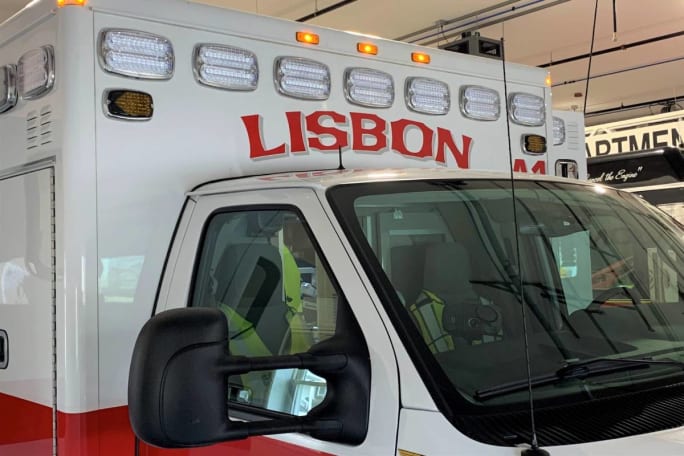
Using the weBoost fleet cell signal booster has improved Lisbon Volunteer Fire Department and EMS' ability to stay connected while responding to emergency calls on the road.
Photo: weBoost
Each year, approximately 240 million 9-1-1 calls are made in the U.S. For paramedics, police officers, firefighters, EMTs, and other first responders, ready access to reliable cellular connectivity is vital. Every day, these professionals in the public sector use a number of wireless devices to communicate with dispatchers, hospital personnel, coworkers, and others in time-critical emergency situations.
First responder Matt Champagne, a lieutenant on the Lisbon Volunteer Fire Department and EMS, serves a rural community in New Hampshire. Specially trained as an EMS provider, he responds to a variety of emergency situations, including car accidents, house fires, medical emergencies, and more. When they aren’t on urgent calls, Champagne and his team also offer emergency standby services, working concerts, snow machine races, and other community events.
Given the nature of their profession, Champagne and his coworkers are on the front line of patient care and service every day. To stay connected, Champagne relies on a weBoost cell signal booster that helps enhance patient care delivery and keeps other first responders safe in life-threatening situations.
The Challenge
Getting reliable cell coverage in rural areas of New Hampshire is a challenge. The mountainous terrain is a natural signal blocker that interferes with cell reception between mobile phones and cell towers. As a result, cell service is often nonexistent or intermittent and dropped calls are frequent.
Champagne was often frustrated with the inability to connect with dispatchers, hospital personnel, and patients’ family members due to poor cellular connectivity. Although Champagne and his coworkers carry pagers that operate on a VHF frequency used in rural two-way radio systems, they don’t always work.
“Your signals are definitely hit or miss. You could be at one part of our main street and have a bar or two, maybe if you’re lucky, and then you move 10 feet to one point or the other and it just drops off completely. So, it’s very spotty service at best.”
Unfortunately, Champagne has also experienced the frustration of working in areas where there is no cell coverage at all. “One of the towns that we go to has zero cell service no matter where you go.”
A specific challenge that Champagne faced was the inability to provide vital information to hospitals quickly. Hospitals typically request that first responders send patient information, such as EKG data and vital signs, as soon as it is collected on the scene. Regrettably, Champagne realized he couldn’t begin the process of transmitting the data until he arrived at a location where there was adequate cell service. Driving to another location to get cell reception wasted valuable time and delayed the patient’s ability to get the best medical care possible.
Champagne also described an incident when he was unable to make an important phone call due to weak cell signal. Dispatch wanted to provide vital information about the location of a house key that was needed to gain access to a locked residence. But they were also apprehensive about conveying the confidential information over the radio for obvious security reasons. So, the dispatcher requested that the EMT call in using a cell phone to obtain that information, but at that moment, there was no cell coverage.
After hearing about the benefits of weBoost cell signal boosters from family members, he decided to give the technology a try. Champagne conducted his own research and found a weBoost solution designed to support the specific needs of first responders.
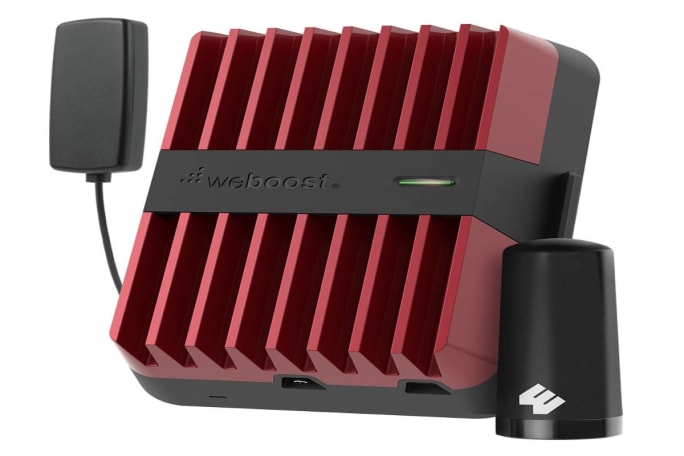
The weBoost cell signal booster helps enhance patient care delivery and keeps other first responders safe in life-threatening situations.
Photo: weBoost
The Solution
For the unique demands faced by Champagne in his role as a firefighter and EMS provider, a weBoost fleet cell phone signal booster was the ideal solution. His in-vehicle booster helps him stay connected in the locations served by his fire department where cell signal is weak, especially in remote and rural areas.
The convenience of being able to communicate directly with the hospital was paramount. “Just the ability to sit in the truck and be able to call the hospital, there are medical controls, so if we have questions as EMS providers, we can call them and get guidance. And so being able to have that booster just to get a call out is nice.”
Champagne also explained how his cell phone signal booster will support future processes. In his role as a volunteer firefighter, Champagne is starting to implement preplans, which saves time and assists with preparation. This includes immediate on-scene assessments. Using an iPad, he can determine what type of sprinkler system is in place, and the location of gas shutoffs, emergency exits, and electrical panels. Accessing that information in time-critical situations requires strong cell coverage as well.
The Results
Using the weBoost fleet cell signal booster has improved Champagne’s ability to stay connected while responding to emergency calls on the road. “It’s allowed us more opportunities to improve patient care. Patient care and first responder safety are really the two key things that it’s helped with.”
Based on his own field experience, Champagne is an advocate for installing a weBoost cell signal booster to help improve in-vehicle cellular connectivity – especially for individuals that travel in their professions. Champagne has already highly recommended the booster to friends and colleagues who work in other industries, ranging from telecommunications to wildlife, and fish and game.