Red Government Fleet with star logo
MenuMENU
SearchSEARCH

Ford’s Test for Hybrid Batteries Simulates 10-Year Use in 10 Months

DEARBORN, MI – Ford is putting the equivalent of 10 years and 150,000 miles of wear and tear on lithium-ion hybrid vehicle batteries using a new lab test that takes less than one year to complete.

by Staff
December 20, 2012
3 min to read


DEARBORN, MI – Ford is putting the equivalent of 10 years and 150,000 miles of wear and tear on hybrid vehicle batteries using a new lab test that takes less than one year to complete, according to the automaker.

Ford designed a new test – the Key Life Test – specifically for its new lithium-ion (li-ion) batteries. The test allows engineers to simulate in a lab setting many factors, including location of a battery within a vehicle, the temperatures they might have to endure, and various kinds of acceleration and stopping that different drivers would apply. The scope of the testing also includes the ability to put 150,000 miles (the equivalent of about 10 years of average use) on the test batteries in about 10 months.

The Key Life Test aims at delivering higher-quality and even more reliable batteries, said Kevin Layden, director of Ford Electrification Programs.

In fact, battery reliability ranks as the single-most important purchase consideration by potential hybrid customers – topping 17 other factors such as fuel economy and number of safety features, according to a recent Ford-commissioned survey.

“Recent studies show consumers are keeping their vehicles longer, and regulations in some regions now require batteries to carry warranties for greater distances,” Layden said. “Fortunately, our tests take into account distances and conditions that go way beyond those normal requirements.”

Ford will offer five electrified vehicles by 2013 – all equipped with advanced li-ion batteries. Previous-generation vehicles from Ford’s lineup featured nickel-metal-hydride (NiMH) batteries. Li-ion batteries offer numerous benefits – including a size 25 to 30 percent smaller, and the ability to provide about three times the amount of power per cell than the previous state-of-the-art NiMH battery technology, according to Ford.

Other battery tests include simulating hot and sunny Phoenix weather by subjecting batteries to greater than 140-degree Fahrenheit temperatures, extreme cold conditions in Manitoba, Canada with frigid -40-degree Fahrenheit tests, and by driving vehicles equipped with the batteries through ditches filled with water to ensure there are no issues.

Ford’s experience with hybrid vehicle technology dates back to the late 1980s. The technology evolved quickly, resulting in limited release of the Ranger EV in 1998, the Escape Hybrid in 2004, and the Fusion Hybrid in 2009. Ford draws on these vast amounts of data it collected from previous-generation hybrids.

For example, 50 million battery cells have been produced since 2004 in previous-generation production Ford hybrid vehicles such as the Escape Hybrid and Fusion Hybrid. Some have been deployed in taxi fleets in such cities as San Francisco and New York, with some taxi vehicles attaining more than 250,000 miles individually and taxi fleets in California alone attaining a total of nearly 100 million miles.

Of all Ford production hybrid vehicles produced to date, only six battery cells have failed of the 50 million that were put into use, the automaker reported.

“We can’t do an apples-to-apples comparison between the nickel-metal-hydride and lithium-ion batteries,” said Mazen Hammoud, chief engineer, Electrified Powertrain Systems. “But, we can evaluate much of the data collected to see how hybrid vehicles are driven, the kinds of conditions they face and the demands that are placed on them. Knowing all of that helps us benchmark our tests and ensure the lithium-ion batteries are meeting or exceeding expectations.”
More Green Fleet

SponsoredFebruary 6, 2026

Hybrids: Electrification Without the Challenges

Hybrids bridge the gap between ICE vehicles and EVs, making them a smart choice for fleets that want to reduce emissions but aren’t ready to fully electrify. Hybrids, which are powered by internal combustion engines and electric motors, capture the benefits of electric power without the barriers many organizations find challenging.

Read More →
Green Fleetby Bob StantonJanuary 21, 2026

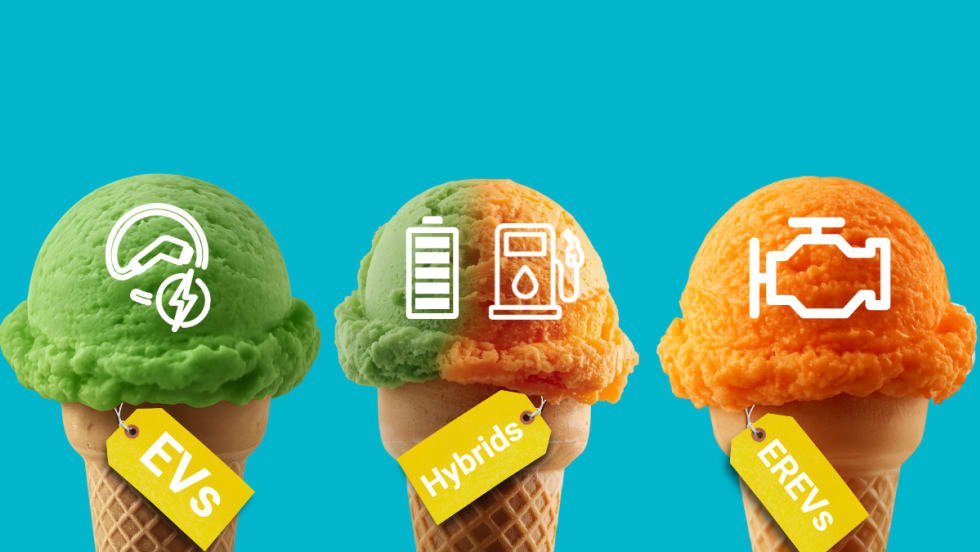
Flavor of the Decade: What if BEVs Aren’t the Answer?

A look at the present state of play in the EV market, plus a 2027 heavy truck emissions update.

Read More →
Ad Loading...
SponsoredJanuary 19, 2026

3 New Ways Fleet Software Pays: ROI opportunities for modern fleet managers

Public fleets face constant pressure to do more with limited budgets. This eBook outlines how modern fleet software helps agencies extend asset life, reduce unplanned downtime, and improve safety by automating maintenance, using smarter video insights, and unifying fleet data. A practical look at how technology can drive measurable ROI for taxpayers.

Read More →
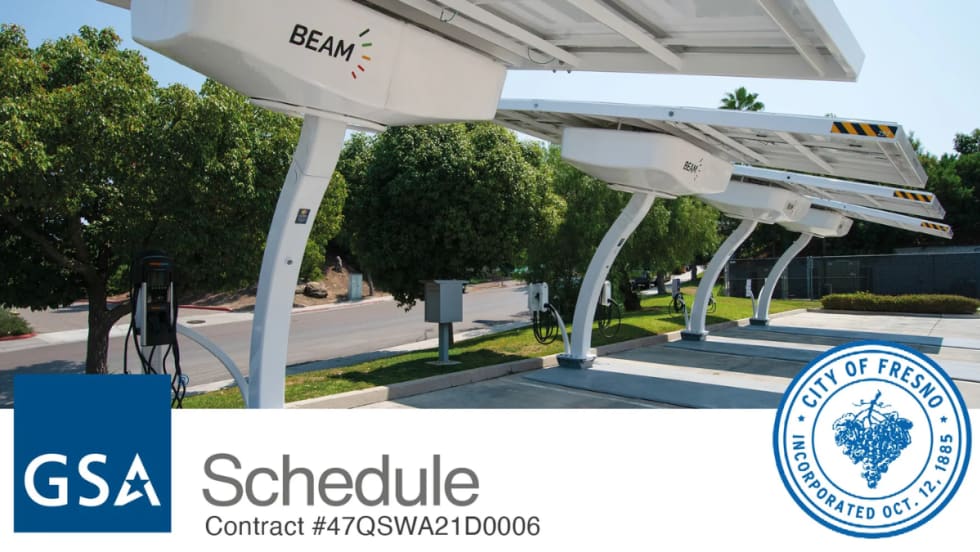
Off-grid Beam Global EV ARC charging systems installed at the City of Fresno Municipal Service Center Yard, featuring solar canopies and EV chargers used by the city’s electric vehicle fleet.
Green Fleetby News/Media ReleaseJanuary 12, 2026

City of Fresno Deploys Beam Global EV ARC Off-Grid EV Charging Systems to Support Municipal Fleet Electrification

The City of Fresno deployed off-grid EV charging systems to support municipal fleet electrification without relying on utility grid connections.

Read More →
Green Fleetby Staff WriterDecember 8, 2025

City of Quincy Partners with Cero Global to Launch Pilot to Reduce Emissions, Fuel Costs

The pilot will use Cero Global’s technology on city-owned vehicles to evaluate its impact on emissions and fuel consumption, as well as potential savings in municipal operating costs.

Read More →
Ad Loading...
SponsoredDecember 5, 2025

The Road to Smarter Electric Van Transitions: A practical roadmap for integrating electric vans into your fleet

Electric vans are becoming a strategic tool, not just a sustainability move. Get a roadmap that breaks down costs, charging planning, upfit compatibility, and what fleets should evaluate before making the switch.

Read More →
Small blue car with a green leaf and an electric plug.
Green Fleetby Staff WriterDecember 1, 2025

New Mexico Signs Agreement Advancing Electrification and Grid Resilience Efforts

The City of Socorro signs a new agreement to accelerate electrification and infrastructure development.

Read More →
UGI Energy Services logo over an image of a CNG trash compactor truck, representing Philadelphia’s move to fuel refuse vehicles with renewable natural gas.
Green Fleetby News/Media ReleaseDecember 1, 2025

UGI Energy Services and The City of Philadelphia Announce Biofuel Agreement

Philadelphia is shifting its trash collection fleet toward cleaner operations with a new partnership that will power 35 CNG compactors using renewable natural gas sourced from regional landfills.

Read More →
Ad Loading...
An electric vehicle charges at a public EV charging station outside a municipal building.
Green Fleetby News/Media ReleaseNovember 17, 2025

Sourcewell Awards ChargePoint New EV Charging Contract

ChargePoint secures a new Sourcewell contract to expand access to EV charging for public agencies across the U.S. and Canada.

Read More →