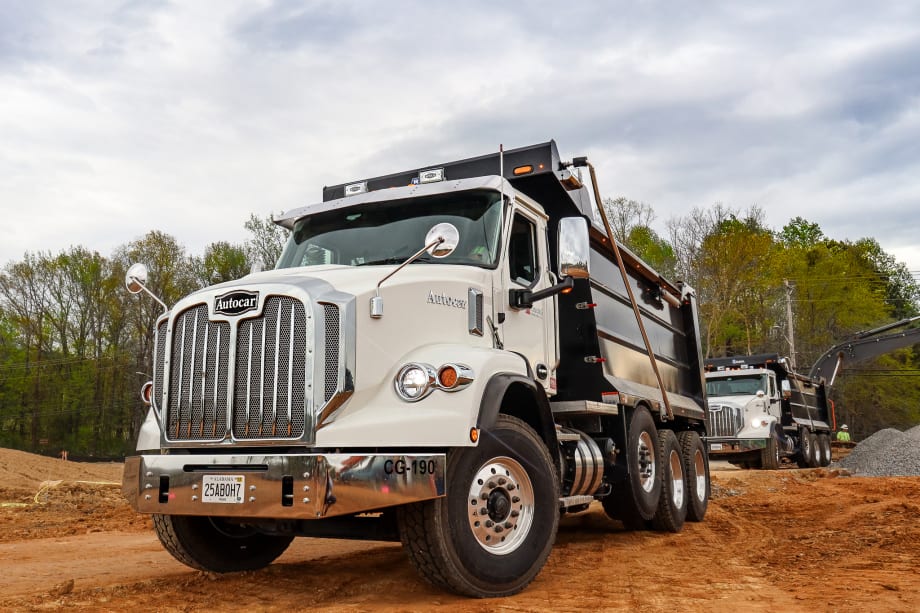
General Motors and Autocar have partnered to create a range of zero tailpipe emissions vocational vehicles powered by GM’s HYDROTEC power cubes.
The two companies signed a joint development agreement in early December 2023.
Fueling Vehicles with Zero Tailpipe Emissions
Autocar, a maker of customized vocational trucks, views the initiative as an important expansion in offering robust, zero tailpipe emissions solutions to fleet customers, according to a GM press release.
Fuel cell technology offers an additional energy propulsion option to support Autocar’s fleet customers’ move toward EPA requirements.
Hydrogen fuel cells are a major component of GM’s electrification strategy which extends beyond battery-powered passenger vehicles.
Since fuel cells are lightweight and enable large payloads, excellent range, quiet operation and rapid refueling, they can meet the needs of the heaviest duty vehicle applications.
With regulations rapidly changing for local, state, and federal governments, fuel cell-powered vehicles have the added advantage of zero tailpipe emissions when compared to diesel vehicles.
“EV propulsion systems like GM’s Ultium Platform are great solutions for electrifying passenger vehicles, but larger vehicles like Autocar’s class 8 trucks, refuse trucks and terminal tractors require robust solutions that enable significant energy carrying capacity and fast refueling times,” GM Executive Director of Global HYDROTEC Charlie Freese said. “We want to enable zero tailpipe emissions solutions for the largest, highest energy consuming vehicles, and fuel cells are ideal for the most energy intensive applications.”
A Closer Look at the HYDROTEC Power Cubes
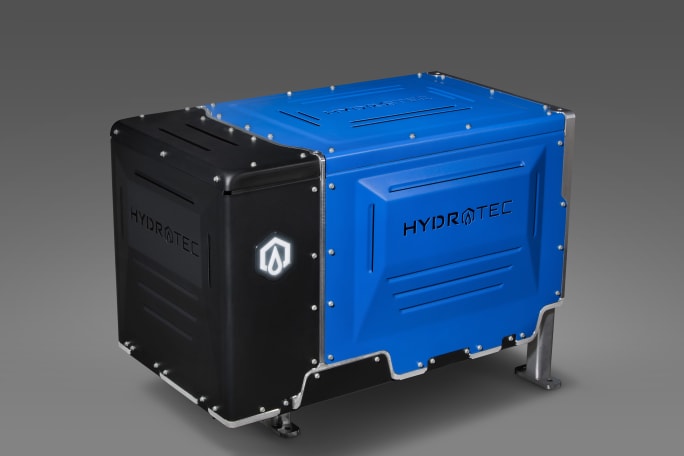
The GM HYDROTEC fuel cell power cube contains more than 300 hydrogen fuel cells and provides 77 kW of power.
Photo: GM
These jointly developed trucks will be powered by GM’s HYDROTEC power cubes, which are GM’s fuel cell propulsion system solution for these very demanding commercial vehicles.
HYDROTEC power cubes are compact, easy to package, scalable, and can electrify vehicles and applications across a variety of industries.
The first of these vehicles is expected to go into production in 2026 at the Autocar Truck Plant in Birmingham, Alabama.
Vehicles with HYDROTEC technology will be built to order by Autocar and will be sold directly to customers. Cement mixers, roll-off and dump trucks, which all share a common architecture, will be built first, followed by refuse trucks and terminal tractors.
“Autocar provides customized vocational trucking solutions, and as regulations change, we see HYDROTEC fuel cells as an additional avenue for our customers to meet their EPA requirements with zero tailpipe emissions vehicles,” Autocar President Eric Schwartz said. “GM’s scale, reliability and the capability of their HYDROTEC fuel cell technology will enhance Autocar’s existing platforms.”
Each power cube contains more than 300 hydrogen fuel cells, along with thermal and power management systems and proprietary controls to fuel cell and battery life and performance while optimizing cold start capability.
The HYDROTEC power cube provides 77 kW of power and is much quieter than a conventional diesel propulsion system. Multiple power cubes can be arrayed in a vehicle for even higher power ratings.
Triz Engineering will provide expert integration support for power distribution between the fuel cell and batteries, which store electricity that is captured from regenerative braking or is created by the HYDROTEC power cubes. Triz Engineering is a commercial vehicle engineering company owned by GVW Group, which also owns Autocar.
“We have carefully studied existing severe duty vocational trucks to understand their specific demands and requirements,” TRIZ Engineering President Johann Vorster said. “With GM and Autocar, we have built a fuel cell application that is unique within vocational vehicles — giving severe duty trucking more options to be truly rugged and capable of achieving zero tailpipe emissions.”
GM’s HYDROTEC fuel cell power cubes will be produced by GM in Brownstown, Michigan.
What Are Hydrogen Fuel Cells?
A fuel cell uses the chemical energy of hydrogen to cleanly and efficiently produce electricity. The only products in these cells are are electricity, water, and heat, according to the U.S. Department of Energy.
Fuel cells combine hydrogen and oxygen to generate electricity through an electrochemical reaction. The fuel cell enables the conversion of energy stored in hydrogen into electricity to power systems as large as a utility power station, or as small as a laptop computer — or in this case, a vehicle.
Fuel cells work like batteries. However, they do not run down or need recharging. They produce electricity and heat as long as fuel is supplied.