Red Government Fleet with star logo
MenuMENU
SearchSEARCH

Inflation Reduction Act Devotes $3 Billion to USPS ZEVs, Infrastructure

In July, the Postal Service announced that thanks to a modernization plan, at least 50% of its initial purchase of Next Generation Delivery Vehicles will be BEVs.

Christy Grimes
Christy GrimesFormer Senior Editor
Read Christy's Posts
August 17, 2022
Inflation Reduction Act Devotes $3 Billion to USPS ZEVs, Infrastructure

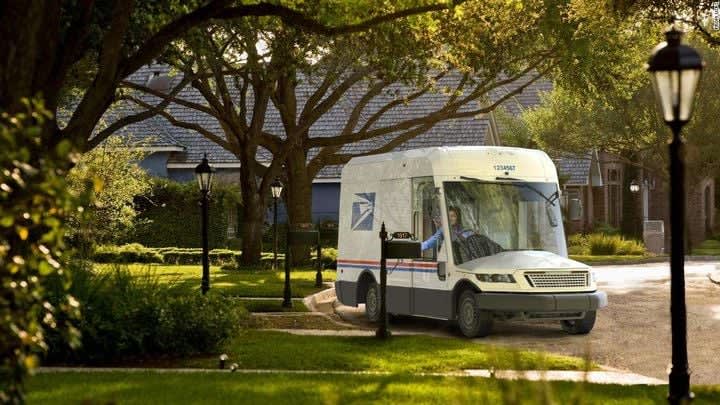
$3 billion from the Inflation Reduction Act of 2022 will help the Postal Service increase its purchases of battery-electric Next Generation Delivery Vehicles, like the one picturered here.

Photo: USPS

3 min to read


The Inflation Reduction Act of 2022, which devotes billions of dollars toward fighting climate change, reducing prescription drug costs, and more, includes $3 billion to boost the U.S. Postal Service's zero-emission vehicle (ZEV) goals. President Joe Biden signed the bill on Tuesday, August 16. The legislation includes funds intended to be used toward purchases that will reduce carbon emissions by roughly 40% by 2030.

Included in the legislation is:

  • $1.29 billion to remain available through September 30, 2031, for the purchase of zero-emission delivery vehicles, as well as

  • $1.71 billion to remain available through September 30, 2031, for the purchase, design, and installation of the infrastructure to support zero-emission delivery vehicles at facilities that the Postal Service owns or leases from non-federal entities.

Earlier this year, the Postal Service announced its plan to acquire up to 165,000 Next Generation Delivery Vehicles (NGDVs), with at least 10% of them being battery electric vehicles (BEVs) and the rest being internal combustion engine (ICE) vehicles. The plan was meant to be flexible to allow the USPS to add more BEVs if funding became available. Government Fleet previously reported that the Postal Service received pushback from the Biden Administration and more than a dozen states, who sued the USPS over its plan. The Postal Service received calls for a higher amount of BEVs to be included in the mix. The USPS then announced its initial purchase of 50,000 NGDVs from Oshkosh Defense, with 20% of them being BEVs.

In June, the USPS announced it was publishing a Notice of Intent to supplement its environmental impact statement (EIS) after accounting for expected changes following a recently announced plan to improve its delivery network. In July, the Postal Service announced that at least 50% of the initial 50,000 NGDVs it purchased will be BEVs. Additionally, the Postal Service also proposed plans to purchase 34,5000 commercial off-the-shelf (COTS) vehicles over a two-year period, according to a press release. In total, of the 84,500 NGDVs and COTS vehicles, the Postal Service anticipated having at least 40% BEVs in the mix.

USPS Reacts to Funding Boost

The Postal Service, which operates the nation's largest public fleet, generally receives no tax dollars for operating expenses and relies on the sale of postage, products, and services to fund its operations. Occassionally, legislation will include funding for the agency.

Government Fleet reached out to the Postal Service earlier this week for reaction on the bill. A spokesperson pointed to the agency's modernization plan, saying in part, "based on improvements in our operational strategy, technology and financial circumstances, we expect the electric portion of our fleet to evolve upward. With passage of funding by Congress in support of that effort, we will move forward with assessing the impact on our plans."

New NGDVs are expected to start servicing postal routes in late 2023.

The Push for Electrification

In December 2021, President Biden issued an executive order asking the U.S. government to buy only EVs for the federal fleet by 2035. While the USPS was exempt from the order, a spokesperson has previously told Government Fleet that the Postal Service hopes to follow the same precedent.

What Else is in the Inflation Reduction Act of 2022?

Also included in the legislation is the creation of a new tax credit for commercial clean vehicles. Additionally, it modifies the refundable tax credit for the purchase of plug-in electric vehicles and previously-owned electric vehicles.

The legislation also provides funding for an environmental review of transportation projects, and grants for the use of low-carbon construction materials and products on federally funded transportation projects.

It provides funding to the Department of Energy (DOE) for a variety of programs concerning energy rebates, energy efficiency in buildings, electric transmissions, advanced industrial facilities, and other energy matters.

Click here to see what else the legislation provides funding for.
More Green Fleet

SponsoredFebruary 6, 2026

Hybrids: Electrification Without the Challenges

Hybrids bridge the gap between ICE vehicles and EVs, making them a smart choice for fleets that want to reduce emissions but aren’t ready to fully electrify. Hybrids, which are powered by internal combustion engines and electric motors, capture the benefits of electric power without the barriers many organizations find challenging.

Read More →
Green Fleetby Bob StantonJanuary 21, 2026

Flavor of the Decade: What if BEVs Aren’t the Answer?

A look at the present state of play in the EV market, plus a 2027 heavy truck emissions update.

Read More →
Ad Loading...
SponsoredJanuary 19, 2026

3 New Ways Fleet Software Pays: ROI opportunities for modern fleet managers

Public fleets face constant pressure to do more with limited budgets. This eBook outlines how modern fleet software helps agencies extend asset life, reduce unplanned downtime, and improve safety by automating maintenance, using smarter video insights, and unifying fleet data. A practical look at how technology can drive measurable ROI for taxpayers.

Read More →
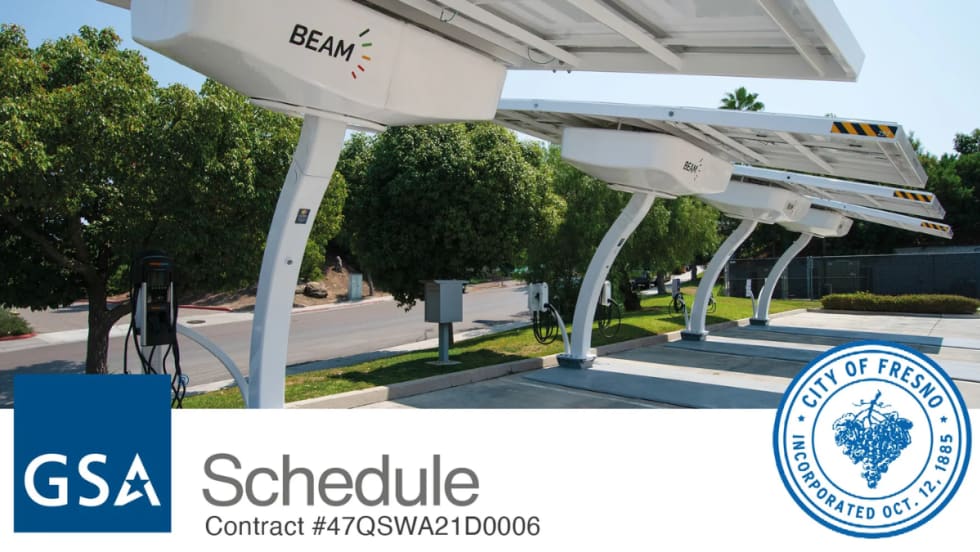
Off-grid Beam Global EV ARC charging systems installed at the City of Fresno Municipal Service Center Yard, featuring solar canopies and EV chargers used by the city’s electric vehicle fleet.
Green Fleetby News/Media ReleaseJanuary 12, 2026

City of Fresno Deploys Beam Global EV ARC Off-Grid EV Charging Systems to Support Municipal Fleet Electrification

The City of Fresno deployed off-grid EV charging systems to support municipal fleet electrification without relying on utility grid connections.

Read More →
Green Fleetby Staff WriterDecember 8, 2025

City of Quincy Partners with Cero Global to Launch Pilot to Reduce Emissions, Fuel Costs

The pilot will use Cero Global’s technology on city-owned vehicles to evaluate its impact on emissions and fuel consumption, as well as potential savings in municipal operating costs.

Read More →
Ad Loading...
SponsoredDecember 5, 2025

The Road to Smarter Electric Van Transitions: A practical roadmap for integrating electric vans into your fleet

Electric vans are becoming a strategic tool, not just a sustainability move. Get a roadmap that breaks down costs, charging planning, upfit compatibility, and what fleets should evaluate before making the switch.

Read More →
Small blue car with a green leaf and an electric plug.
Green Fleetby Staff WriterDecember 1, 2025

New Mexico Signs Agreement Advancing Electrification and Grid Resilience Efforts

The City of Socorro signs a new agreement to accelerate electrification and infrastructure development.

Read More →
UGI Energy Services logo over an image of a CNG trash compactor truck, representing Philadelphia’s move to fuel refuse vehicles with renewable natural gas.
Green Fleetby News/Media ReleaseDecember 1, 2025

UGI Energy Services and The City of Philadelphia Announce Biofuel Agreement

Philadelphia is shifting its trash collection fleet toward cleaner operations with a new partnership that will power 35 CNG compactors using renewable natural gas sourced from regional landfills.

Read More →
Ad Loading...
An electric vehicle charges at a public EV charging station outside a municipal building.
Green Fleetby News/Media ReleaseNovember 17, 2025

Sourcewell Awards ChargePoint New EV Charging Contract

ChargePoint secures a new Sourcewell contract to expand access to EV charging for public agencies across the U.S. and Canada.

Read More →