Red Government Fleet with star logo
MenuMENU
SearchSEARCH

Local Governments Partner with White House for EV Adoption

State and local governments have joined the White House in a broad-based agreement to boost adoption of electrified vehicles by committing to purchase more plug-in electric vehicles for their fleets.

by Staff
November 4, 2016
Local Governments Partner with White House for EV Adoption

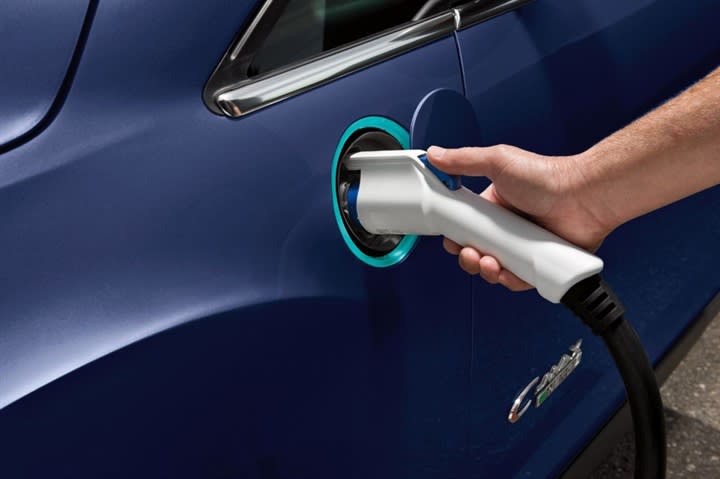
Photo courtesy of Ford.

3 min to read


Photo courtesy of Ford.

State and local governments have joined the White House in a broad-based agreement to boost adoption of electrified vehicles by committing to purchase more plug-in electric vehicles for their fleets.

The 24 state and local governments said they will add 2,500 electric vehicles as part of the national effort to combat climate change and reduce dependence on foreign oil, according to the White House. The Obama administration is establishing electric-vehicle charging networks on about 25,000 miles of highways in 35 states, the White House announced on Nov. 11.

This announcement comes after the federal government committed to purchasing 500 plug-in electric vehicles (PEVs) in fiscal-year 2017 and invited state and local governments to join its efforts. The Department of Transportation (DOT) and Department of Energy (DOE) will also work to increase EV charging infrastructure across the country.

Six states are participating in this initiative, including California, Minnesota, Montana, Rhode Island, Vermont, and Washington. Among them, Washington made the largest commitment to purchase 250 plug-in electric vehicles. Montana's State Energy Office will swap out two hybrid vehicles for plug-in hybrids, the state's first-ever PHEVs.

Several other local governments have committed to procuring EVs and installing charging infrastructure:

  • The City of Atlanta will add 300 charging stations at Hartsfield-Jackson International Airport by the end of 2017, spend $3,000 per vehicle for charging infrastructure installation through December 2018, and educate city employees about EVs and charging stations.

  • The City of Columbus, Ohio, which won the DOT's Smart Cities Challenge grant, will procure 200 PHEVs for its fleet with the appropriate charging infrastructure over the next three years. It will install 1,600 Level 1 charging stations and 300 Level 2 charging stations around the region, and add 448 PHEVs to its private fleets.

  • The City of Los Angeles will purchase 352 zero-emission vehicles (ZEVs), with 200 going to its police department. It will spend $22.5 million on charging stations by 2019, including an additional 500 new charging stations for the public. 

  • New York City will invest in at least 30 solar-powered charging carports for the city fleet with some public access. It will also implement 200 alternative power units and batteries in city ambulances to reduce idling and enable the units to charge up through land-based chargers.

  • The City of Seattle will purchase 100 EVs through 2017, with a target of 400 electrified vehicles by 2023, for a fully electric light-duty fleet. It will also install 200 charging stations for fleet vehicles in 2017 and 2018, so the city can reach 400 charging stations by 2023.

Additional local governments participating in this initiative include:

  • The City of Fort Collins, Colo.

  • The City of Denver

  • The City of Detroit

  • The City of Pittsburgh

  • The City of Portland, Ore.

  • The City and County of San Francisco

  • Arlington County, Va.

  • Boulder County, Colo.

  • Monterey County, Calif.

  • Sacramento County Municipal Utility District, Calif.

  • San Mateo County, Calif.

  • Sonoma County, Calif.

  • Ulster County, N.Y.

To coincide with this announcement, the DOT is establishing 48 national EV charging corridors along highways. The DOE will publish two studies to evaluate national EV deployment scenarios. One will identify the optimal number of charging stations to meet demand, and the second will provide best practices for fast-charging installation, including power availability and capital and maintenance cost considerations.
More Green Fleet

SponsoredFebruary 6, 2026

Hybrids: Electrification Without the Challenges

Hybrids bridge the gap between ICE vehicles and EVs, making them a smart choice for fleets that want to reduce emissions but aren’t ready to fully electrify. Hybrids, which are powered by internal combustion engines and electric motors, capture the benefits of electric power without the barriers many organizations find challenging.

Read More →
Green Fleetby Bob StantonJanuary 21, 2026

Flavor of the Decade: What if BEVs Aren’t the Answer?

A look at the present state of play in the EV market, plus a 2027 heavy truck emissions update.

Read More →
Ad Loading...
SponsoredJanuary 19, 2026

3 New Ways Fleet Software Pays: ROI opportunities for modern fleet managers

Public fleets face constant pressure to do more with limited budgets. This eBook outlines how modern fleet software helps agencies extend asset life, reduce unplanned downtime, and improve safety by automating maintenance, using smarter video insights, and unifying fleet data. A practical look at how technology can drive measurable ROI for taxpayers.

Read More →
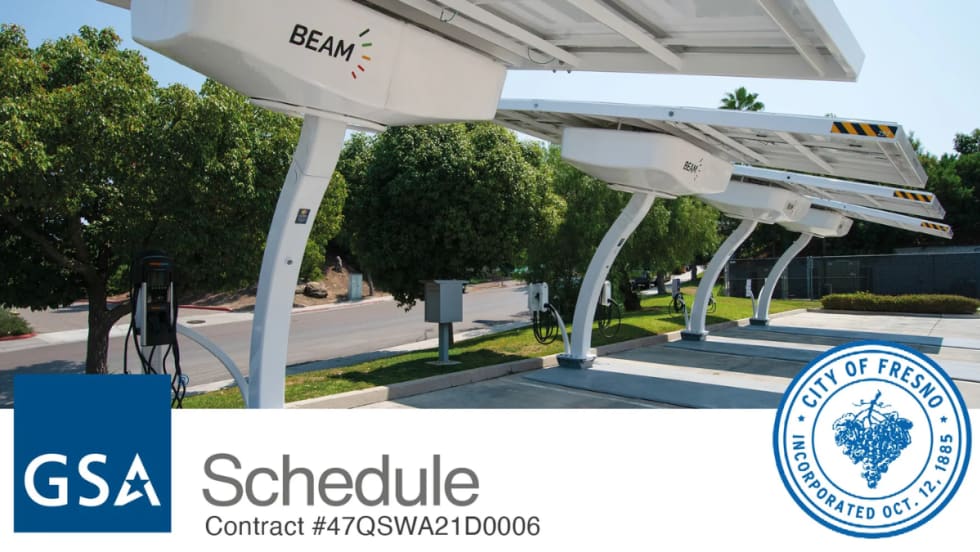
Off-grid Beam Global EV ARC charging systems installed at the City of Fresno Municipal Service Center Yard, featuring solar canopies and EV chargers used by the city’s electric vehicle fleet.
Green Fleetby News/Media ReleaseJanuary 12, 2026

City of Fresno Deploys Beam Global EV ARC Off-Grid EV Charging Systems to Support Municipal Fleet Electrification

The City of Fresno deployed off-grid EV charging systems to support municipal fleet electrification without relying on utility grid connections.

Read More →
Green Fleetby Staff WriterDecember 8, 2025

City of Quincy Partners with Cero Global to Launch Pilot to Reduce Emissions, Fuel Costs

The pilot will use Cero Global’s technology on city-owned vehicles to evaluate its impact on emissions and fuel consumption, as well as potential savings in municipal operating costs.

Read More →
Ad Loading...
SponsoredDecember 5, 2025

The Road to Smarter Electric Van Transitions: A practical roadmap for integrating electric vans into your fleet

Electric vans are becoming a strategic tool, not just a sustainability move. Get a roadmap that breaks down costs, charging planning, upfit compatibility, and what fleets should evaluate before making the switch.

Read More →
Small blue car with a green leaf and an electric plug.
Green Fleetby Staff WriterDecember 1, 2025

New Mexico Signs Agreement Advancing Electrification and Grid Resilience Efforts

The City of Socorro signs a new agreement to accelerate electrification and infrastructure development.

Read More →
UGI Energy Services logo over an image of a CNG trash compactor truck, representing Philadelphia’s move to fuel refuse vehicles with renewable natural gas.
Green Fleetby News/Media ReleaseDecember 1, 2025

UGI Energy Services and The City of Philadelphia Announce Biofuel Agreement

Philadelphia is shifting its trash collection fleet toward cleaner operations with a new partnership that will power 35 CNG compactors using renewable natural gas sourced from regional landfills.

Read More →
Ad Loading...
An electric vehicle charges at a public EV charging station outside a municipal building.
Green Fleetby News/Media ReleaseNovember 17, 2025

Sourcewell Awards ChargePoint New EV Charging Contract

ChargePoint secures a new Sourcewell contract to expand access to EV charging for public agencies across the U.S. and Canada.

Read More →