Red Government Fleet with star logo
MenuMENU
SearchSEARCH

NAFA Urges States to Consider Public Fleets in EVSE Plans

NAFA teamed up with the Ceres Corporate Electric Vehicle Alliance to call on states to include commercial and public fleets in EV charging infrastructure plans.

Christy Grimes
Christy GrimesFormer Senior Editor
Read Christy's Posts
April 26, 2023
NAFA Urges States to Consider Public Fleets in EVSE Plans

In their letter to states, the Ceres Corporate Electric Vehicle Alliance and NAFA Fleet Management Association called on state leadership to remember commercial and public fleets in their EV charging infrastructure plans.

Photo: NAFA/Canva/Government Fleet

3 min to read


The Ceres Corporate Electric Vehicle Alliance and NAFA Fleet Management Association teamed up to send a letter to state departments of transportation, urging officials to strongly consider commercial and public fleets in their plans for electric vehicle supply equipment (EVSE) in their respective states.

In February, the Federal Highway Administration (FHWA) issued the final minimum standards for the National Electric Vehicle Infrastructure (NEVI) Formula Program that will provide funding and guidance to states for the build-out of cost-effective, equitable, and reliable electric vehicle (EV) infrastructure.

'Merely a Baseline for Success'

Together, the Ceres and NAFA coalition is made up of 32 major companies and fleet operators that represent over $1.1 trillion in annual revenue and collectively own, lease, or operate more than 2.5 million fleet or networked vehicles. The April 20 letter is a follow-up to Ceres and NAFA's July 2022 letter. In the new letter, the organizations reminded states that the final NEVI standards are, "merely a baseline for success," for both publicly- and privately-funded infrastructure.

The Ceres Corporate Electric Vehicle Alliance members plan to collectively procure more than 330,000 zero emission vehicles (ZEVs) in the U.S. market. Additionally, the letter states that NAFA members support the accelerated transition to EVs as a critical part of the strategy for sustainability and the reduction of vehicle emissions.

What the Organizations Are Asking For

A Ceres Alliance survey found that the majority of vehicle charging for the 330,000+ ZEVs will take place at private locations — 26% at fleet depots and 42% at employee homes. However, on-road charging will account for the remaining 32% of charging needs. The organizations wrote that the on-road charging is critical for regional and long-haul freight movement, and fleet movement within urban, suburban and rural areas.

The organizations called the NEVI Formula Program charging stations a "promising step towards widespread charging availability in the U.S.," but said there is much more to be done to create a cost-effective, equitable, and resilient charging network for commercial and public fleets.

The organizations pointed to NAFA's 2022 Charging Infrastructure Recommendations as a source of guidance for states as they work to invest funding from the NEVI Formula Program. They also encouraged eligible public and tribal governments within states to take advantage of funding opportunities offered under the Charging and Fueling Infrastructure (CFI) Discretionary Grant Program, which provides $700 million in the current round of funding to help public and tribal entitites address regional EV charging system gaps and deploy charging infrastructure in communities and along corridors most impacted by transportation emissions.

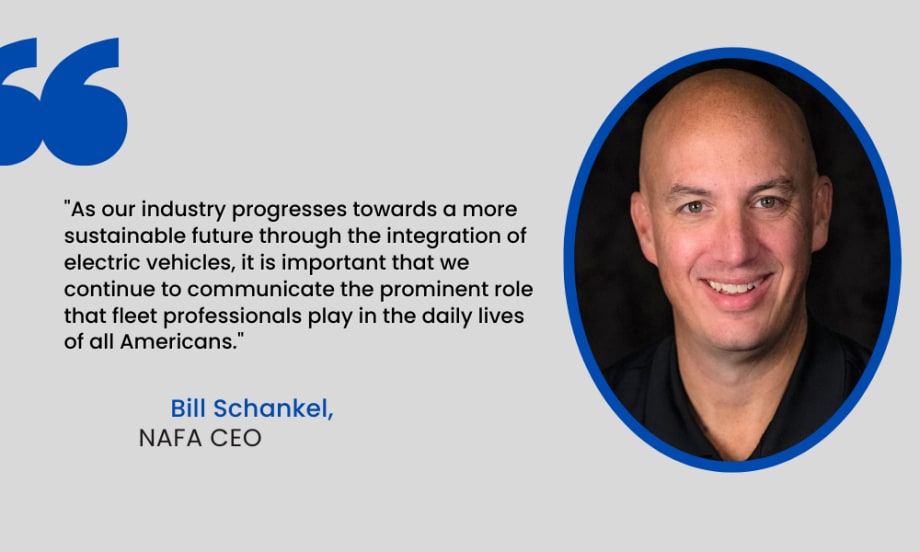
"As our industry progresses towards a more sustainable future through the integration of electric vehicles, it is important that we continue to communicate the prominent role that fleet professionals play in the daily lives of all Americans," NAFA CEO Bill Schankel said in a statement to Government Fleet. "The work of NAFA members touches lives across the country and tells a truly compelling story that legislative and regulatory policymakers and their staff need to hear. Only then can they create and implement public policies that protect NAFA members and their livelihoods. Fleets are highly regulated, and policy decisions can have a significant effect on NAFA members."

Don't Forget About Medium- and Heavy-Duty Vehicles

The final NEVI standards don't include specific requirements to support the charging of medium- and heavy-duty vehicles (MHDVs). However, while these vehicles represent only 5% of the vehicles on the road, they currently account for 21% of transportation greenhouse gas emissions and are, "therefore critical levers in improving public health and reducing transportation emissions," the organizations wrote.

They also pointed out that MHDVs typically run on diesel fuel, which is the top source for criteria pollutants like nitrogen oxides (NOx) and PM2.5 that are threatening to human health.

"These emissions disproportionally impact the health of traditionally low-income and BIPOC communities situated near fleet depots, major transportation corridors, distribution centers, and ports," the letter stated.

CERES and NAFA are calling for states to incorporate provisions that support the charging of MHDVs in future NEVI State Deployment Plans and in all other siting plans for new charging infrastructure.

According to the American Lung Association’s 2022 State of the Air report, a national shift to 100% zero-emission passenger vehicles by 2035 and 100% medium- and heavy-duty trucks by 2040 would generate over $1.2 trillion in public health benefits between 2020 and 2050.


More Green Fleet

SponsoredFebruary 6, 2026

Hybrids: Electrification Without the Challenges

Hybrids bridge the gap between ICE vehicles and EVs, making them a smart choice for fleets that want to reduce emissions but aren’t ready to fully electrify. Hybrids, which are powered by internal combustion engines and electric motors, capture the benefits of electric power without the barriers many organizations find challenging.

Read More →
Green Fleetby Bob StantonJanuary 21, 2026

Flavor of the Decade: What if BEVs Aren’t the Answer?

A look at the present state of play in the EV market, plus a 2027 heavy truck emissions update.

Read More →
Ad Loading...
SponsoredJanuary 19, 2026

3 New Ways Fleet Software Pays: ROI opportunities for modern fleet managers

Public fleets face constant pressure to do more with limited budgets. This eBook outlines how modern fleet software helps agencies extend asset life, reduce unplanned downtime, and improve safety by automating maintenance, using smarter video insights, and unifying fleet data. A practical look at how technology can drive measurable ROI for taxpayers.

Read More →
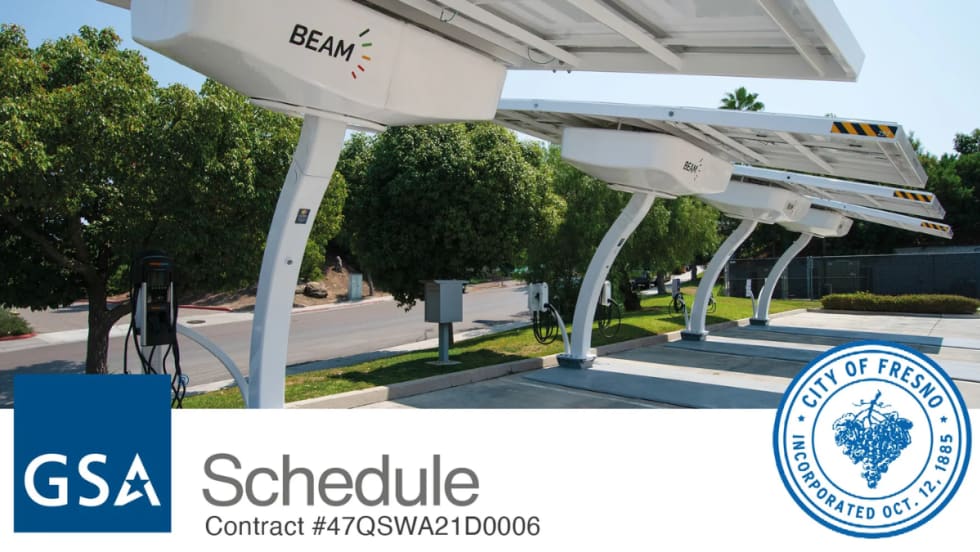
Off-grid Beam Global EV ARC charging systems installed at the City of Fresno Municipal Service Center Yard, featuring solar canopies and EV chargers used by the city’s electric vehicle fleet.
Green Fleetby News/Media ReleaseJanuary 12, 2026

City of Fresno Deploys Beam Global EV ARC Off-Grid EV Charging Systems to Support Municipal Fleet Electrification

The City of Fresno deployed off-grid EV charging systems to support municipal fleet electrification without relying on utility grid connections.

Read More →
Green Fleetby Staff WriterDecember 8, 2025

City of Quincy Partners with Cero Global to Launch Pilot to Reduce Emissions, Fuel Costs

The pilot will use Cero Global’s technology on city-owned vehicles to evaluate its impact on emissions and fuel consumption, as well as potential savings in municipal operating costs.

Read More →
Ad Loading...
SponsoredDecember 5, 2025

The Road to Smarter Electric Van Transitions: A practical roadmap for integrating electric vans into your fleet

Electric vans are becoming a strategic tool, not just a sustainability move. Get a roadmap that breaks down costs, charging planning, upfit compatibility, and what fleets should evaluate before making the switch.

Read More →
Small blue car with a green leaf and an electric plug.
Green Fleetby Staff WriterDecember 1, 2025

New Mexico Signs Agreement Advancing Electrification and Grid Resilience Efforts

The City of Socorro signs a new agreement to accelerate electrification and infrastructure development.

Read More →
UGI Energy Services logo over an image of a CNG trash compactor truck, representing Philadelphia’s move to fuel refuse vehicles with renewable natural gas.
Green Fleetby News/Media ReleaseDecember 1, 2025

UGI Energy Services and The City of Philadelphia Announce Biofuel Agreement

Philadelphia is shifting its trash collection fleet toward cleaner operations with a new partnership that will power 35 CNG compactors using renewable natural gas sourced from regional landfills.

Read More →
Ad Loading...
An electric vehicle charges at a public EV charging station outside a municipal building.
Green Fleetby News/Media ReleaseNovember 17, 2025

Sourcewell Awards ChargePoint New EV Charging Contract

ChargePoint secures a new Sourcewell contract to expand access to EV charging for public agencies across the U.S. and Canada.

Read More →