Red Government Fleet with star logo
MenuMENU
SearchSEARCH

New Mexico Executive Order Puts State Fleets on Road Toward ZEVs

State agencies have until 2035 to transition their fleets to ZEVs.

Christy Grimes
Christy GrimesFormer Senior Editor
Read Christy's Posts
October 20, 2023
New Mexico Executive Order Puts State Fleets on Road Toward ZEVs

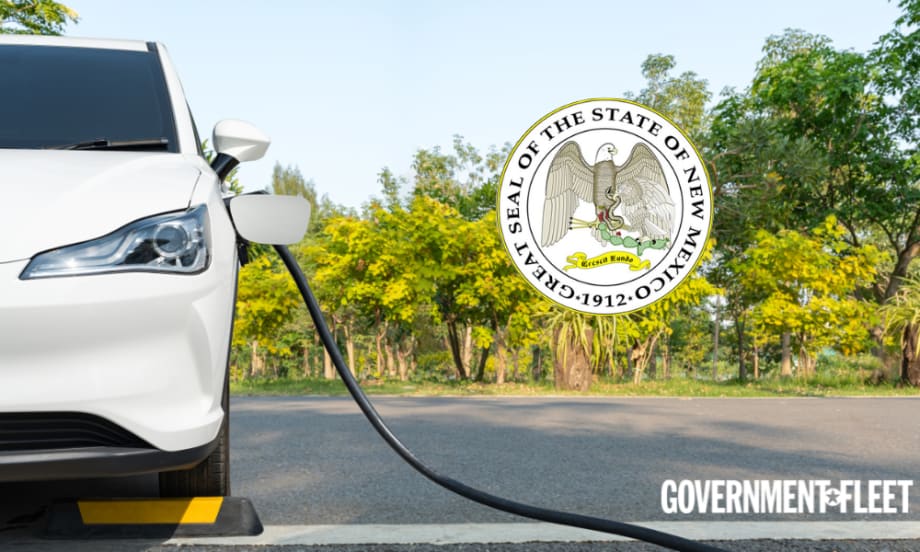
A newly signed executive order in New Mexico directs state fleets to purchase zero-emission vehicles for all new acquisitions where one or more options are available.

Photo: Canva/State of New Mexico/Government Fleet

3 min to read


State fleets in New Mexico have 12 years to transition to zero-emission vehicles, under a newly signed executive order by Gov. Michelle Lujan Grisham. She made the announcement during her Symposium on the Future of Transportation in New Mexico.

Gov. Lujan Grisham also said she intends to pursue tax credits for EVs during the upcoming legislative session to make "EVs more accessible and more affordable for all," according to a post on X, formerly known as Twitter.

Big news for ⚡️ 🚘 today! We will pursue #EV tax credits in the upcoming legislative session to make EVs more accessible and more affordable for all. I also directed the state to “walk the walk” by transitioning to a zero-emission vehicle fleet by 2035. Pedal to the metal, NM! pic.twitter.com/aFDeYfdhfX

— Governor Michelle Lujan Grisham (@GovMLG) October 16, 2023

Diving Into the Executive Order

In the executive order signed on Oct. 16 that was sent to Government Fleet, Gov. Lujan Grisham cited the GAO's ZEV executive order for federal fleets to define ZEVs. As part of this order, they are defined as:

  • Battery-electric vehicles.

  • Plug-in hybrid electric vehicles.

  • Fuel cell electric vehicles.

It's important to list what is and is not included, because some consider hybrid electric vehicles to be ZEVs, while others do not. The CARB Advanced Clean Fleets rule also leaves out HEVs.

The order noted that because New Mexico is a rural state where many residents depend on cars and trucks for transportation, tackling emissions is a challenge.

It also stated that tackling climate change is important because, "the lands and environment of our state do not belong to us, but are part of a trust that we are obligated to protect, preserve, and ensure that they remain beautiful and whole for our children, their children, and every generation to follow."

The executive order cited a technical report by the National Renewable Energy Lab showing that ZEVs can reach total-cost-of-driving parity with conventional diesel vehicles by 2035 for all medium- and heavy-duty vehicle classes, with ZEV sales potentially reaching 42% of those trucks by 2030, reflecting lower combined vehicle purchase and operating costs, potentially reducing CO2 emissions levels in 2045 by nearly 70% from 2019 levels.

Implementing the Executive Order with Measurable Actions

The order recognized that the transition of the state's fleet to ZEVs will require detailed infrastructure planning to include accessible charging, development of procurement standards and strategies, employee education and training, and optimization of vehicle types purchased and deployed.

The order directs departments to purchase zero-emission vehicles for all new acquisitions where one or more options are available.

Exceptions to the order include law enforcement fleets, fire apparatus, construction vehicles, and maintenance vehicles where no equivalent ZEV is available or when a ZEV would be "substantially less effective for the intended use."

The order directs the New Mexico General Services Department and New Mexico Department of Transportation to institute state fleet purchase requirements as soon as "practicable that are measurable, enforceable, and include benchmarking and progress reporting."

All state agencies that are not exempt were directed to take the following steps to achieve ZEV fleets by 2035:

  • Work with the Transportation Services Division (TSD) to propose targets, including annual progress targets, where applicable, to meet the order's goals and requirements for ZEV acquisition and charging equipment deployment.

  • Issue or revise existing agency policies, directives, and guidance, as appropriate, including policies that impact employee training.

  • Fleets with 10 or more vehicles should work annually with TSD to develop and submit a data-driven, strategic plan that includes proposed annual ZEV acquisition and charging equipment deployment targets, to the Office of the Governor

  • Work with GSD to include the installation of Level 2 or Level 3 charging stations in the design and construction of any new facilities.

More Green Fleet

SponsoredFebruary 6, 2026

Hybrids: Electrification Without the Challenges

Hybrids bridge the gap between ICE vehicles and EVs, making them a smart choice for fleets that want to reduce emissions but aren’t ready to fully electrify. Hybrids, which are powered by internal combustion engines and electric motors, capture the benefits of electric power without the barriers many organizations find challenging.

Read More →
Green Fleetby Bob StantonJanuary 21, 2026

Flavor of the Decade: What if BEVs Aren’t the Answer?

A look at the present state of play in the EV market, plus a 2027 heavy truck emissions update.

Read More →
Ad Loading...
SponsoredJanuary 19, 2026

3 New Ways Fleet Software Pays: ROI opportunities for modern fleet managers

Public fleets face constant pressure to do more with limited budgets. This eBook outlines how modern fleet software helps agencies extend asset life, reduce unplanned downtime, and improve safety by automating maintenance, using smarter video insights, and unifying fleet data. A practical look at how technology can drive measurable ROI for taxpayers.

Read More →
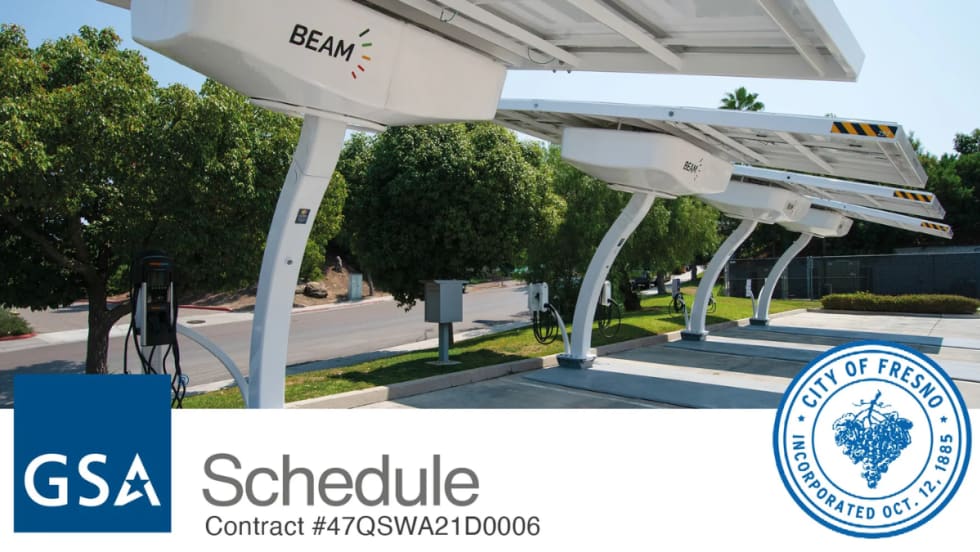
Off-grid Beam Global EV ARC charging systems installed at the City of Fresno Municipal Service Center Yard, featuring solar canopies and EV chargers used by the city’s electric vehicle fleet.
Green Fleetby News/Media ReleaseJanuary 12, 2026

City of Fresno Deploys Beam Global EV ARC Off-Grid EV Charging Systems to Support Municipal Fleet Electrification

The City of Fresno deployed off-grid EV charging systems to support municipal fleet electrification without relying on utility grid connections.

Read More →
Green Fleetby Staff WriterDecember 8, 2025

City of Quincy Partners with Cero Global to Launch Pilot to Reduce Emissions, Fuel Costs

The pilot will use Cero Global’s technology on city-owned vehicles to evaluate its impact on emissions and fuel consumption, as well as potential savings in municipal operating costs.

Read More →
Ad Loading...
SponsoredDecember 5, 2025

The Road to Smarter Electric Van Transitions: A practical roadmap for integrating electric vans into your fleet

Electric vans are becoming a strategic tool, not just a sustainability move. Get a roadmap that breaks down costs, charging planning, upfit compatibility, and what fleets should evaluate before making the switch.

Read More →
Small blue car with a green leaf and an electric plug.
Green Fleetby Staff WriterDecember 1, 2025

New Mexico Signs Agreement Advancing Electrification and Grid Resilience Efforts

The City of Socorro signs a new agreement to accelerate electrification and infrastructure development.

Read More →
UGI Energy Services logo over an image of a CNG trash compactor truck, representing Philadelphia’s move to fuel refuse vehicles with renewable natural gas.
Green Fleetby News/Media ReleaseDecember 1, 2025

UGI Energy Services and The City of Philadelphia Announce Biofuel Agreement

Philadelphia is shifting its trash collection fleet toward cleaner operations with a new partnership that will power 35 CNG compactors using renewable natural gas sourced from regional landfills.

Read More →
Ad Loading...
An electric vehicle charges at a public EV charging station outside a municipal building.
Green Fleetby News/Media ReleaseNovember 17, 2025

Sourcewell Awards ChargePoint New EV Charging Contract

ChargePoint secures a new Sourcewell contract to expand access to EV charging for public agencies across the U.S. and Canada.

Read More →