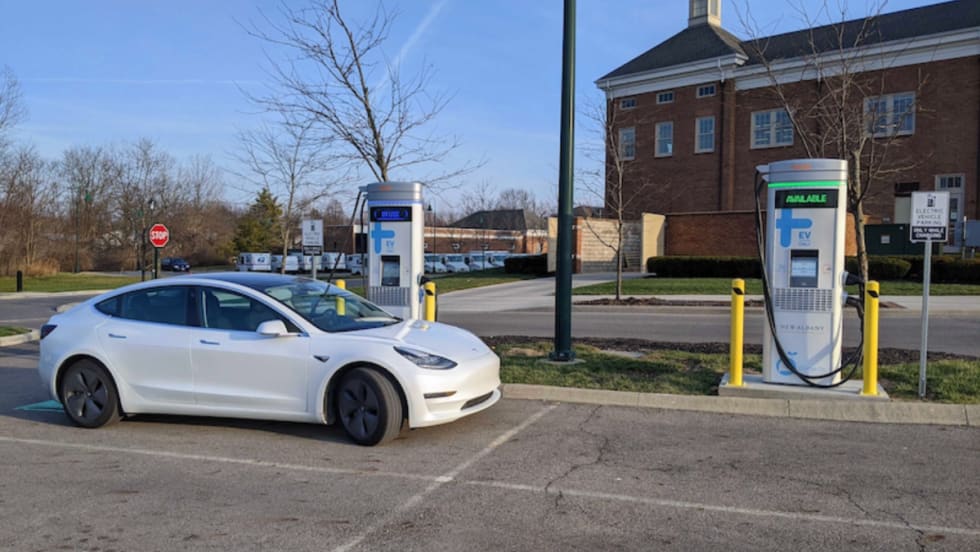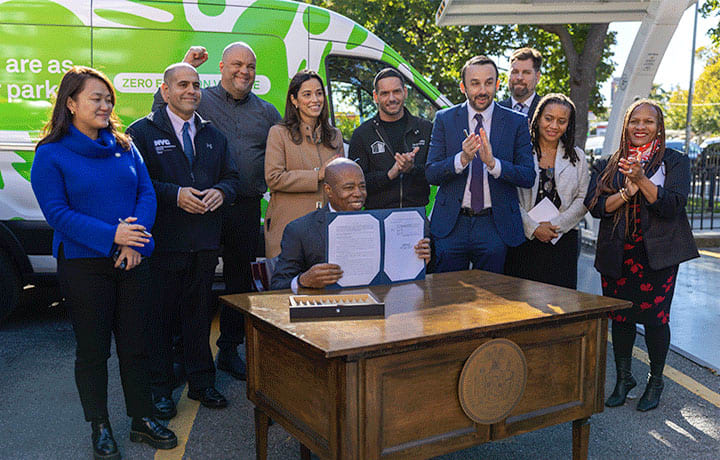
In a significant move toward environmental sustainability, New York City has enacted legislation, known as Introduction 279, mandating a complete shift to zero-emission vehicles (ZEVs). Mayor Adams signed the bill, underlining the city's commitment to combatting climate change and improving air quality.c
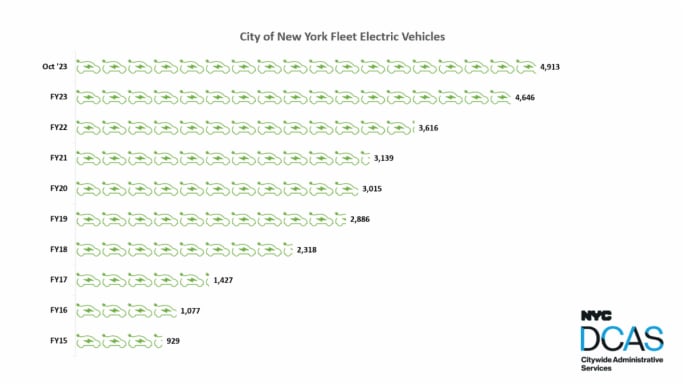
City of New York Fleet electrification chart from fiscal year 2015 until October 2023.
Photo: NYCDCAS
Key Points of the City's Timeline to Zero Emissions
This legislation outlines a phased transition to zero-emission vehicles. Starting July 1, 2025, all newly procured light- and medium-duty vehicles must be zero-emission, with the goal of having the entire fleet electric by 2035. The law extends to heavy-duty vehicles, requiring all acquisitions after July 1, 2028, to be zero-emission, with a plan to achieve a fully electric heavy-duty municipal fleet by July 1, 2038. Motorcycles in the city's fleet are also mandated to be zero-emission vehicles by July 1, 2035.
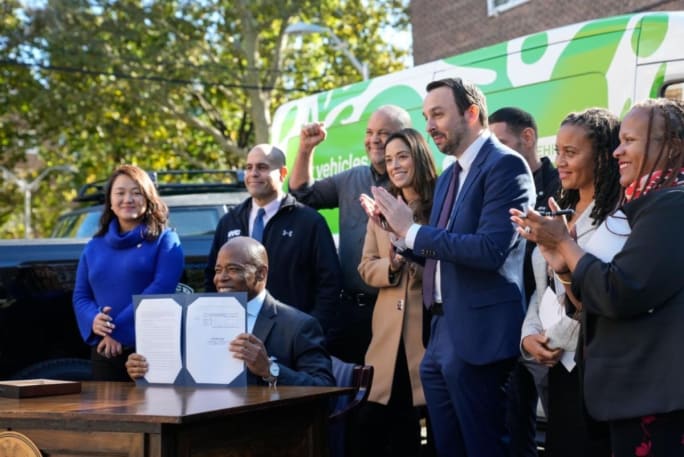
NYC Mayor Adams, First Deputy Mayor Wright, DCAS Commissioner Pinnock, DCAS Deputy Commissioner Kerman and others at the signing.
Photo: NYCDCAS
Considerations and Exceptions:
While ambitious, the legislation acknowledges practical challenges. Exceptions can be made based on factors such as cost, availability, and the lack of sufficient charging infrastructure. This approach aims to ensure a realistic and economically viable transition, considering the dynamic landscape of emerging electric vehicle technology.
The new law:
Codifies the electric fleet initiative currently being implemented under Mayoral Executive Order 90.
Accelerates the goal date for fleet electrification from 2040 to 2038. There are exemptions for market availability, costs, suitability for operations, electric charging, and backup power capacity.
Requires all light and medium duty units to be procured as EV starting July 1, 2025, unless exempted.
Requires all trucks and specialized vehicles to be procured as EV starting July 1, 2028, unless exempted.
Introduces an annual report for DCAS to complete starting July 2025 on the status of fleet EV, charging, training, and personnel and labor force impacts.
Requires DCAS to have a training initiative for mechanics and drivers.
Introduces right to repair text to ensure electric vehicle vendors share service manuals, licenses, and tools to enable in-house repair for routine and standard servicing. This will be one of the first efforts nationally to require right to repair for vehicles and trucks.
Requires NYPD to procure more fuel-efficient motorcycles and transition to zero emission motorcycles by July 1, 2035.
Solar Charging and All-Electric Car-Sharing
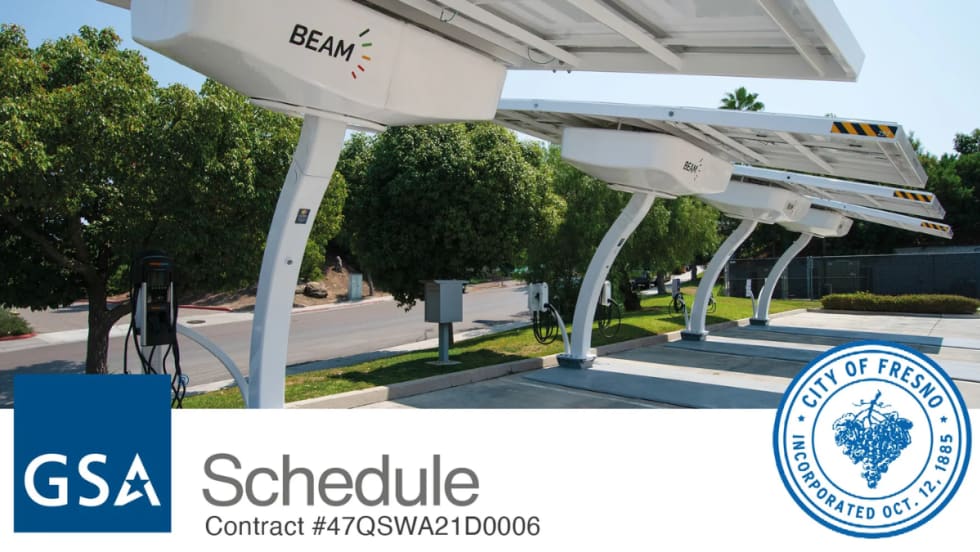
The city will also an agreement that will bring four solar carports to New York City Housing Authority (NYCHA) public housing parking lots throughout the city. The carports feature a storm-resilient design and are the first of their kind on NYCHA properties. Further, the agreement includes the introduction of electric vehicle car-sharing for NYCHA staff through an online reservation system.
As of September 2022, DCAS had already reached its 2025 goal of transitioning 4,000 vehicles in the city fleet to electric vehicles — three years ahead of schedule. The city currently operates over 4,800 electric vehicles in its fleet and 1,805 charging stations throughout the five boroughs. Last year, Mayor Adams announced a reduction of the city’s vehicle fleet by at least 855 vehicles in an effort to save taxpayer dollars and reduce carbon emissions. DCAS has reduced total fleet fuel use 16% over the last five years.
In total, NYCHA will have five DCAS solar carports at on public housing campuses. In February 2023, DCAS announced the addition of 71 solar carports to its charging network. DCAS and NYCHA will add additional sites as the solar carport network continues to grow.
This expanded agreement introduces an all-electric car-sharing option for NYCHA staff. Since 2016, DCAS has been offering a citywide pool fleet of all-electric vehicles to be made available for shared interagency use through online reservations. Now, NYCHA staff will be able to utilize these shared units with the intention of reducing the agency’s emissions and the strain on its own fleet resources. To start, four DCAS shared electric units have been deployed at NYCHA facilities for use.
Workforce Development Initiatives
Introduction 279 also mandates the training of city workers in the repair and maintenance of electric vehicles. This provision aims to preserve existing jobs by ensuring the workforce is equipped with the skills necessary for the evolving landscape of green transportation.
“New York City continues to set the standard for sustainability by becoming the largest city in the nation to require its fleet to be entirely made up of zero emission vehicles,” said Speaker Adrienne Adams. “The council is proud to champion legislative efforts to address the environmental and health impacts of vehicle pollution, reduce our carbon footprint, and prepare our workforce for the repair and maintenance of electric vehicles. I thank Majority Leader Keith Powers for his leadership on this critical legislation, my council colleagues for supporting policies that transition us to a more sustainable future, and Mayor Adams for signing the bill into law.”