Red Government Fleet with star logo
MenuMENU
SearchSEARCH

Problems Plague U.S. Government's Flex-Fuel Fleet

WASHINGTON - The costly effort to put more workers into vehicles powered by ethanol and other fuel alternatives has been fraught with problems.

by Staff
November 25, 2008
2 min to read


WASHINGTON - The federal government has invested billions of dollars over the past 16 years, building a fleet of 112,000 alternative-fuel vehicles to serve as a model for a national movement away from fossil fuels, according to the Washington Post. But the costly effort to put more workers into vehicles powered by ethanol and other fuel alternatives has been fraught with problems, many of them caused by buying vehicles before fuel stations were in place to support them, a Washington Post analysis of federal records shows.

More than 92 percent of the fuel used in the government's alternative-fuel fleet continues to be standard gasoline. And, the federal program - known as EPAct - has sometimes increased gasoline consumption and emission rates, the opposite of what was intended.

The Postal Service illustrates the problem. It estimates that its 37,000 newer alternative-fuel delivery vans, which can run on high-grade ethanol, consumed 1.5 million additional gallons of gasoline last fiscal year because of the larger engines. The vehicles that would allow the agency to meet federal mandates were available in six- and eight-cylinder models -- not the four-cylinder variety it traditionally purchased. Alternative fuel was used less than 1 percent of the time in 2007-2008, according to the Washington Post.

The Post analysis shows that at least 2,341 flex-fuel vehicles were placed in seven states with no E-85 stations, and in Puerto Rico, where the situation is the same. Hawaii has the greatest share, with more than 1,000 flex-fuel vehicles purchased or leased by various agencies, mostly military. The U.S. Navy tops the list. The Navy has more than 670 flex-fuel vehicles on three islands. Not one of the sedans, SUVs, or trucks has ever operated on E-85.

Another shortcoming of EPAct was that it did not require fleet managers to track vehicle locations. The fleet grew, but no one knew how it was taking shape. This discouraged private investment in fueling stations because industry needed better data.

The GAO said its analysis showed that future improvements will rely on better data. And it is time for government to reassess the original vision for the fleet, the agency said.


More Green Fleet

SponsoredFebruary 6, 2026

Hybrids: Electrification Without the Challenges

Hybrids bridge the gap between ICE vehicles and EVs, making them a smart choice for fleets that want to reduce emissions but aren’t ready to fully electrify. Hybrids, which are powered by internal combustion engines and electric motors, capture the benefits of electric power without the barriers many organizations find challenging.

Read More →
Green Fleetby Bob StantonJanuary 21, 2026

Flavor of the Decade: What if BEVs Aren’t the Answer?

A look at the present state of play in the EV market, plus a 2027 heavy truck emissions update.

Read More →
Ad Loading...
SponsoredJanuary 19, 2026

3 New Ways Fleet Software Pays: ROI opportunities for modern fleet managers

Public fleets face constant pressure to do more with limited budgets. This eBook outlines how modern fleet software helps agencies extend asset life, reduce unplanned downtime, and improve safety by automating maintenance, using smarter video insights, and unifying fleet data. A practical look at how technology can drive measurable ROI for taxpayers.

Read More →
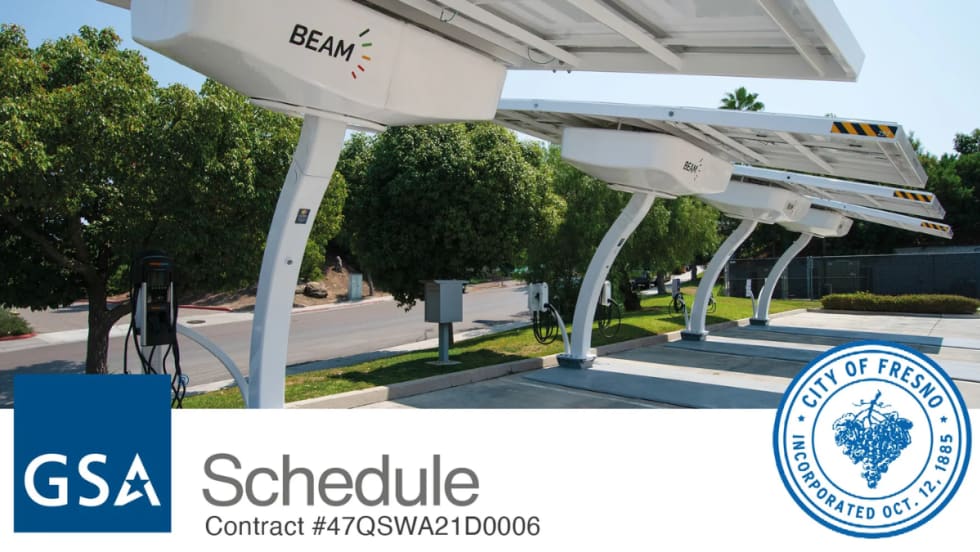
Off-grid Beam Global EV ARC charging systems installed at the City of Fresno Municipal Service Center Yard, featuring solar canopies and EV chargers used by the city’s electric vehicle fleet.
Green Fleetby News/Media ReleaseJanuary 12, 2026

City of Fresno Deploys Beam Global EV ARC Off-Grid EV Charging Systems to Support Municipal Fleet Electrification

The City of Fresno deployed off-grid EV charging systems to support municipal fleet electrification without relying on utility grid connections.

Read More →
Green Fleetby Staff WriterDecember 8, 2025

City of Quincy Partners with Cero Global to Launch Pilot to Reduce Emissions, Fuel Costs

The pilot will use Cero Global’s technology on city-owned vehicles to evaluate its impact on emissions and fuel consumption, as well as potential savings in municipal operating costs.

Read More →
Ad Loading...
SponsoredDecember 5, 2025

The Road to Smarter Electric Van Transitions: A practical roadmap for integrating electric vans into your fleet

Electric vans are becoming a strategic tool, not just a sustainability move. Get a roadmap that breaks down costs, charging planning, upfit compatibility, and what fleets should evaluate before making the switch.

Read More →
Small blue car with a green leaf and an electric plug.
Green Fleetby Staff WriterDecember 1, 2025

New Mexico Signs Agreement Advancing Electrification and Grid Resilience Efforts

The City of Socorro signs a new agreement to accelerate electrification and infrastructure development.

Read More →
UGI Energy Services logo over an image of a CNG trash compactor truck, representing Philadelphia’s move to fuel refuse vehicles with renewable natural gas.
Green Fleetby News/Media ReleaseDecember 1, 2025

UGI Energy Services and The City of Philadelphia Announce Biofuel Agreement

Philadelphia is shifting its trash collection fleet toward cleaner operations with a new partnership that will power 35 CNG compactors using renewable natural gas sourced from regional landfills.

Read More →
Ad Loading...
An electric vehicle charges at a public EV charging station outside a municipal building.
Green Fleetby News/Media ReleaseNovember 17, 2025

Sourcewell Awards ChargePoint New EV Charging Contract

ChargePoint secures a new Sourcewell contract to expand access to EV charging for public agencies across the U.S. and Canada.

Read More →